Elkot Ahmed Fawzy, Nassar Ahmed E, Elmassry Elsayed L, Forner-Martínez Macarena, Awal Rajani, Wingen Luzie U, Griffiths Simon, Alsamman Alsamman M, Kehel Zakaria
Wheat Research Department, Field Crops Research Institute, Agricultural Research Center, Giza, Egypt.
Agricultural Genetic Engineering Research Institute (AGERI), Agricultural Research Center (ARC), Giza, Egypt.
Front Genet. 2024 Dec 2;15:1384220. doi: 10.3389/fgene.2024.1384220. eCollection 2024.
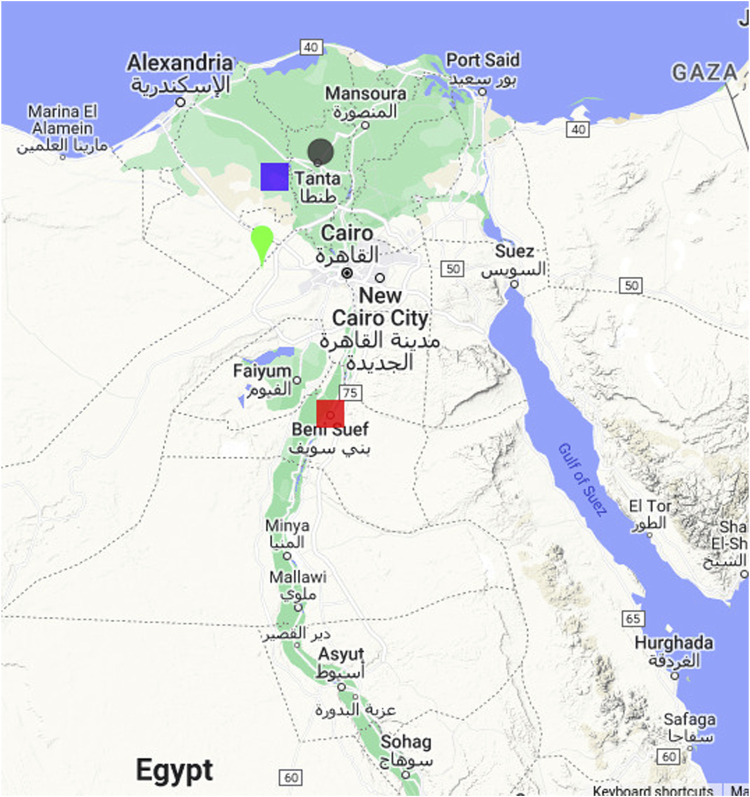
Wheat landraces represent a reservoir of genetic diversity that can support wheat improvement through breeding. A core panel of 300 Watkins wheat landraces, as well as 16 non-Watkins landraces and elite wheat cultivars, was grown during the 2020-2021 and 2021-2022 seasons at four Agricultural Research Stations in Egypt, Gemmiza, Nubaria, Sakha, and Sids, to evaluate the core panel for agromorphological and yield-related traits. The genetic population structure within these genotypes were assessed using 35,143 single nucleotide polymorphisms (SNPs).
Cluster analyses using Discriminant Analysis of Principal Components (DAPC) and k-means revealed three clusters with moderate genetic differentiation and population structure, possibly due to wheat breeding systems and geographical isolation. The best ancestry was k = 4, but k = 2 and k = 3 were also significant. A genome-wide association study (GWAS) identified clustered marker trait associations (MTAs) linked to thousand kernel weight on chromosome 5A, plant height on chromosomes 3B and 1D, days to heading on chromosomes 2A, 4B, 5B and 1D, and plant maturity on chromosomes 3A, 2B, and 6B. In the future, these MTAs can be used to accelerate the incorporation of beneficial alleles into locally adapted germplasm through marker-assisted selection. Gene enrichment analysis identified key genes within these loci, including Reduced height-1 (Rht-A1) and stress-related genes.
These findings underscore significant genetic connections and the involvement of crucial biological pathways.
小麦地方品种是遗传多样性的宝库,可通过育种支持小麦改良。在2020 - 2021年和2021 - 2022年生长季,在埃及的四个农业研究站,即杰米扎、努巴里亚、萨哈和锡兹,种植了由300个沃特金斯小麦地方品种以及16个非沃特金斯地方品种和优良小麦品种组成的核心样本,以评估该核心样本的农艺形态和产量相关性状。使用35143个单核苷酸多态性(SNP)评估这些基因型内的遗传群体结构。
使用主成分判别分析(DAPC)和k均值法进行的聚类分析揭示了三个聚类,具有中等程度的遗传分化和群体结构,这可能归因于小麦育种系统和地理隔离。最佳祖先数为k = 4,但k = 2和k = 3也具有显著性。全基因组关联研究(GWAS)确定了与5A染色体上的千粒重、3B和1D染色体上的株高、2A、4B、5B和1D染色体上的抽穗天数以及3A、2B和6B染色体上的植株成熟度相关的成簇标记性状关联(MTA)。未来,这些MTA可用于通过标记辅助选择加速将有益等位基因整合到当地适应的种质中。基因富集分析确定了这些位点内的关键基因,包括矮秆基因-1(Rht - A1)和与胁迫相关的基因。
这些发现强调了显著的遗传联系以及关键生物学途径的参与。