Yahaya Pudza Musa, Zainal Abidin Zurina, Abdul Rashid Suraya, Md Yasin Faizah, Noor A S M, Issa Mohammed A
Department of Chemical and Environmental Engineering, Faculty of Engineering, Universiti Putra Malaysia, Serdang, Selangor 43400, Malaysia.
Department of Computer and Communication System Engineering, Faculty of Engineering, Universiti Putra Malaysia (UPM), Serdang 43400 Selangor, Malaysia.
Nanomaterials (Basel). 2020 Feb 12;10(2):315. doi: 10.3390/nano10020315.
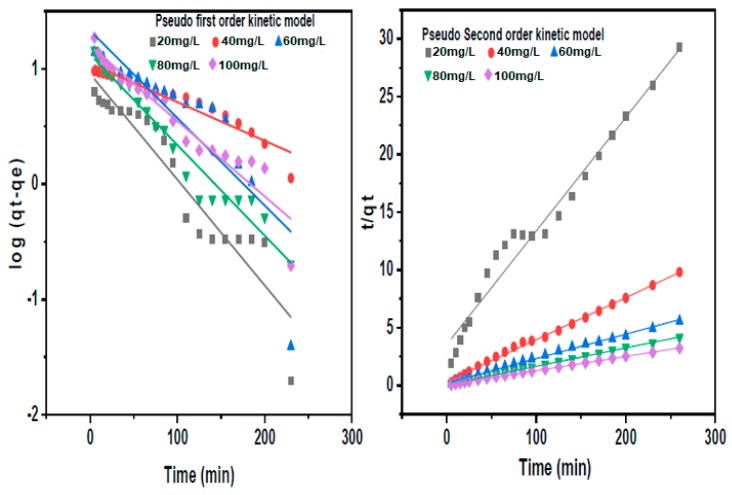
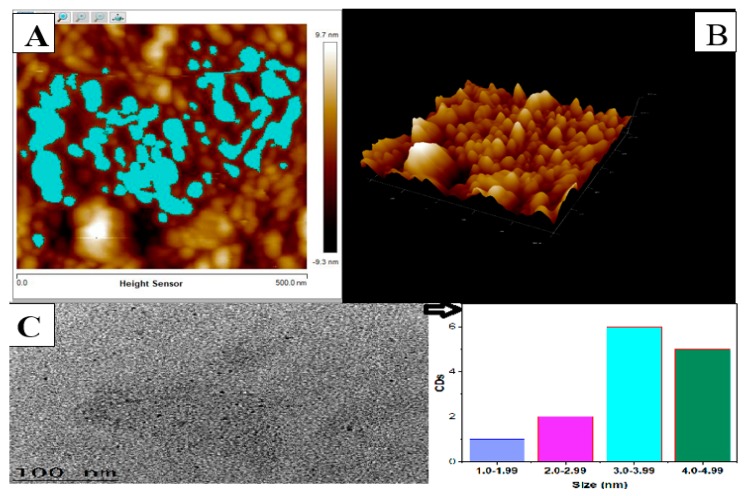
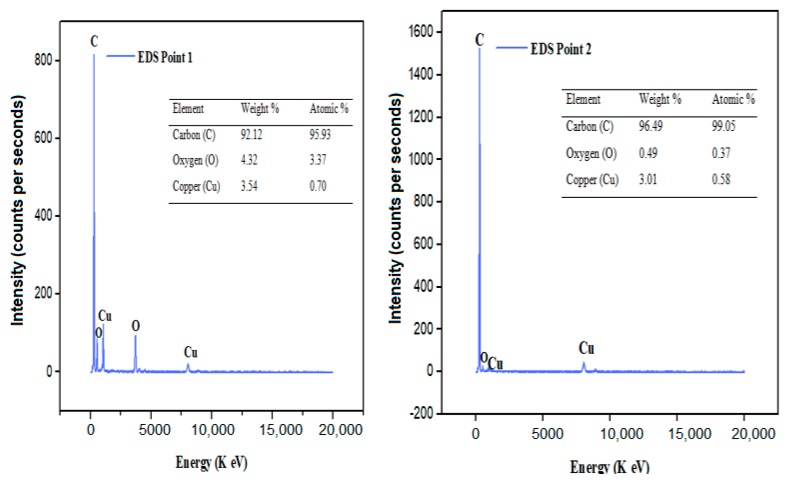
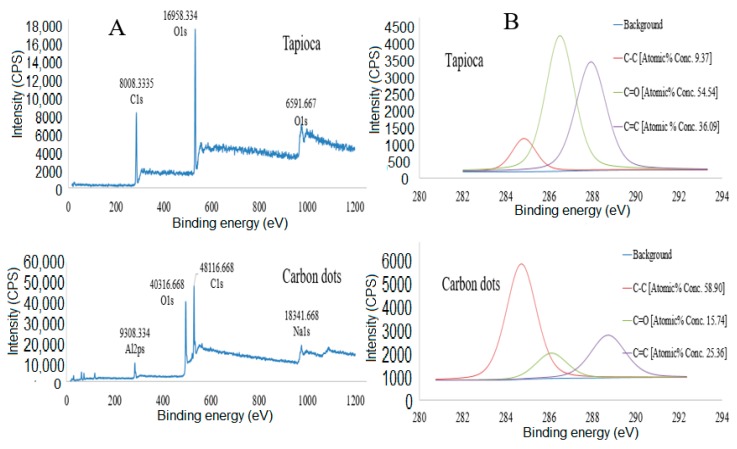
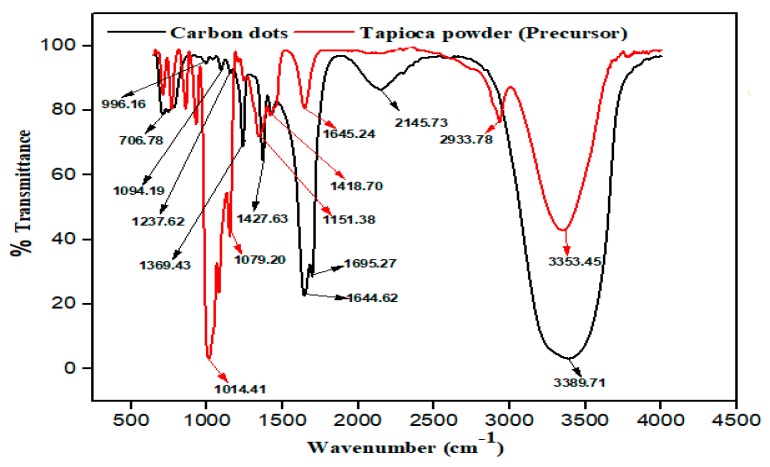
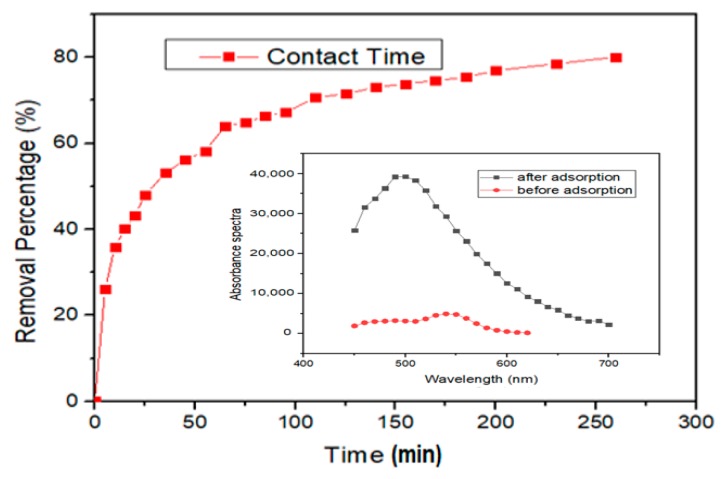
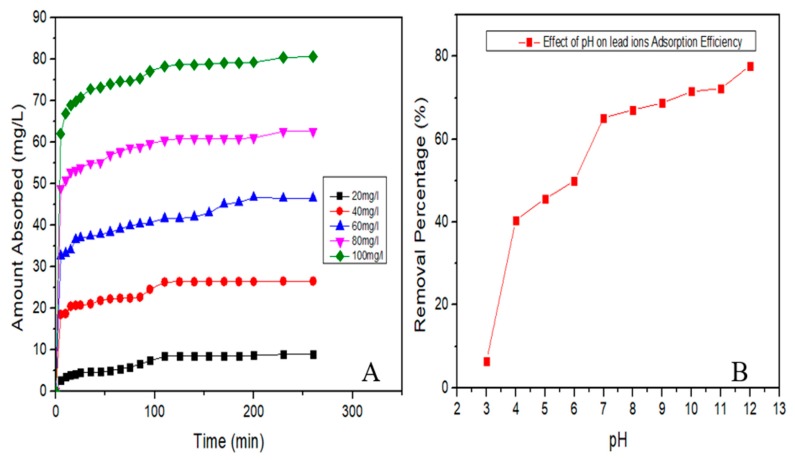
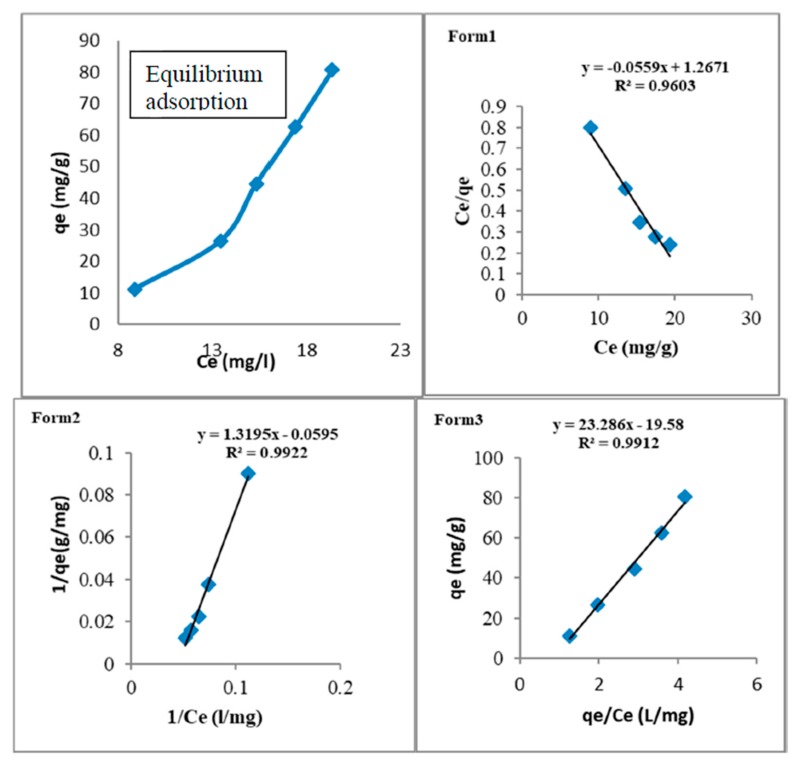
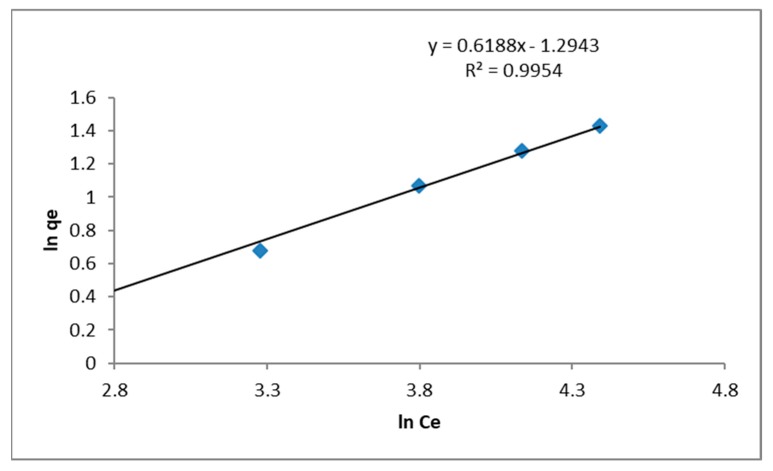
The materials and substances required for sustainable water treatment by adsorption technique, are still being researched widely by distinguished classes of researchers. Thus, the need to synthesize substances that can effectively clean up pollutants from the environment cannot be overemphasized. So far, materials in bulk forms that are rich in carbon, such as biochar and varieties of activated carbon have been used for various adsorptive purposes. The use of bulk materials for such purposes are not efficient due to minimal surface areas available for adsorption. This study explores the adsorption task at nano dimension using carbon dots (CDs) from tapioca. The properties of carbon structure and its influence on the adsorptive efficacy of carbon nanoparticles were investigated by energy-dispersive spectroscopy (EDS), X-ray photoelectron spectroscopy (XPS), Fourier transform infrared spectroscopy (FTIR), high resolution transmission electron microscopy (HrTEM), and atomic force microscopy (AFM). The results implied carbon present in CDs are good adsorbents for effective adsorption of heavy metal ions (lead) with removal efficiency of 80.6% in aqueous environment. The adsorption process as explored by both Langmuir and Freundlich isotherms have proven favorability of the adsorption process. Langmuir form two and three have correlation coefficients R at 0.9922 and 0.9912, respectively. The Freundlich isotherm confirms CDs as having defined surface heterogeneity and the exponential distribution of active sites. The adsorption of lead unto CDs obeyed the second order kinetic model with coefficient of determination, R of 0.9668 and 0.9996 at an initial lead concentration of 20 mg/L and 100 mg/L, respectively. The findings validated the efficiency of CDs derived from tapioca as an excellent material for further utilization in the environmental fields of wastewater pollution detection and clean up, bio-imaging, and chemical sensing applications.
吸附技术用于可持续水处理所需的材料和物质,仍在受到各类杰出研究人员的广泛研究。因此,合成能够有效清除环境污染物的物质的必要性再怎么强调也不为过。到目前为止,富含碳的块状材料,如生物炭和各种活性炭,已被用于各种吸附目的。由于可用于吸附的表面积最小,使用块状材料进行此类用途效率不高。本研究利用木薯中的碳点(CDs)探索纳米尺寸的吸附任务。通过能量色散光谱(EDS)、X射线光电子能谱(XPS)、傅里叶变换红外光谱(FTIR)、高分辨率透射电子显微镜(HrTEM)和原子力显微镜(AFM)研究了碳结构的性质及其对碳纳米颗粒吸附效果的影响。结果表明,CDs中存在的碳是有效吸附重金属离子(铅)的良好吸附剂,在水环境中的去除效率为80.6%。朗缪尔等温线和弗伦德利希等温线所探索的吸附过程均证明了吸附过程的有利性。朗缪尔形式二和形式三的相关系数R分别为0.9922和0.9912。弗伦德利希等温线证实CDs具有明确的表面不均匀性和活性位点的指数分布。铅在CDs上的吸附符合二级动力学模型,在初始铅浓度分别为20 mg/L和100 mg/L时,决定系数R分别为0.9668和0.9996。这些发现验证了木薯衍生的CDs作为一种优秀材料在废水污染检测与清理、生物成像和化学传感应用等环境领域进一步利用的效率。