Cochrane Oral Health, Division of Dentistry, School of Medical Sciences, The University of Manchester, UK.
Health Economics Research Unit, University of Aberdeen, UK.
Br Dent J. 2020 Feb;228(3):191-197. doi: 10.1038/s41415-020-1250-2.
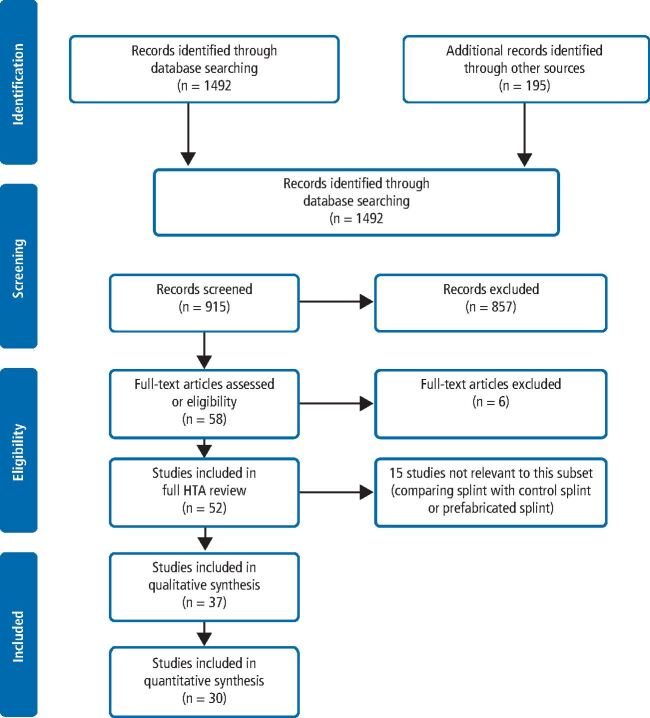
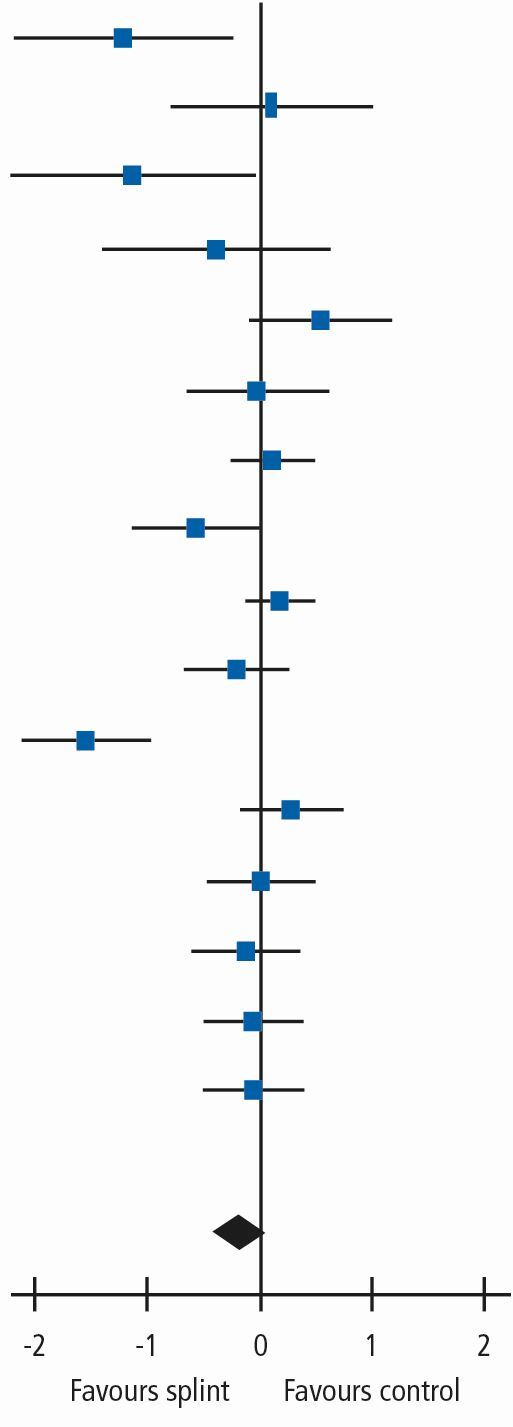
Objectives To evaluate the clinical-effectiveness of oral splints for patients with TMD or bruxism for the primary outcomes: pain (TMD) and tooth wear (bruxism).Data sources Four databases including MEDLINE and EMBASE were searched from inception until 1 October 2018.Data selection and extraction Randomised controlled trials comparing all types of splints versus no/minimal treatment for patients with TMD or bruxism were eligible. Standard Cochrane review methods were used. Standardised mean differences (SMD) were pooled for the primary outcome of pain, using random effects models in TMD patients.Data synthesis Thirty-seven trials were included and the evidence identified was of very low certainty using GRADE assessments. When all subtypes of TMD were pooled into one global TMD group, there was no evidence that splints reduced pain: SMD (up to 3 months) -0.18 (95% CI -0.42 to 0.06); 13 trials, 1,076 participants. There was no evidence that any other outcomes improved when using splints. There was no evidence of adverse events associated with splints, but reporting was poor regarding this outcome. No trials measured tooth wear in patients with bruxism. There was a large variation in diagnostic criteria, splint types and outcome measures used and reported. Sensitivity analyses based on these factors did not indicate a reduction in pain.Conclusions The very low-certainty evidence identified did not demonstrate that splints reduced pain in TMD as a group of conditions. There is insufficient evidence to determine whether splints reduce tooth wear in patients with bruxism.
评估口腔夹板治疗 TMD 或磨牙症患者的临床疗效,主要结局为疼痛(TMD)和牙齿磨损(磨牙症)。
从建库至 2018 年 10 月 1 日,检索了 MEDLINE 和 EMBASE 在内的 4 个数据库。
纳入比较 TMD 或磨牙症患者使用所有类型夹板与非/最小治疗的随机对照试验。使用标准 Cochrane 综述方法。使用随机效应模型对 TMD 患者的主要结局疼痛进行标准化均数差(SMD)合并。
共纳入 37 项试验,使用 GRADE 评估证据质量极低。当将所有 TMD 亚型合并为一个整体 TMD 组时,没有证据表明夹板能减轻疼痛:SMD(最长 3 个月)-0.18(95%CI-0.42 至 0.06);13 项试验,1076 名参与者。没有证据表明使用夹板能改善其他结局。没有证据表明夹板存在与不良反应相关,但关于这一结局的报告很差。没有试验在磨牙症患者中测量牙齿磨损。诊断标准、夹板类型和使用及报告的结局指标差异很大。基于这些因素的敏感性分析并未表明疼痛减轻。
确定的极低质量证据并未表明夹板能整体减轻 TMD 患者的疼痛。没有足够的证据来确定夹板是否能减少磨牙症患者的牙齿磨损。