Zhou Sheng, Ren Meilin, Xu Huanji, Xia Hongwei, Tang Qiulin, Liu Ming
Department of Abdominal Oncology, West China Hospital, Sichuan University, Chengdu, Sichuan Province 610041, People's Republic of China.
Laboratory of Molecular Targeted Therapy in Oncology, State Key Laboratory of Biotherapy and Cancer Center, West China Hospital, Sichuan University, Collaborative Innovation Center for Biotherapy, Chengdu, Sichuan Province 610041, People's Republic of China.
Onco Targets Ther. 2019 Nov 26;12:10239-10250. doi: 10.2147/OTT.S226395. eCollection 2019.
Colon cancer is one of the most common cancers worldwide. IFN-stimulated gene 15 (ISG15), a ubiquitin-like molecule, is strongly up-regulated by type I interferon as a crucial response to a variety of microbial and cellular stress stimuli. However, the role of ISG15 in colon cancer remains unclear.
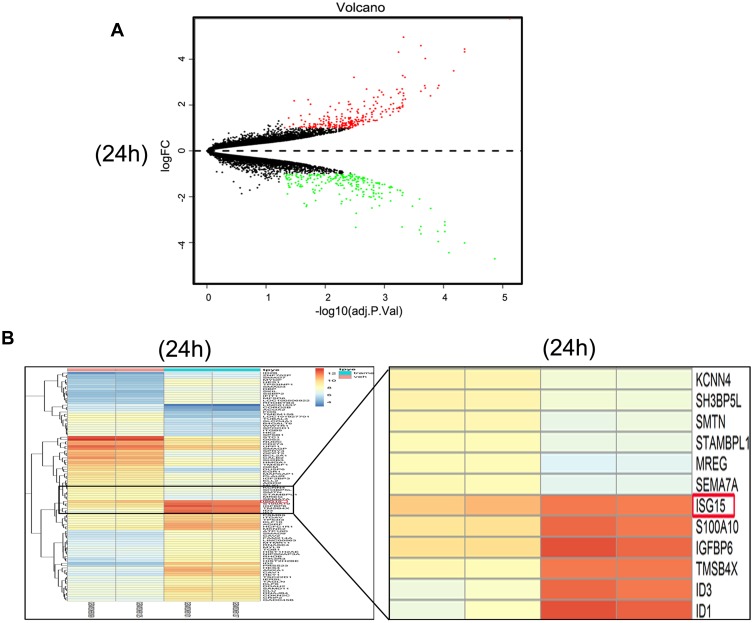
The expression of ISG15 in colon cancer tissues and cell lines was detected by using Western blotting and immunohistochemistry. ISG15 expression levels of colon cancer cells treated with trametinib was verified by using the data downloaded from the Gene Expression Omnibus (GEO) databases, quantitative real-time PCR analysis and Western blots assays. ISG15-siRNA was used to silence ISG15 in colon cancer cell line to determine the roles of ISG15 in colon cancer cell proliferation.
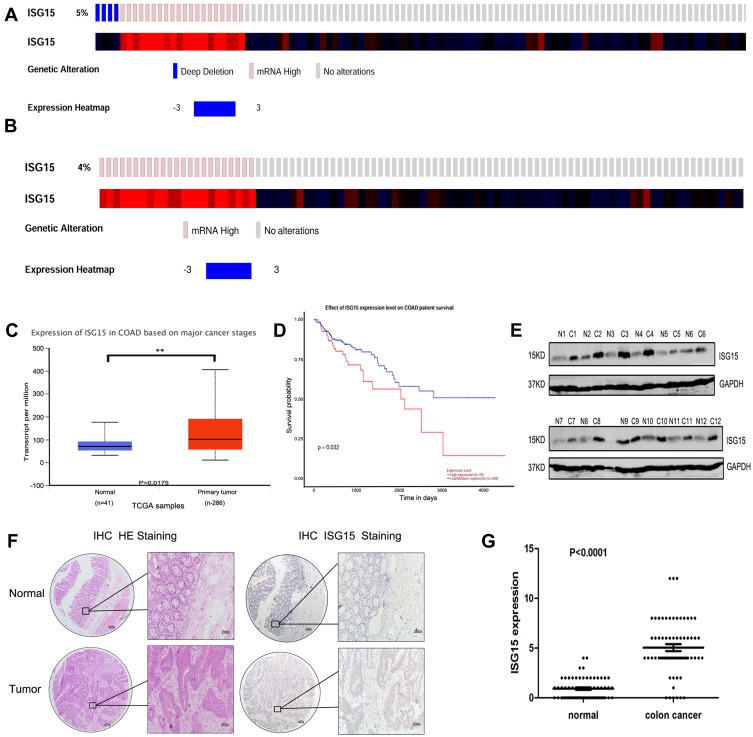
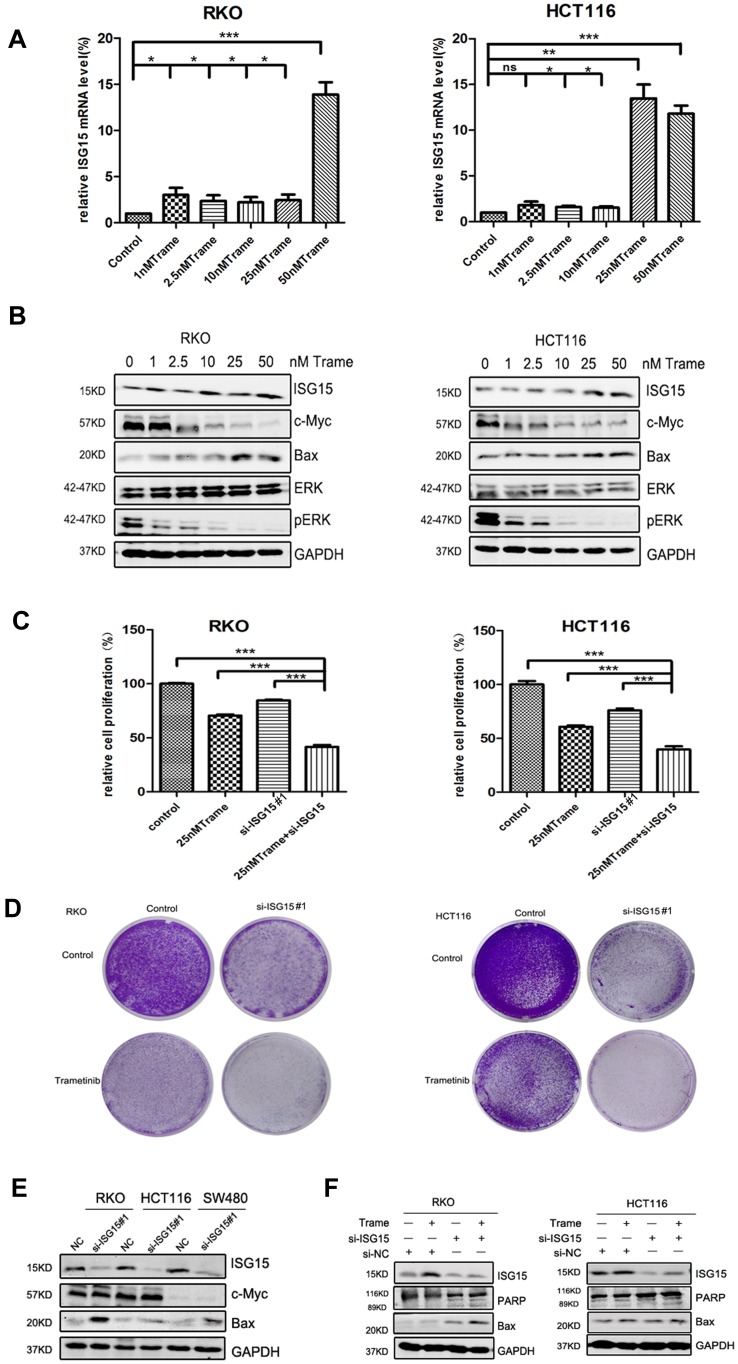
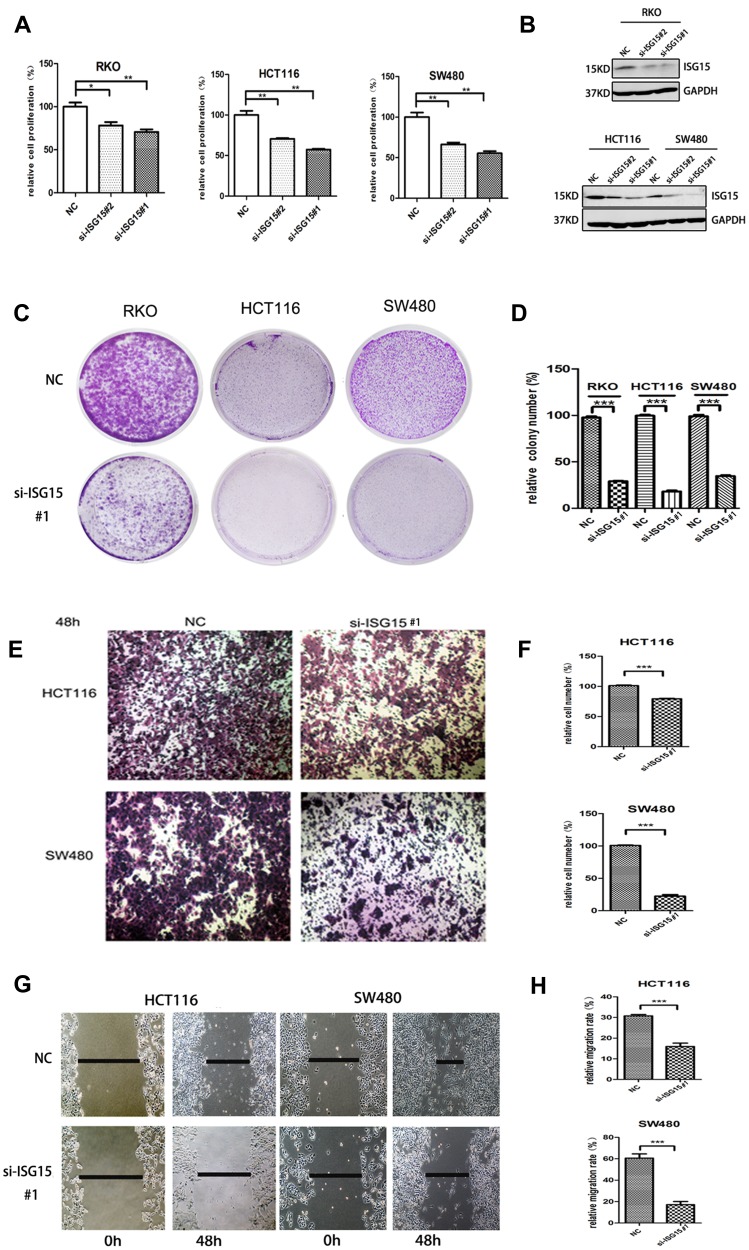
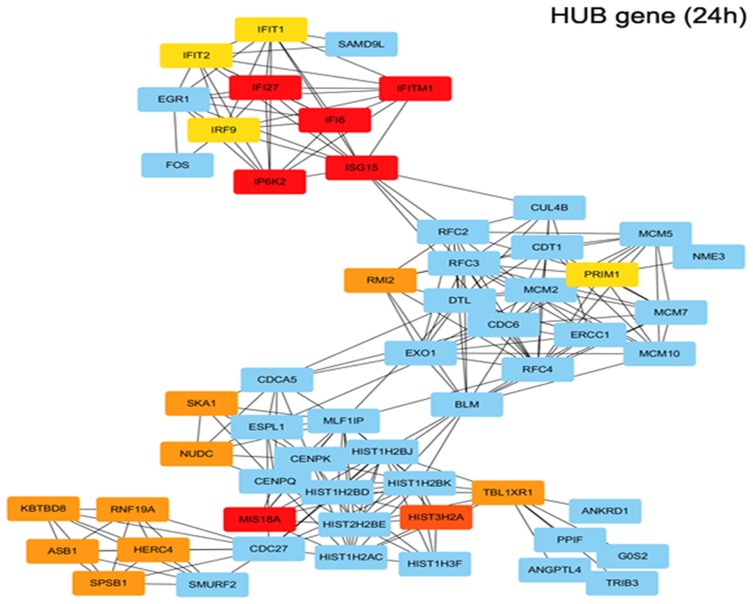
ISG15 was highly expressed in colon cancer tissues and ISG15 upregulation was closely associated with poor prognoses in colon cancer patients. Enhanced ISG15 expression promoted the migration and proliferation of colon cancer cells in vitro, while ISG15 knockdown decreased cell proliferation and metastasis. In addition, we first found that the mRNA and protein expression of ISG15 were up-regulated following trametinib treatment. Further investigation showed that ISG15 knockdown could enhance the anti-cancer effect of trametinib in colon cancer cells.
We proposed an interesting possibility that ISG15 may be a prognostic bio-marker, and the combined targeting of ISG15 and MEK might be a promising therapeutic strategy for colon cancer.
结肠癌是全球最常见的癌症之一。干扰素刺激基因15(ISG15)是一种类泛素分子,作为对多种微生物和细胞应激刺激的关键反应,它被I型干扰素强烈上调。然而,ISG15在结肠癌中的作用仍不清楚。
采用蛋白质免疫印迹法和免疫组织化学法检测ISG15在结肠癌组织和细胞系中的表达。通过从基因表达综合数据库(GEO)下载的数据、定量实时PCR分析和蛋白质免疫印迹分析,验证用曲美替尼处理的结肠癌细胞的ISG15表达水平。利用ISG15-siRNA使结肠癌细胞系中的ISG15沉默,以确定ISG15在结肠癌细胞增殖中的作用。
ISG15在结肠癌组织中高表达,ISG15上调与结肠癌患者的不良预后密切相关。ISG15表达增强促进了体外结肠癌细胞的迁移和增殖,而ISG15敲低则降低了细胞增殖和转移。此外,我们首次发现曲美替尼处理后ISG15的mRNA和蛋白表达上调。进一步研究表明,ISG15敲低可增强曲美替尼对结肠癌细胞的抗癌作用。
我们提出了一个有趣的可能性,即ISG15可能是一种预后生物标志物,联合靶向ISG15和MEK可能是一种有前景的结肠癌治疗策略。