Department of Computer Science and Engineering, Green University of Bangladesh, Dhaka, Bangladesh.
Department of Computer Science and Engineering, Varendra University, Rajshahi, Bangladesh.
Sci Rep. 2020 Feb 17;10(1):2795. doi: 10.1038/s41598-020-57916-9.
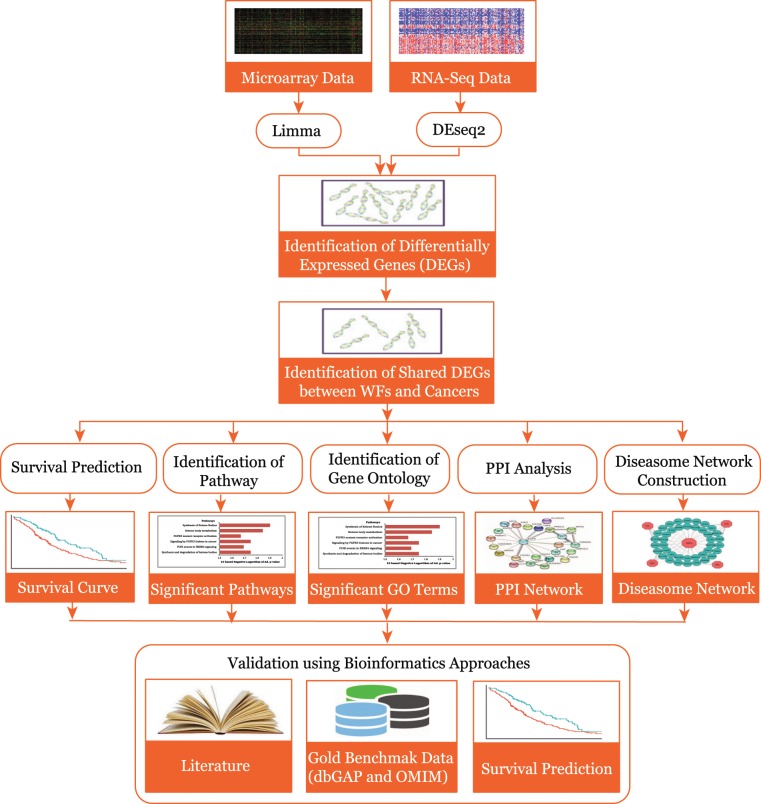
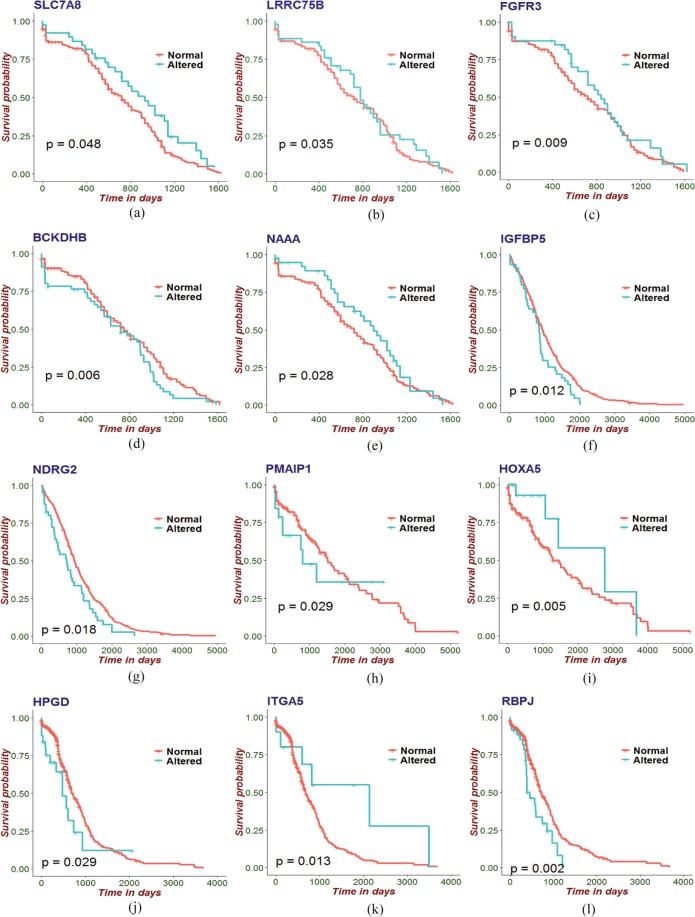
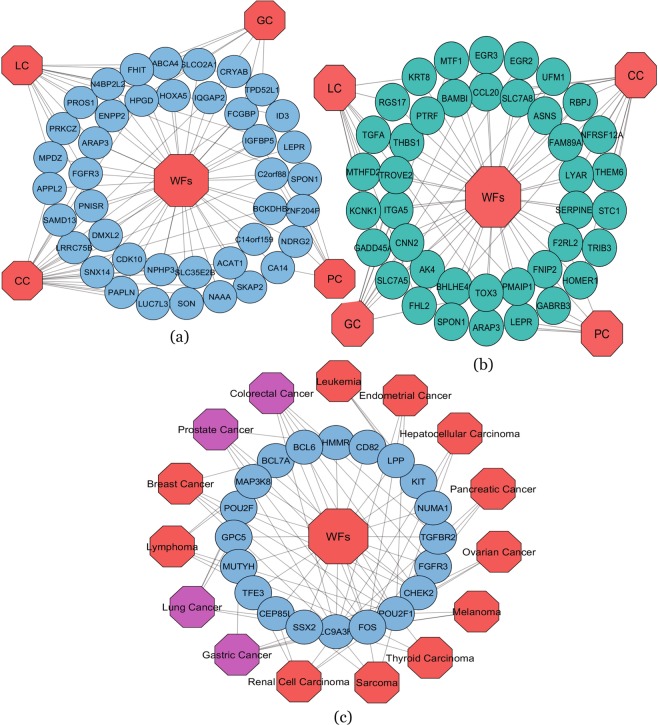
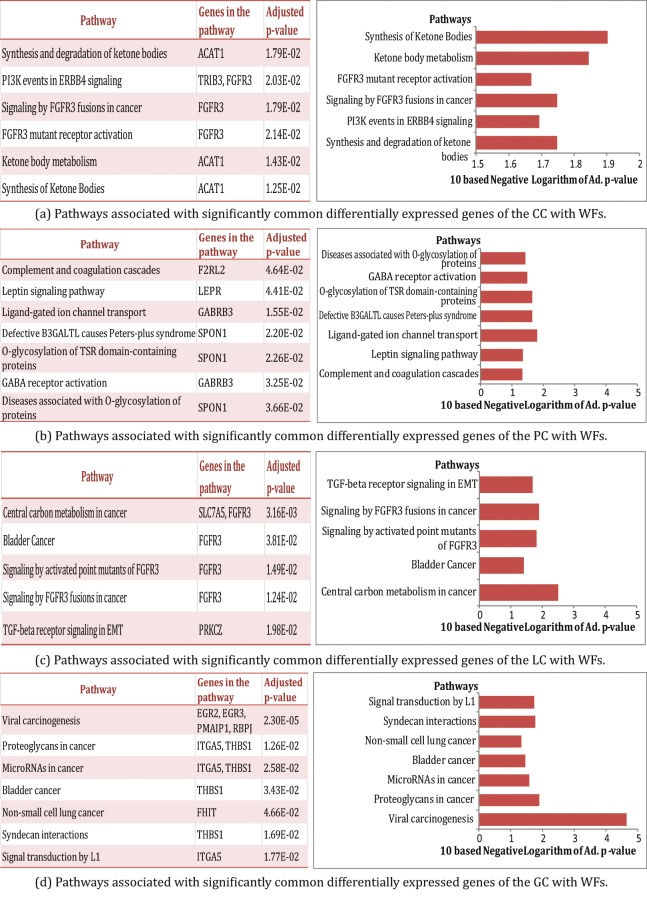
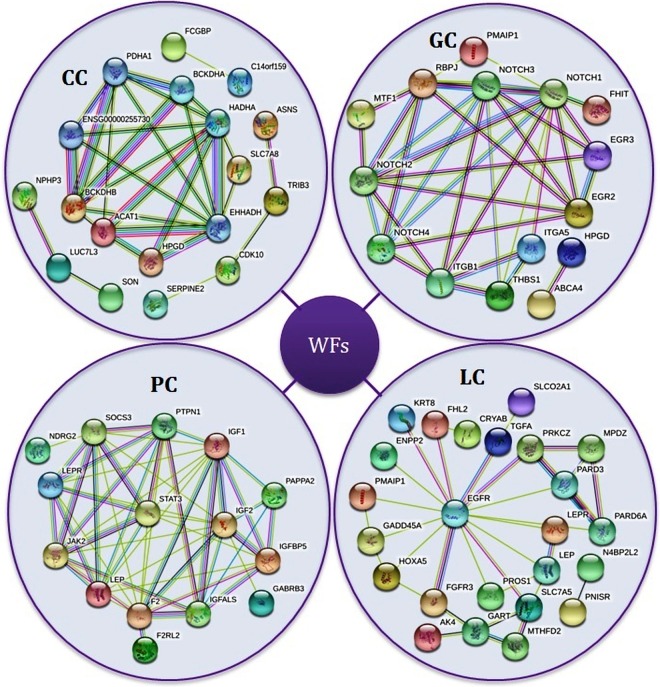
Welding generates and releases fumes that are hazardous to human health. Welding fumes (WFs) are a complex mix of metallic oxides, fluorides and silicates that can cause or exacerbate health problems in exposed individuals. In particular, WF inhalation over an extended period carries an increased risk of cancer, but how WFs may influence cancer behaviour or growth is unclear. To address this issue we employed a quantitative analytical framework to identify the gene expression effects of WFs that may affect the subsequent behaviour of the cancers. We examined datasets of transcript analyses made using microarray studies of WF-exposed tissues and of cancers, including datasets from colorectal cancer (CC), prostate cancer (PC), lung cancer (LC) and gastric cancer (GC). We constructed gene-disease association networks, identified signaling and ontological pathways, clustered protein-protein interaction network using multilayer network topology, and analyzed survival function of the significant genes using Cox proportional hazards (Cox PH) model and product-limit (PL) estimator. We observed that WF exposure causes altered expression of many genes (36, 13, 25 and 17 respectively) whose expression are also altered in CC, PC, LC and GC. Gene-disease association networks, signaling and ontological pathways, protein-protein interaction network, and survival functions of the significant genes suggest ways that WFs may influence the progression of CC, PC, LC and GC. This quantitative analytical framework has identified potentially novel mechanisms by which tissue WF exposure may lead to gene expression changes in tissue gene expression that affect cancer behaviour and, thus, cancer progression, growth or establishment.
焊接会产生和释放对人体健康有害的烟雾。焊接烟尘(Welding Fumes,WFs)是一种复杂的金属氧化物、氟化物和硅酸盐混合物,可导致或加剧暴露个体的健康问题。特别是,长期吸入焊接烟尘会增加患癌症的风险,但焊接烟尘如何影响癌症的行为或生长尚不清楚。为了解决这个问题,我们采用了定量分析框架来确定焊接烟尘可能影响癌症后续行为的基因表达效应。我们检查了使用微阵列研究 WF 暴露组织和癌症的转录分析数据集,包括结直肠癌(Colorectal Cancer,CC)、前列腺癌(Prostate Cancer,PC)、肺癌(Lung Cancer,LC)和胃癌(Gastric Cancer,GC)的数据集。我们构建了基因-疾病关联网络,识别了信号和本体论途径,使用多层网络拓扑聚类蛋白质-蛋白质相互作用网络,并使用 Cox 比例风险(Cox PH)模型和乘积限(PL)估计器分析显著基因的生存功能。我们观察到,WF 暴露会导致许多基因的表达发生改变(分别为 36、13、25 和 17),这些基因在 CC、PC、LC 和 GC 中的表达也发生了改变。基因-疾病关联网络、信号和本体论途径、蛋白质-蛋白质相互作用网络以及显著基因的生存功能表明,WF 可能通过多种方式影响 CC、PC、LC 和 GC 的进展。这种定量分析框架已经确定了组织 WF 暴露可能导致组织基因表达中基因表达变化的潜在新机制,这些变化会影响癌症的行为,从而影响癌症的进展、生长或建立。