Department of Psychiatry, University of Texas Southwestern Medical Center, Dallas, TX, USA.
Department of Neurology and Neurotherapeutics, UT Southwestern Medical Center, Dallas, TX, USA.
Sci Rep. 2020 Feb 17;10(1):2737. doi: 10.1038/s41598-020-59419-z.
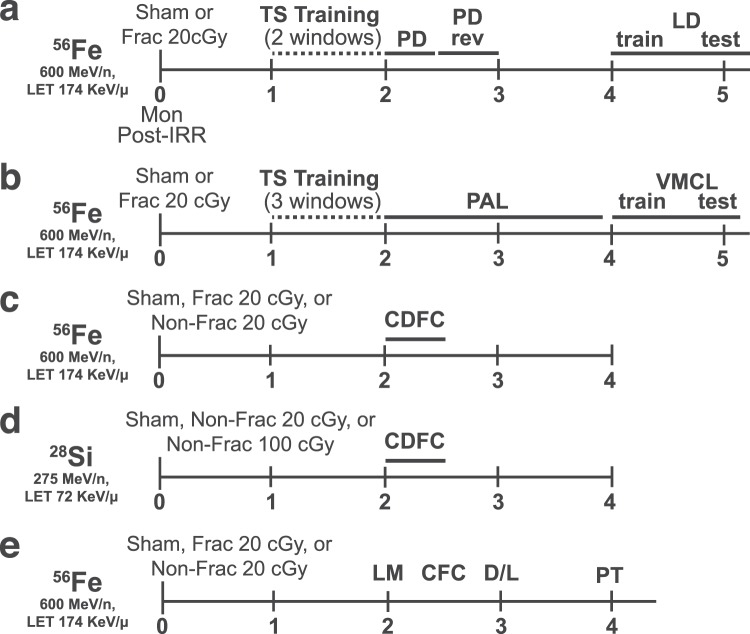
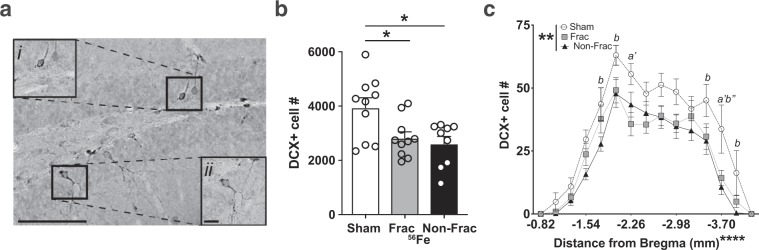
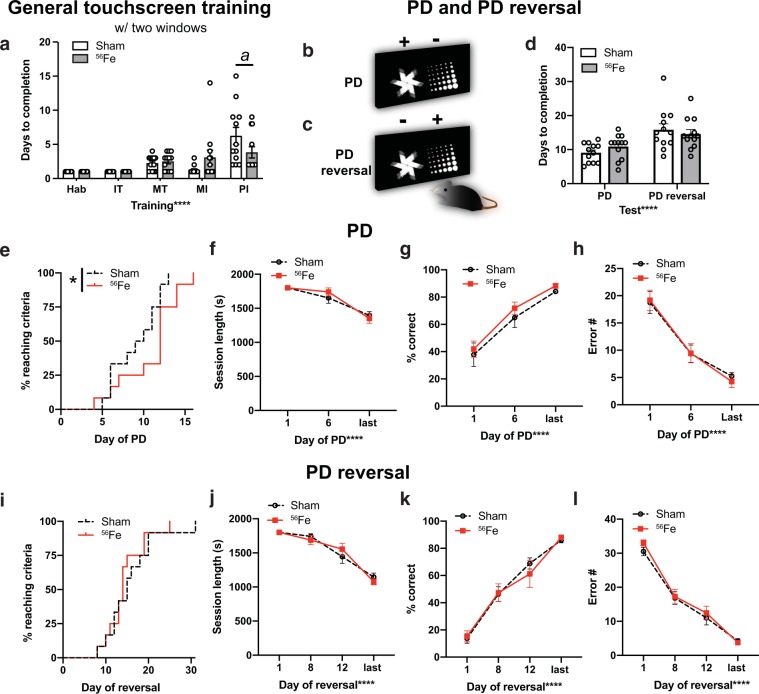
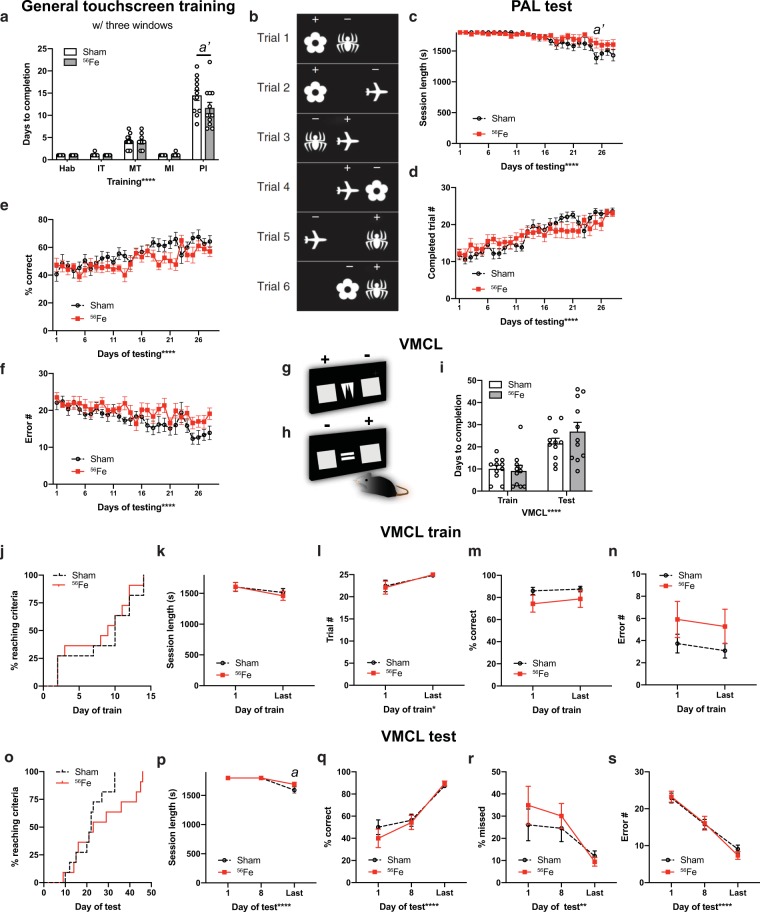
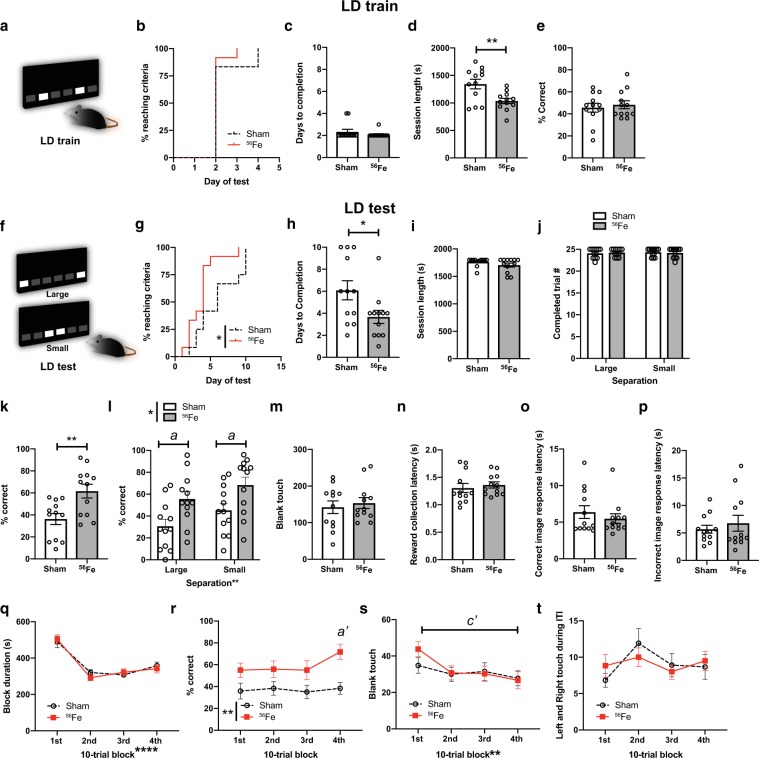
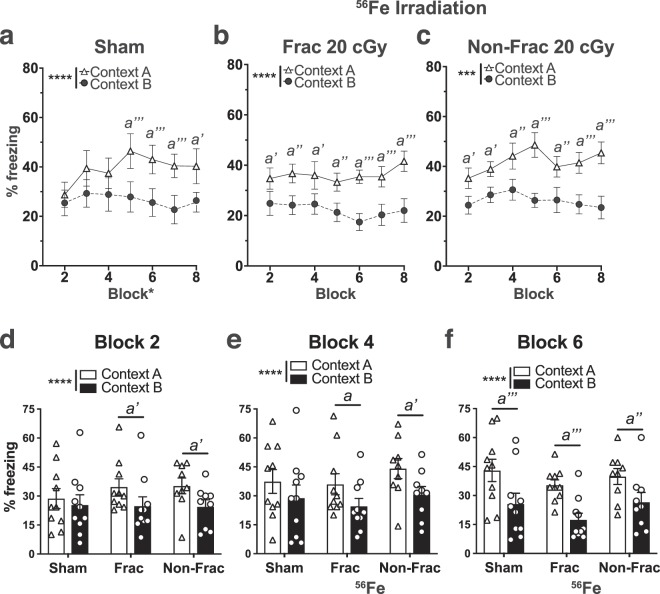
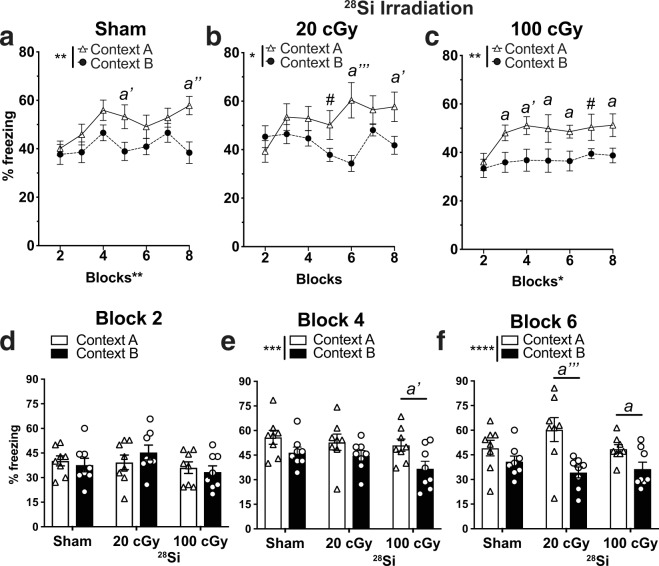
Astronauts on interplanetary missions - such as to Mars - will be exposed to space radiation, a spectrum of highly-charged, fast-moving particles that includes Fe and Si. Earth-based preclinical studies show space radiation decreases rodent performance in low- and some high-level cognitive tasks. Given astronaut use of touchscreen platforms during training and space flight and given the ability of rodent touchscreen tasks to assess functional integrity of brain circuits and multiple cognitive domains in a non-aversive way, here we exposed 6-month-old C57BL/6J male mice to whole-body space radiation and subsequently assessed them on a touchscreen battery. Relative to Sham treatment, Fe irradiation did not overtly change performance on tasks of visual discrimination, reversal learning, rule-based, or object-spatial paired associates learning, suggesting preserved functional integrity of supporting brain circuits. Surprisingly, Fe irradiation improved performance on a dentate gyrus-reliant pattern separation task; irradiated mice learned faster and were more accurate than controls. Improved pattern separation performance did not appear to be touchscreen-, radiation particle-, or neurogenesis-dependent, as Fe and Si irradiation led to faster context discrimination in a non-touchscreen task and Fe decreased new dentate gyrus neurons relative to Sham. These data urge revisitation of the broadly-held view that space radiation is detrimental to cognition.
星际任务(如火星任务)中的宇航员将暴露于太空辐射中,这是一种高速运动的带高电荷的粒子,其中包括 Fe 和 Si。基于地面的临床前研究表明,太空辐射会降低啮齿动物在低水平和一些高水平认知任务中的表现。鉴于宇航员在训练和太空飞行期间使用触摸屏平台,并且啮齿动物的触摸屏任务能够以非痛苦的方式评估大脑回路和多个认知领域的功能完整性,在这里,我们让 6 个月大的 C57BL/6J 雄性小鼠接受全身太空辐射,然后在触摸屏上进行电池测试。与假辐射处理相比,Fe 辐射并没有明显改变视觉辨别、反转学习、基于规则或物体空间配对联想学习任务的表现,这表明支持大脑回路的功能完整性得到了保留。令人惊讶的是,Fe 辐射改善了依赖于齿状回的模式分离任务的表现;辐射后的老鼠比对照组学习更快、更准确。模式分离性能的提高似乎与触摸屏、辐射粒子或神经发生无关,因为 Fe 和 Si 辐射导致在非触摸屏任务中更快地进行上下文辨别,并且 Fe 相对于假辐射减少了新的齿状回神经元。这些数据促使重新审视普遍认为太空辐射对认知有害的观点。