Division of Gastroenterology and Hepatology, Medical University of Graz, Graz, Austria.
Center for Biomarker Research in Medicine (CBmed), Graz, Austria.
Sci Rep. 2020 Feb 17;10(1):2723. doi: 10.1038/s41598-020-59550-x.
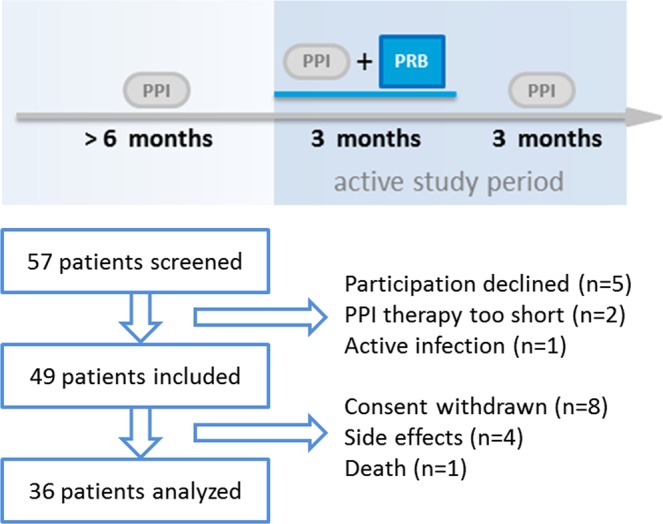
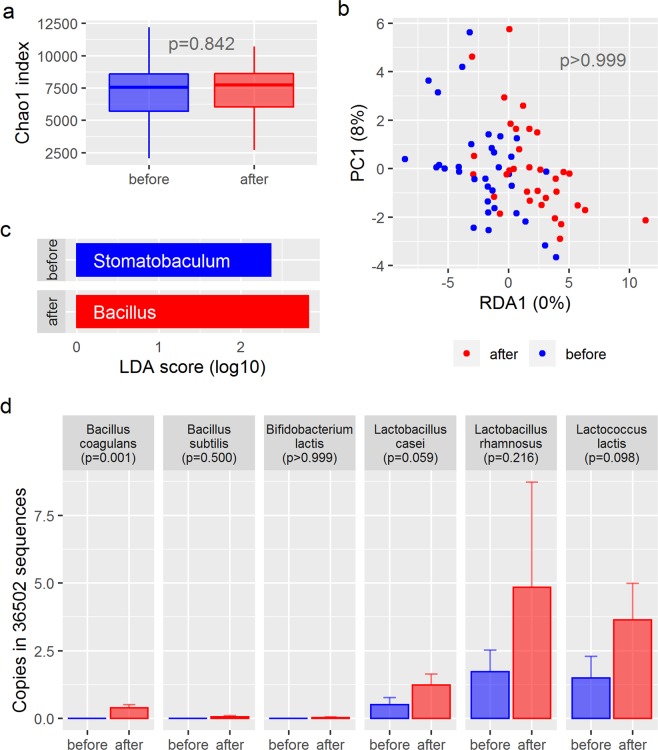
Side effects of proton pump inhibitors (PPI) can be linked to the changes in the intestinal microbiome that occur during therapy, especially in long-term users. Therefore, the microbiome might also be a key player in the reduction of PPI side effects. We tested the effects of a three-month intervention with a multispecies synbiotic on intestinal inflammation, gut barrier function, microbiome composition, routine laboratory parameters and quality of life in patients with long-term PPI therapy. Thirty-six patients received a daily dose of a multispecies synbiotic for three months and were clinically observed without intervention for another three months. After intervention 17% of patients reached normal calprotectin levels; the overall reduction did not reach statistical significance (-18.8 ng/mg; 95%CI: -50.5; 12.9, p = 0.2). Elevated zonulin levels could be significantly reduced (-46.3 ng/mg; 95%CI: -71.4; -21.2; p < 0.001). The abundance of Stomatobaculum in the microbiome was reduced and Bacillus increased during the intervention. Furthermore, albumin, alkaline phosphatase and thrombocyte count were significantly increased and aspartate transaminase was significantly decreased during intervention. Gastrointestinal quality of life showed significant improvements. In conclusion, microbiome-related side effects of long-term PPI use can be substantially reduced by synbiotic intervention. Further studies are warranted to optimize dosage and duration of the intervention.
质子泵抑制剂 (PPI) 的副作用可能与治疗过程中肠道微生物组的变化有关,尤其是在长期使用者中。因此,微生物组也可能是减少 PPI 副作用的关键因素。我们测试了为期三个月的多菌种合生剂干预对长期接受 PPI 治疗的患者肠道炎症、肠道屏障功能、微生物组组成、常规实验室参数和生活质量的影响。36 名患者每天服用多菌种合生剂三个月,并在没有干预的情况下再临床观察三个月。干预后,17%的患者达到正常钙卫蛋白水平;总体减少没有达到统计学意义(-18.8ng/mg;95%CI:-50.5;12.9,p=0.2)。升高的紧密连接蛋白水平可显著降低(-46.3ng/mg;95%CI:-71.4;-21.2;p<0.001)。在干预过程中,微生物组中的 Stomatobaculum 丰度减少,而 Bacillus 增加。此外,白蛋白、碱性磷酸酶和血小板计数在干预期间显著增加,天冬氨酸转氨酶显著降低。胃肠道生活质量也显著改善。总之,合生剂干预可显著减少长期使用 PPI 引起的与微生物组相关的副作用。需要进一步研究以优化干预的剂量和持续时间。