Bokas Alexandros, Papakotoulas Pavlos, Sarantis Panagiotis, Papadimitropoulou Adriana, Papavassiliou Athanasios G, Karamouzis Michalis V
st Department of Medical Oncology, Theagenion Hospital, 54007 Thessaloniki, Greece.
Molecular Oncology Unit, Department of Biological Chemistry, Medical School, National and Kapodistrian University of Athens, 11527 Athens, Greece.
Cancers (Basel). 2020 Feb 13;12(2):432. doi: 10.3390/cancers12020432.
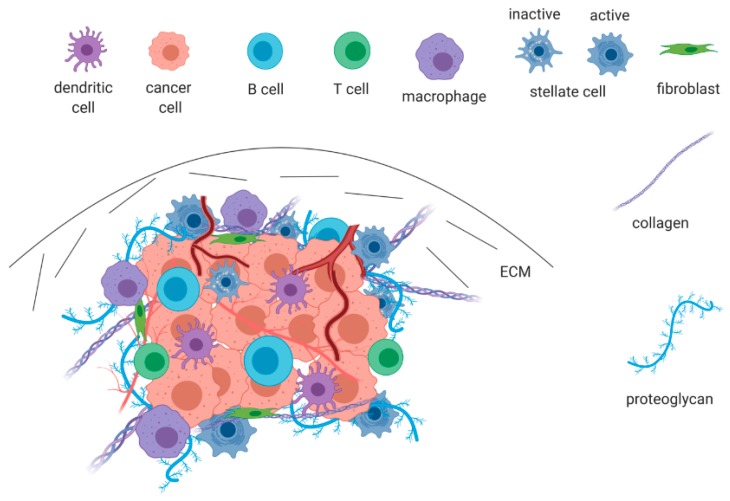
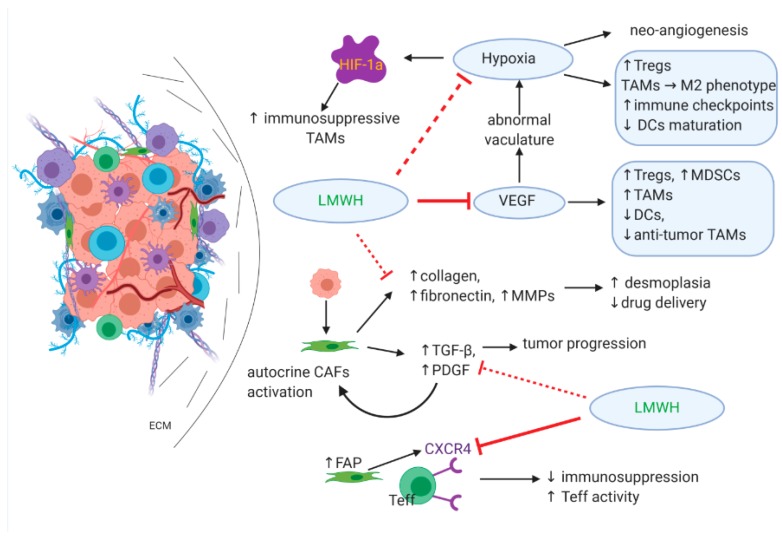
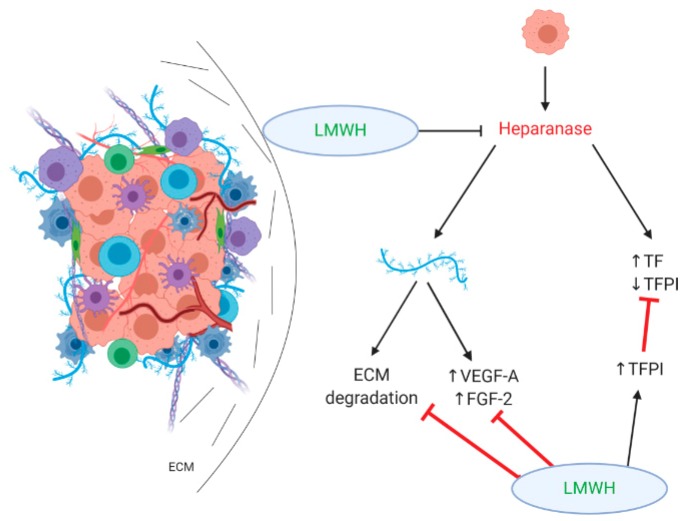
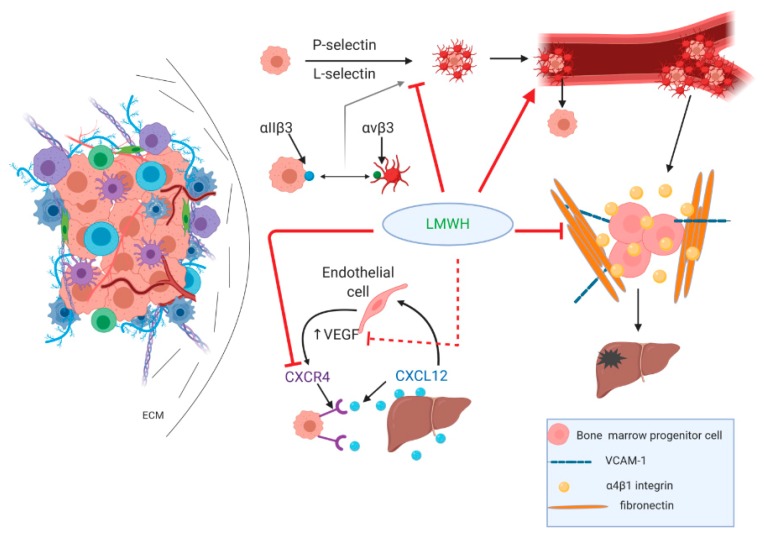
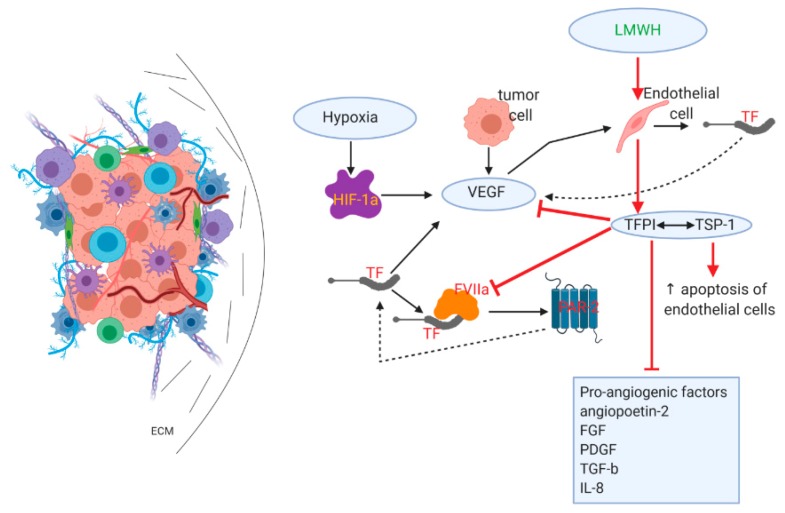
Immune checkpoint inhibitors have revolutionized cancer treatment in the last decade. Despite the progress in immunotherapy, most pancreatic cancer patients still do not derive benefit when receiving immune-based therapies. Recently, resistance mechanisms to immune therapies have been mainly focused on tumor microenvironment properties. Pancreatic cancer is considered one of the most lethal and difficult to treat tumors due to its highly immunosuppressive and desmoplastic microenvironment. Low molecular weight heparins (LMWHs) have been used for the treatment and prevention of thromboembolic disease in these patients. However, many nonanticoagulant properties attributed to LMWHs have been described. Exploiting LMWH properties in a combined treatment modality with immune checkpoint inhibition and chemotherapy could provide a new approach in the management of pancreatic adenocarcinoma patients. The ability of LMWH to interfere with various aspects of the tumor microenvironment could result in both the alleviation of immunosuppression and improvement in drug delivery within the tumor, leading to higher cancer cell destruction rates and more potent immune system activity that would, ultimately, lead to better patient outcomes.
在过去十年中,免疫检查点抑制剂彻底改变了癌症治疗方式。尽管免疫疗法取得了进展,但大多数胰腺癌患者在接受基于免疫的治疗时仍无法获益。最近,免疫疗法的耐药机制主要集中在肿瘤微环境特性上。由于其高度免疫抑制和促结缔组织增生的微环境,胰腺癌被认为是最致命且最难治疗的肿瘤之一。低分子量肝素(LMWHs)已被用于这些患者血栓栓塞性疾病的治疗和预防。然而,LMWHs还具有许多非抗凝特性。在免疫检查点抑制和化疗的联合治疗模式中利用LMWHs的特性,可能为胰腺腺癌患者的管理提供一种新方法。LMWH干扰肿瘤微环境各个方面的能力,可能会减轻免疫抑制并改善肿瘤内的药物递送,从而导致更高的癌细胞破坏率和更强的免疫系统活性,最终为患者带来更好的治疗效果。