Farag Mohamed A, Abdelwareth Amr, Sallam Ibrahim E, El Shorbagi Mohamed, Jehmlich Nico, Fritz-Wallace Katarina, Serena Schäpe Stephanie, Rolle-Kampczyk Ulrike, Ehrlich Anja, Wessjohann Ludger A, von Bergen Martin
Pharmacognosy Department, College of Pharmacy, Cairo University, Kasr el Aini St., Cairo 11562, Egypt.
Department of Chemistry, School of Sciences & Engineering, The American University in Cairo, New Cairo 11835, Egypt.
J Adv Res. 2020 Jan 3;23:47-59. doi: 10.1016/j.jare.2020.01.001. eCollection 2020 May.
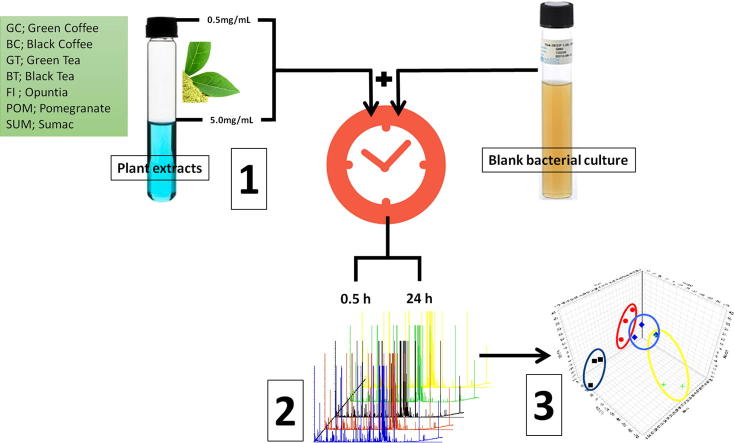
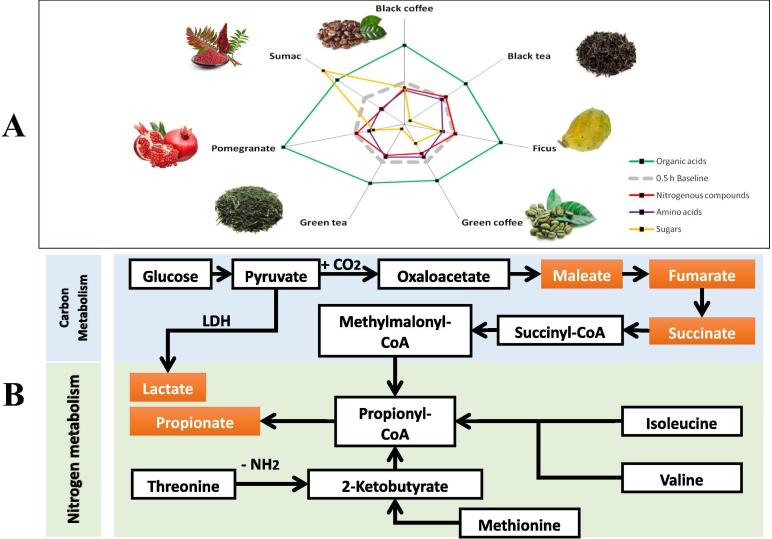
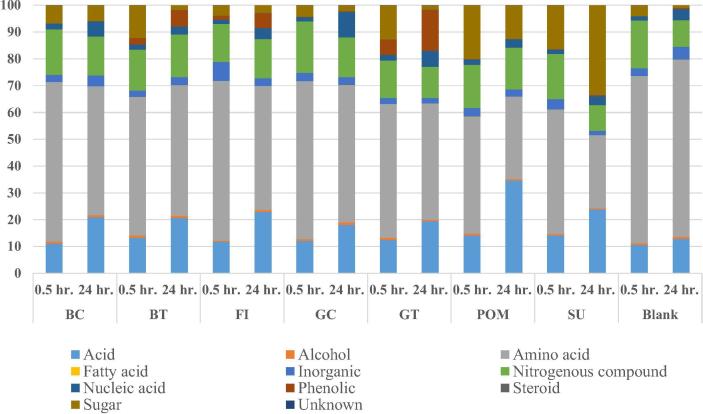
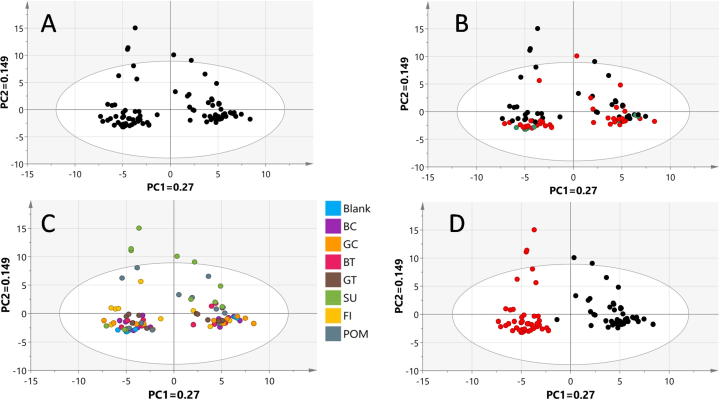
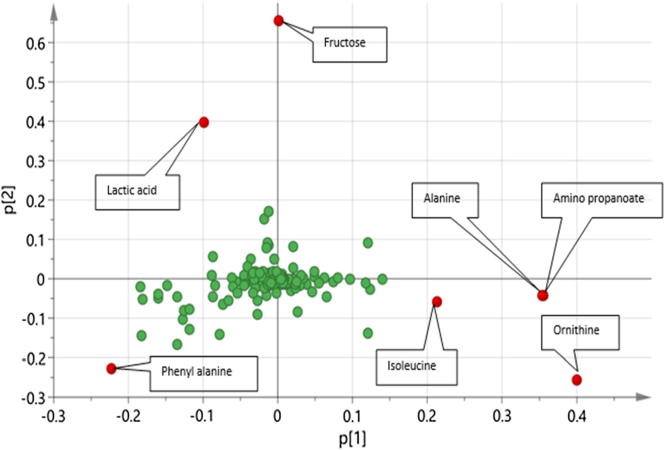
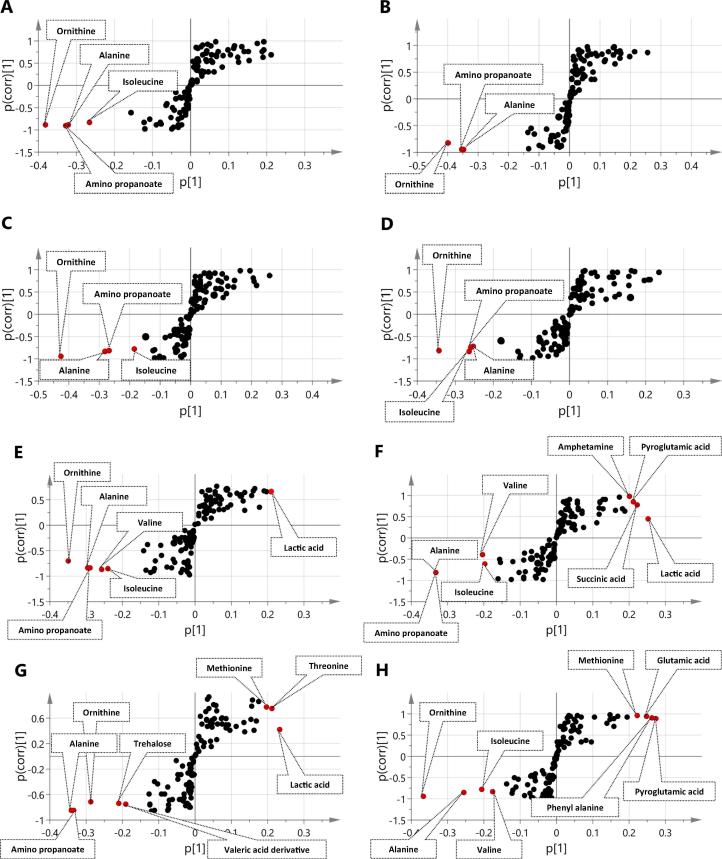
Functional food defined as dietary supplements that in addition to their nutritional values, can beneficially modulate body functions becomes more and more popular but the reaction of the intestinal microbiota to it is largely unknown. In order to analyse the impact of functional food on the microbiota itself it is necessary to focus on the physiology of the microbiota, which can be assessed in a whole by untargeted metabolomics. Obtaining a detailed description of the gut microbiota reaction to food ingredients can be a key to understand how these organisms regulate and bioprocess many of these food components. Extracts prepared from seven chief functional foods, namely green tea, black tea, (prickly pear, cactus pear), black coffee, green coffee, pomegranate, and sumac were administered to a gut consortium culture encompassing 8 microbes which are resembling, to a large extent, the metabolic activities found in the human gut. Samples were harvested at 0.5 and 24 h post addition of functional food extract and from blank culture in parallel and analysed for its metabolites composition using gas chromatography coupled to mass spectrometry detection (GC-MS). A total of 131 metabolites were identified belonging to organic acids, alcohols, amino acids, fatty acids, inorganic compounds, nitrogenous compounds, nucleic acids, phenolics, steroids and sugars, with amino acids as the most abundant class in cultures. Considering the complexity of such datasets, multivariate data analyses were employed to classify samples and investigate how functional foods influence gut microbiota metabolisms. Results from this study provided a first insights regarding how functional foods alter gut metabolism through either induction or inhibition of certain metabolic pathways, i.e. GABA production in the presence of higher acidity induced by functional food metabolites such as polyphenols. Likewise, functional food metabolites ., purine alkaloids acted themselves as direct substrate in microbiota metabolism.
功能性食品被定义为除营养价值外还能有益地调节身体功能的膳食补充剂,它越来越受欢迎,但肠道微生物群对其的反应在很大程度上尚不清楚。为了分析功能性食品对微生物群自身的影响,有必要关注微生物群的生理学,这可以通过非靶向代谢组学整体评估。获得肠道微生物群对食品成分反应的详细描述可能是理解这些生物体如何调节和生物加工许多此类食品成分的关键。从七种主要功能性食品,即绿茶、红茶、(仙人掌果)、黑咖啡、绿咖啡、石榴和漆树中制备的提取物被施用于包含8种微生物的肠道菌群培养物中,这些微生物在很大程度上类似于人类肠道中发现的代谢活动。在添加功能性食品提取物后0.5小时和24小时以及平行的空白培养物中采集样品,并使用气相色谱-质谱检测(GC-MS)分析其代谢物组成。总共鉴定出131种代谢物,属于有机酸、醇、氨基酸、脂肪酸、无机化合物、含氮化合物、核酸、酚类、类固醇和糖类,其中氨基酸是培养物中最丰富的类别。考虑到此类数据集的复杂性,采用多变量数据分析对样品进行分类,并研究功能性食品如何影响肠道微生物群代谢。这项研究的结果首次揭示了功能性食品如何通过诱导或抑制某些代谢途径改变肠道代谢,例如在功能性食品代谢物如多酚诱导的较高酸度下γ-氨基丁酸的产生。同样,功能性食品代谢物,即嘌呤生物碱本身作为微生物群代谢的直接底物发挥作用。