Department of Sport Management, University of Florida, Gainesville, FL 32611, USA.
Department of Health Education and Promotion, East Carolina University, Greenville, NC 27858, USA.
Int J Environ Res Public Health. 2020 Feb 14;17(4):1225. doi: 10.3390/ijerph17041225.
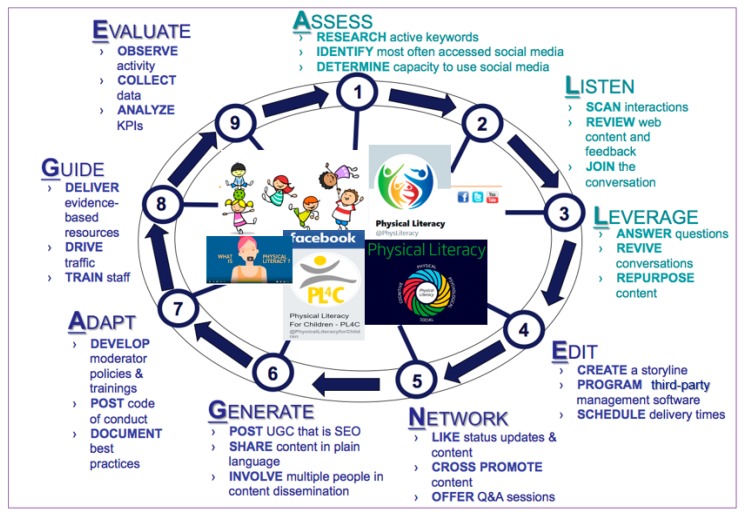
The rapid development of social media has led to its increased use by children and adolescents for health and well-being purposes. Accordingly, social interactions resulting from social media use can be further integrated into physical and health education pedagogy. Given the relationship between increased physical literacy and positive health outcomes, best practices and lessons learned from social media use in the healthcare industry should be adopted by health and physical educators practicing in schools. Thus, the purpose of this paper is to comment on several practical and ethical challenges and opportunities associated with using social media to improve physical literacy among youth. Specifically, two of the most prominent issues are discussed in depth: (1) integration of social media in physical education settings that educate children and adolescents about the biopsychosocial effects of physical activity, and (2) use of wearable technologies among youth to accrue experiences that enhance physical literacy competencies. In our opinion, health and physical educators who utilize the ALL-ENGAGE Playbook described in this commentary will successfully reach, engage, and impact students with popular social media that adequately promotes physical literacy, including through experiential use of wearable technologies.
社交媒体的迅速发展导致儿童和青少年越来越多地将其用于健康和福祉目的。因此,社交媒体使用产生的社交互动可以进一步融入到体育和健康教育教学法中。鉴于身体素养的提高与健康结果之间的关系,在学校从事健康和体育教育的教育工作者应该采用医疗保健行业从社交媒体使用中获得的最佳实践和经验教训。因此,本文的目的是评论使用社交媒体提高青少年身体素养相关的一些实际和伦理挑战与机遇。具体而言,深入讨论了两个最突出的问题:(1)在体育教育环境中整合社交媒体,教育儿童和青少年了解身体活动的身心社会影响,以及(2)在青少年中使用可穿戴技术来积累增强身体素养能力的经验。在我们看来,使用本文评论中描述的 ALL-ENGAGE Playbook 的健康和体育教育工作者将通过流行的社交媒体成功地接触、吸引和影响学生,这些社交媒体充分促进了身体素养,包括通过可穿戴技术的体验式使用。