Muniyandi Priyadharshni, Palaninathan Vivekanandan, Veeranarayanan Srivani, Ukai Tomofumi, Maekawa Toru, Hanajiri Tatsuro, Mohamed Mohamed Sheikh
Graduate School of Interdisciplinary New Science, Toyo University, Kawagoe, Saitama 350-8585, Japan.
Bio-Nano Electronics Research Centre, Toyo University, Kawagoe, Saitama 350-8585, Japan.
Polymers (Basel). 2020 Feb 14;12(2):451. doi: 10.3390/polym12020451.
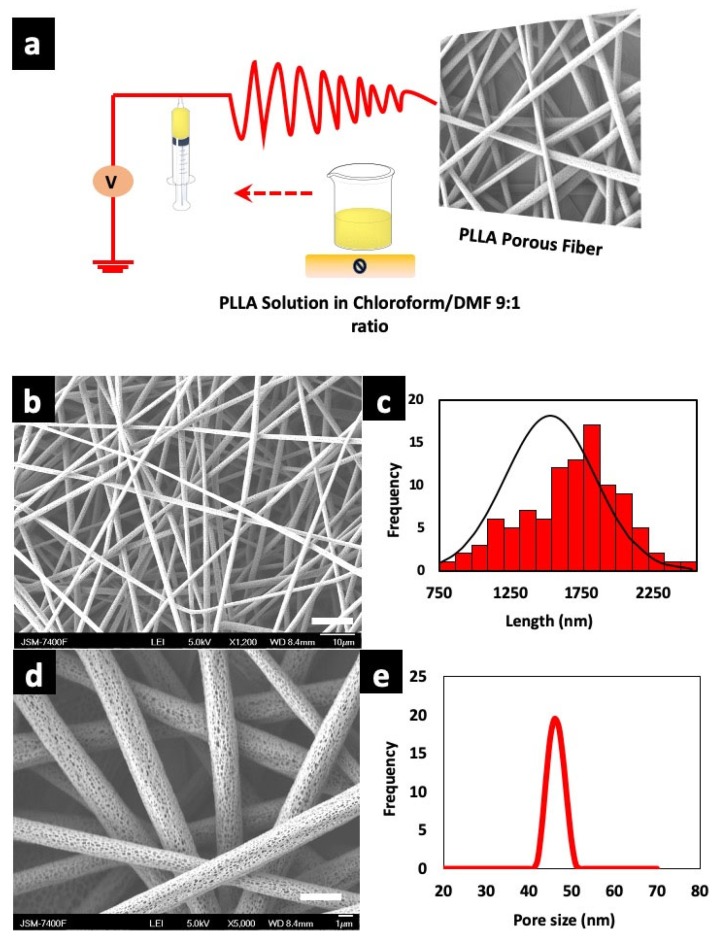
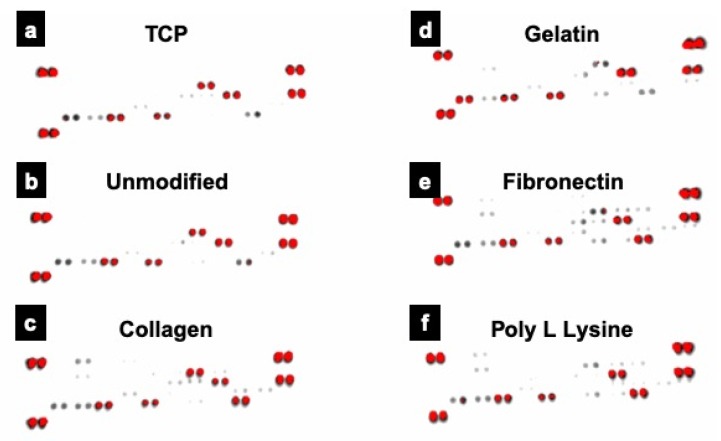
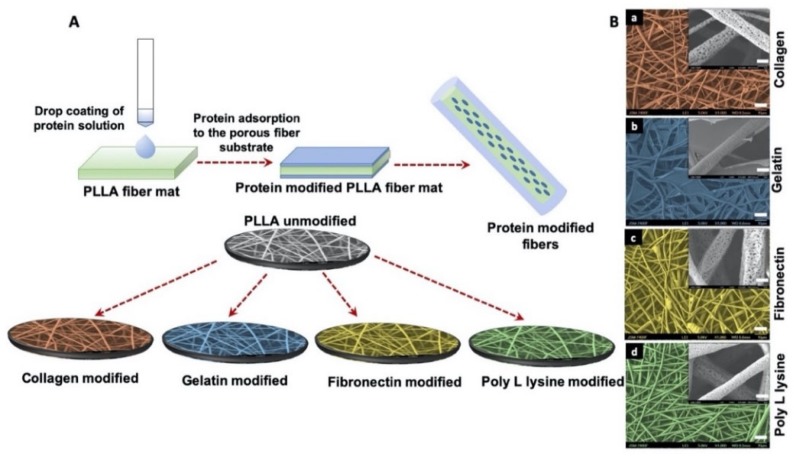
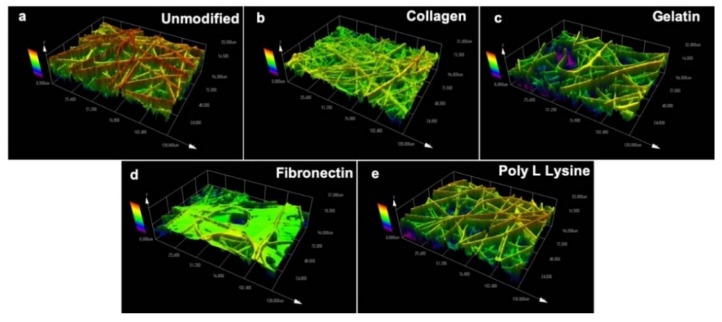
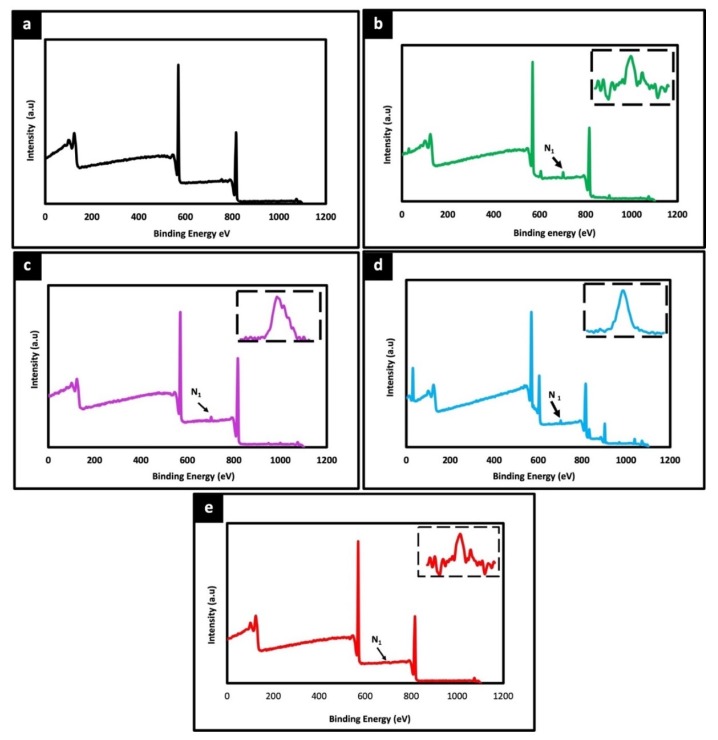
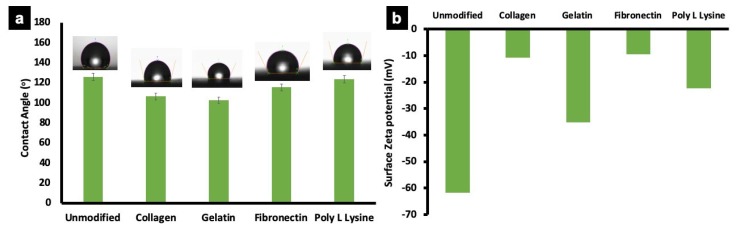
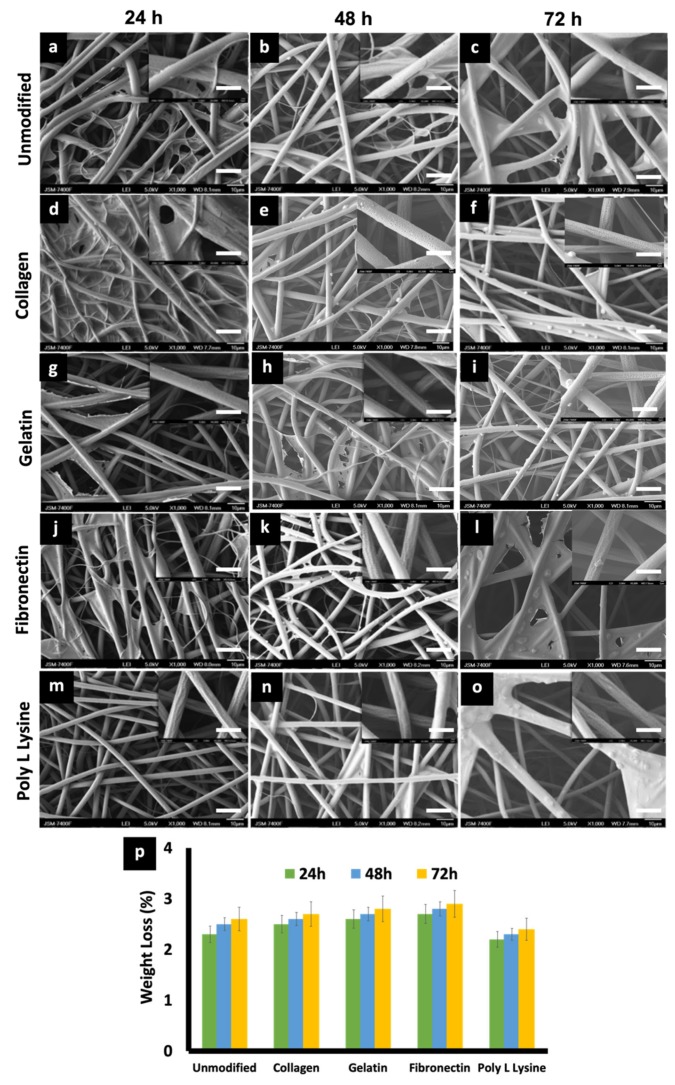
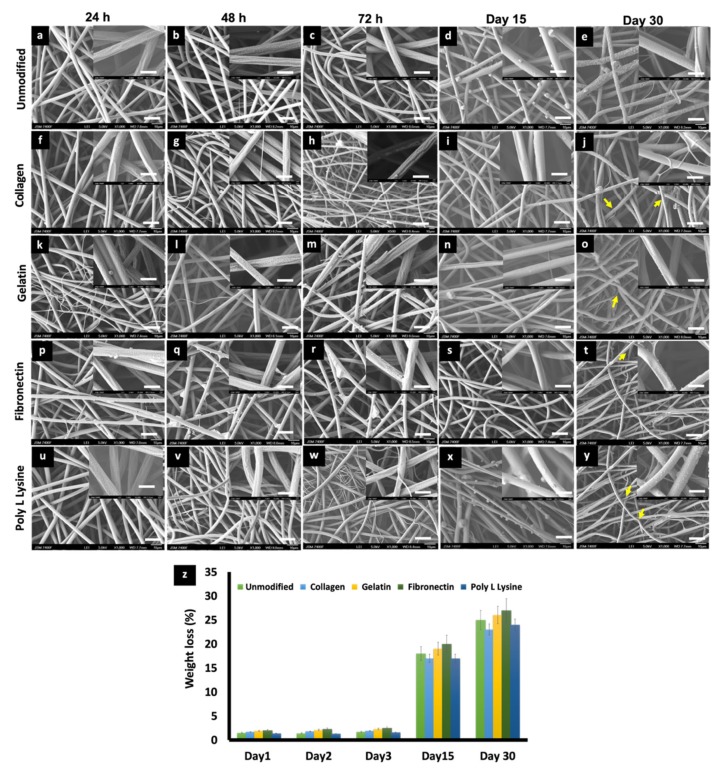
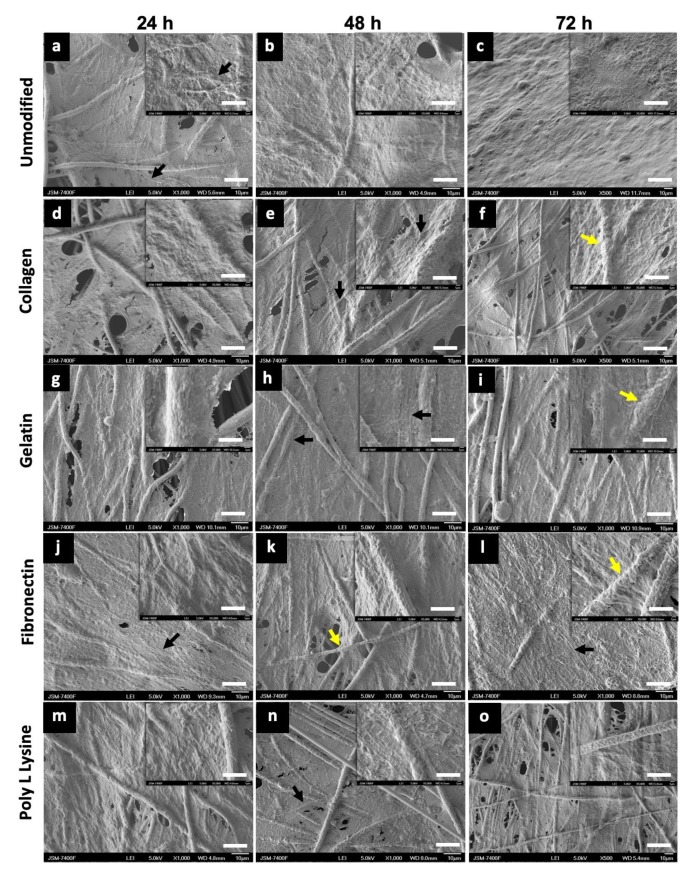
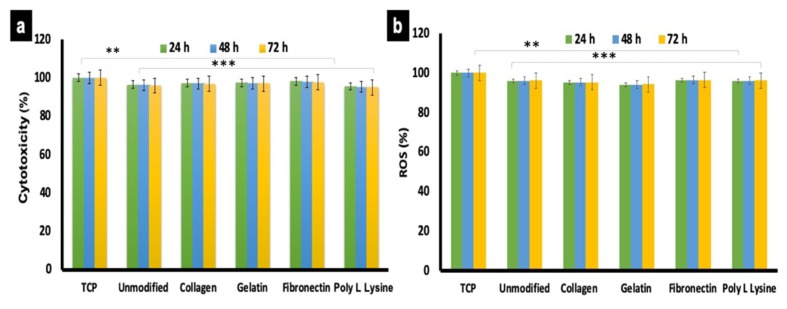
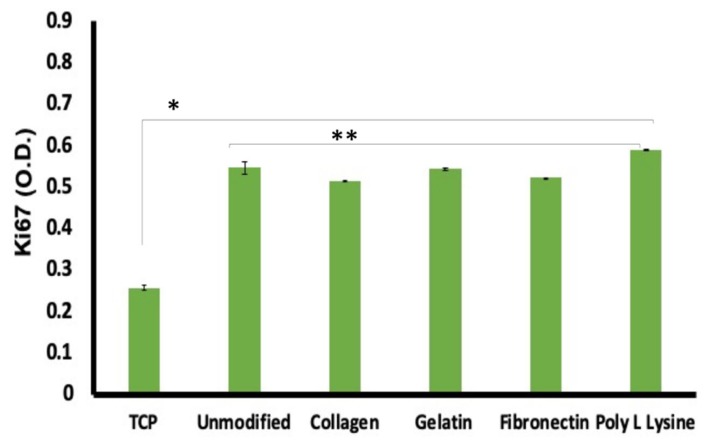
Cardiac tissue engineering (CTE) aims to generate potential scaffolds to mimic extracellular matrix (ECM) for recreating the injured myocardium. Highly porous scaffolds with properties that aid cell adhesion, migration and proliferation are critical in CTE. In this study, electrospun porous poly (l-lactic acid) (PLLA) porous scaffolds were fabricated and modified with different ECM derived proteins such as collagen, gelatin, fibronectin and poly-L-lysine. Subsequently, adult human cardiac fibroblasts (AHCF) were cultured on the protein modified and unmodified fibers to study the cell behavior and guidance. Further, the cytotoxicity and reactive oxygen species (ROS) assessments of the respective fibers were performed to determine their biocompatibility. Excellent cell adhesion and proliferation of the cardiac fibroblasts was observed on the PLLA porous fibers regardless of the surface modifications. The metabolic rate of cells was on par with the conventional cell culture ware while the proliferation rate surpassed the latter by nearly two-folds. Proteome profiling revealed that apart from being an anchorage platform for cells, the surface topography has modulated significant expression of the cellular proteome with many crucial proteins responsible for cardiac fibroblast growth and proliferation.
心脏组织工程(CTE)旨在生成潜在的支架以模拟细胞外基质(ECM),从而再造受损心肌。具有有助于细胞黏附、迁移和增殖特性的高孔隙率支架在心脏组织工程中至关重要。在本研究中,制备了电纺多孔聚左旋乳酸(PLLA)支架,并用不同的源自细胞外基质的蛋白质(如胶原蛋白、明胶、纤连蛋白和聚-L-赖氨酸)进行了修饰。随后,将成人心脏成纤维细胞(AHCF)培养在经蛋白质修饰和未经修饰的纤维上,以研究细胞行为和导向作用。此外,对各纤维进行了细胞毒性和活性氧(ROS)评估,以确定其生物相容性。无论表面修饰如何,在PLLA多孔纤维上均观察到心脏成纤维细胞具有出色的细胞黏附和增殖能力。细胞的代谢率与传统细胞培养器皿相当,而增殖率则比后者高出近两倍。蛋白质组分析表明,除了作为细胞的锚定平台外,表面形貌还调节了细胞蛋白质组的显著表达,其中许多关键蛋白质负责心脏成纤维细胞的生长和增殖。