Department of Nephrology, The Second Hospital of Jilin University, No. 218 Ziqiang Street, Changchun 130021, China.
Department of Spinal Surgery, The First Hospital of Jilin University, No. 71 Xinmin Street, Changchun, Jilin 130021, China.
J Diabetes Res. 2020 Jan 31;2020:9481720. doi: 10.1155/2020/9481720. eCollection 2020.
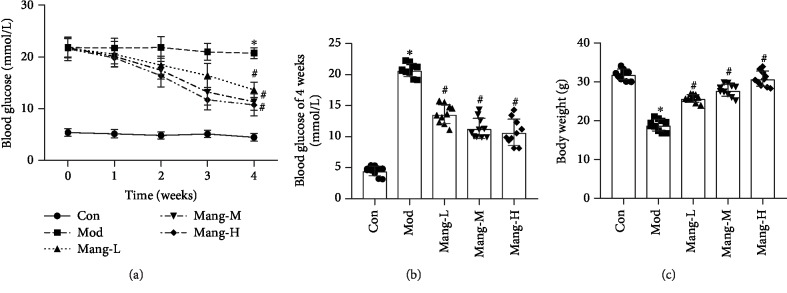
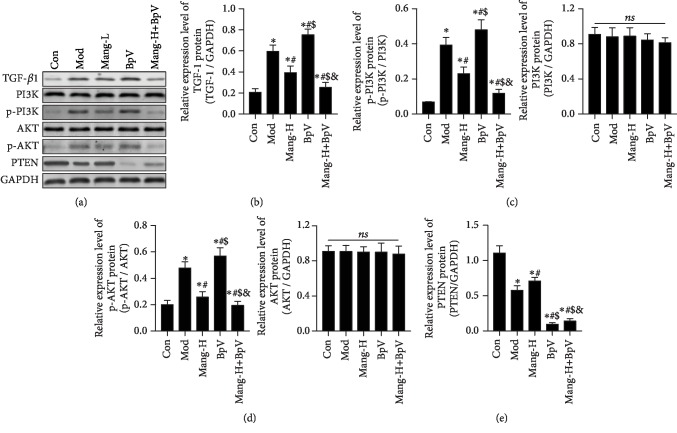
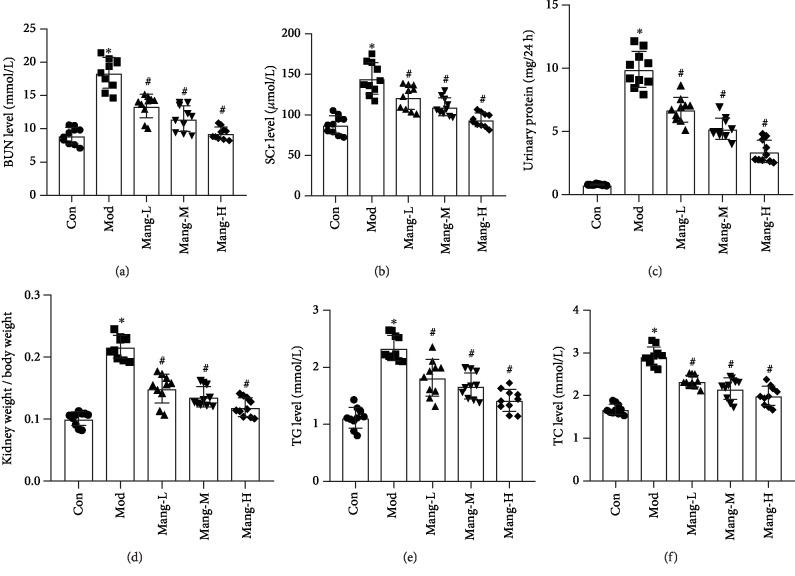
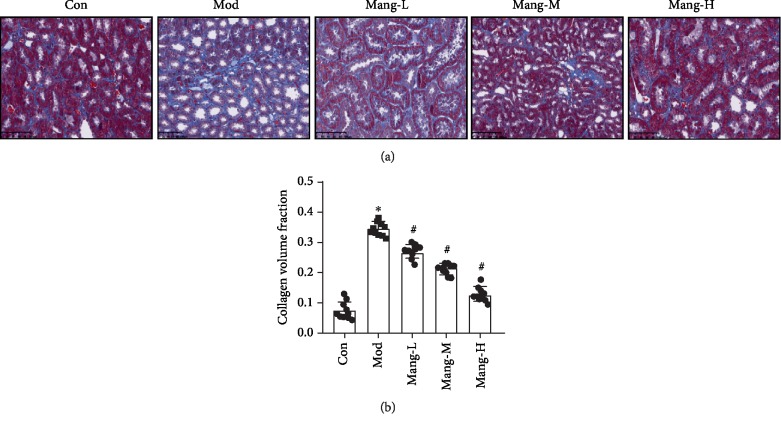
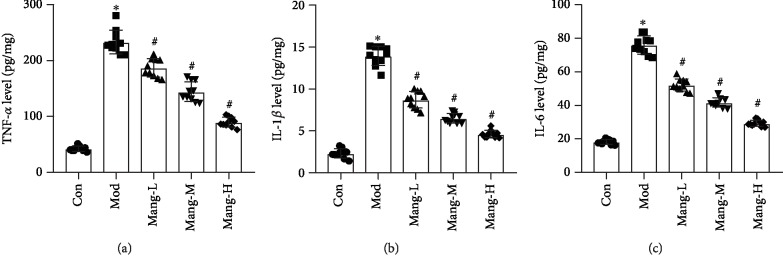
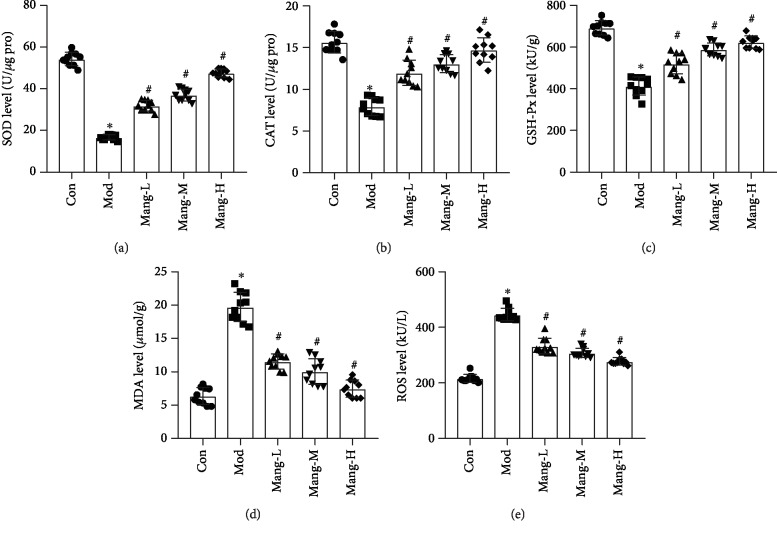
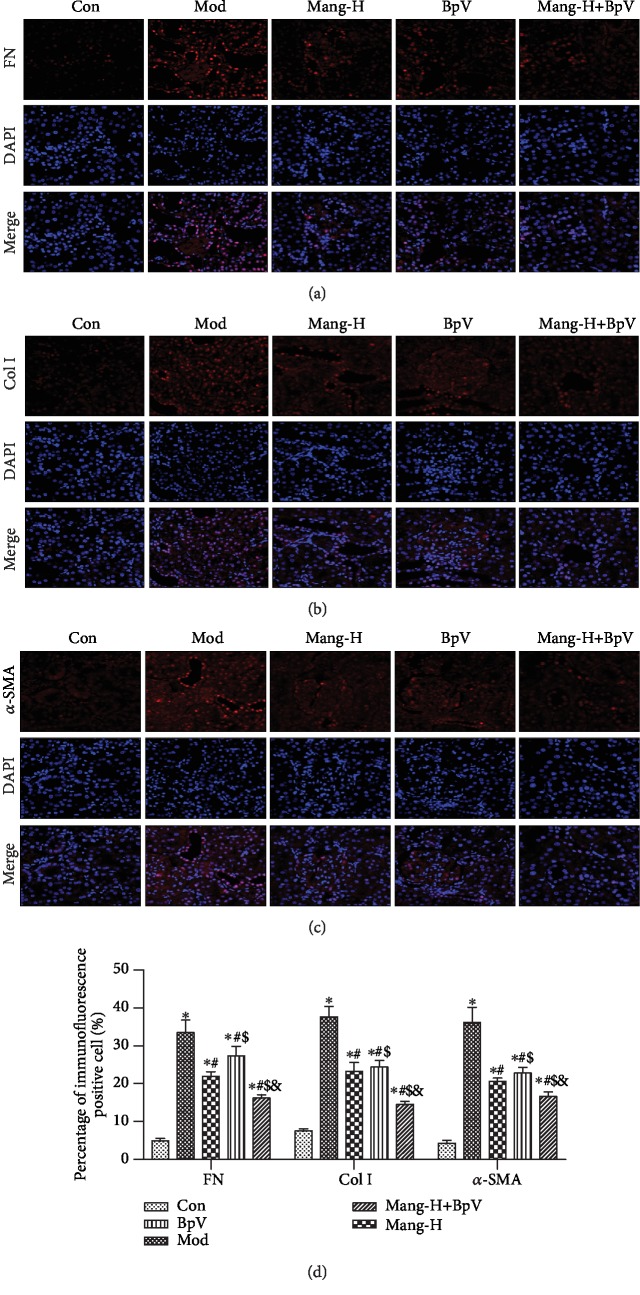
Renal interstitial fibrosis is considered to be the typical manifestation of diabetic nephropathy (DN). Mangiferin has shown positive effect on the prevention or treatment of diabetes and its complications. The aim of this study was to explore the inhibitive effect and mechanism of mangiferin on renal interstitial fibrosis in diabetic mice. Streptozotocin- (STZ-) induced diabetic mice were treated with mangiferin (15, 30, and 60 mg/kg/d) for 4 weeks. The morphology of kidneys was observed by Masson's trichrome staining, and the biochemical parameters (fasting blood glucose (FBG), triglyceride (TG), total cholesterol (TC), blood urea nitrogen (BUN), serum creatinine (SCr), and urine protein) were determined by kits. In addition, the levels of inflammatory cytokines (tumor necrosis factor- (TNF-), interleukin- (IL-) 6, and IL-1), antioxidant enzymes (SOD, CAT, and GSH-Px), MDA, and ROS were assessed. Furthermore, the expressions of fibronectin (FN), collagen I (Col I), and -SMA were measured by immunohistochemistry. Regulations of TGF-1 and the PTEN/PI3K/Akt pathway were detected by Western blotting. Treatment with mangiferin significantly ameliorated renal dysfunction in diabetic mice, as evidenced by the increase in body weight and decreases in FBG, TG, TC, BUN, SCr, urine protein, and the kidney to body weight ratio (KW/BW). Furthermore, mangiferin treatment prevented renal interstitial fibrosis evidenced by decreases in the positive expression of FN, Col I, and -SMA, in comparison with morphological changes in the renal tissue. Meanwhile, mangiferin increased antioxidant enzymes, reduced the TNF-, IL-6, and IL-1, as well as MDA and ROS. Additionally, mangiferin administration also downregulated TGF-1, upregulated PTEN, and decreased the phosphorylation of both PI3K and Akt. These findings demonstrate that mangiferin may reduce inflammation and oxidative stress in DN, thereby inhibiting the renal interstitial fibrosis by reducing the TGF-1-mediated elevation of Col I, FN, and -SMA through the PTEN/PI3K/Akt pathway.
肾间质纤维化被认为是糖尿病肾病(DN)的典型表现。芒果苷对糖尿病及其并发症的预防和治疗有积极作用。本研究旨在探讨芒果苷对糖尿病小鼠肾间质纤维化的抑制作用及其机制。链脲佐菌素(STZ)诱导的糖尿病小鼠用芒果苷(15、30 和 60mg/kg/d)处理 4 周。用 Masson 三色染色观察肾脏形态,试剂盒测定生化参数(空腹血糖(FBG)、甘油三酯(TG)、总胆固醇(TC)、血尿素氮(BUN)、血清肌酐(SCr)和尿蛋白)。此外,还测定了炎症细胞因子(肿瘤坏死因子-(TNF-)、白细胞介素-(IL-)6 和 IL-1)、抗氧化酶(SOD、CAT 和 GSH-Px)、MDA 和 ROS 的水平。进一步用免疫组化法测定纤维连接蛋白(FN)、胶原 I(Col I)和 -SMA 的表达。用 Western blot 法检测 TGF-1 和 PTEN/PI3K/Akt 通路的调节。芒果苷治疗显著改善了糖尿病小鼠的肾功能障碍,表现为体重增加,FBG、TG、TC、BUN、SCr、尿蛋白和肾重比(KW/BW)降低。此外,与肾组织形态变化相比,芒果苷治疗可降低 FN、Col I 和 -SMA 的阳性表达,从而预防肾间质纤维化。同时,芒果苷增加抗氧化酶,减少 TNF-、IL-6 和 IL-1 以及 MDA 和 ROS。此外,芒果苷给药还下调 TGF-1,上调 PTEN,并减少 PI3K 和 Akt 的磷酸化。这些发现表明,芒果苷可能通过降低 TGF-1 介导的 Col I、FN 和 -SMA 升高,通过 PTEN/PI3K/Akt 通路减少炎症和氧化应激,从而抑制 DN 中的肾间质纤维化。