Department of Astronomy, Harvard University, 60 Garden St., Cambridge, MA 02138, USA.
Division of Geological and Planetary Sciences, California Institute of Technology, Pasadena, CA 91125, USA.
Sci Adv. 2020 Feb 5;6(6):eaax3419. doi: 10.1126/sciadv.aax3419. eCollection 2020 Feb.
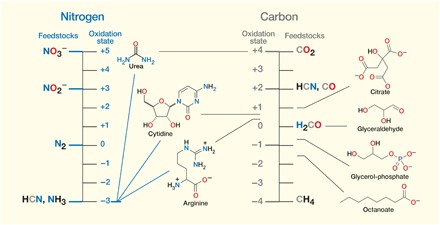
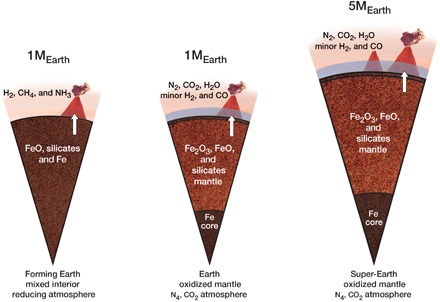
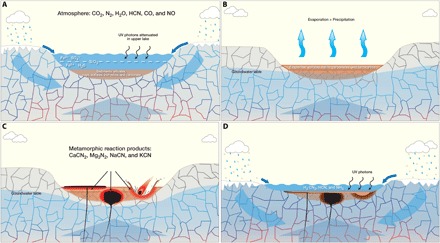
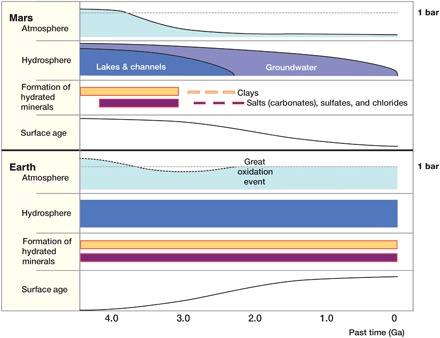
We advocate an integrative approach between laboratory experiments in prebiotic chemistry and geologic, geochemical, and astrophysical observations to help assemble a robust chemical pathway to life that can be reproduced in the laboratory. The cyanosulfidic chemistry scenario described here was developed by such an integrative iterative process. We discuss how it maps onto evolving planetary surface environments on early Earth and Mars and the value of comparative planetary evolution. The results indicate that Mars can offer direct evidence for geochemical conditions similar to prebiotic Earth, whose early record has been erased. The Jezero crater is now the chosen landing site for NASA's Mars 2020 rover, making this an extraordinary opportunity for a breakthrough in understanding life's origins.
我们提倡将前生物化学的实验室实验与地质、地球化学和天体物理观测相结合,以帮助构建一个可以在实验室中复制的稳健的生命化学途径。这里描述的氰硫化学情景就是通过这种综合迭代过程发展起来的。我们讨论了它如何映射到早期地球和火星上不断变化的行星表面环境以及比较行星演化的价值。结果表明,火星可以提供与早期地球相似的地球化学条件的直接证据,而早期地球的记录已经被抹去。杰泽罗陨石坑现在是美国宇航局的火星 2020 漫游者的首选着陆点,这为理解生命起源的突破提供了一个绝佳的机会。