School of Economics and Management, Southwest University of Science and Technology, Mianyang 621010, China.
School of Marxism, Hefei University of Technology, Hefei 230009, China.
Int J Environ Res Public Health. 2020 Feb 17;17(4):1270. doi: 10.3390/ijerph17041270.
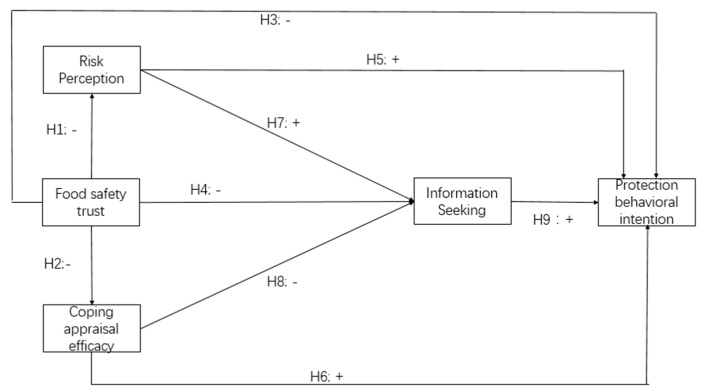
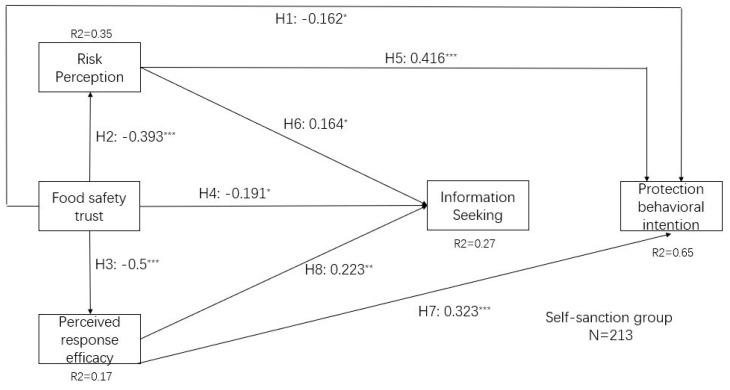
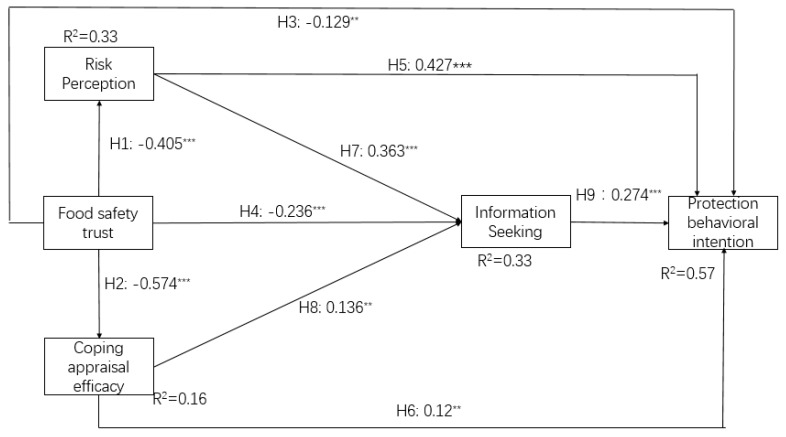
Food recalls have severe impacts on the operation, reputation, and even the survival of a recalling company involved in a crisis, with consumer trust violation being the immediate threat to the recalling firm. The involved firms adopt trust repair strategies and release messages relevant to these actions to the public. In this research, we developed a conceptual model to analyze consumers' general responses to the food recall, and we then compared the effect of two types of consumer trust repair strategies, i.e., self-sanction and information-sharing. The results show that consumer food safety trust has negative impacts on consumers' protective behavioral intention during a food recall crisis. In the scientific-evidence sharing group, consumers have a higher risk perception, coping appraisal efficacy, information-seeking tendency, and protection behavioral intention. However, consumers' food safety trust fails to predict protection behavioral intention because scientific-evidence actions can either be regarded as an explanation and self-serving, or as useful facts and solutions. Self-sanction actions overcome the disadvantages of information-sharing actions, but consumers still require information on facts of and solutions to the crisis. Therefore, it is recommended that recalling firms combine these two strategies in the case of consumer trust repair in food recall crises. Furthermore, the involved firms are encouraged to employ a third party to release the scientific evidence.
食品召回对涉及危机的召回公司的运营、声誉甚至生存都有严重影响,而消费者信任的破坏是对召回公司的直接威胁。相关公司会采取信任修复策略,并向公众发布与这些行动相关的信息。在这项研究中,我们开发了一个概念模型来分析消费者对食品召回的一般反应,然后比较了两种类型的消费者信任修复策略,即自我制裁和信息共享的效果。结果表明,消费者食品安全信任对食品召回危机期间消费者的保护行为意向有负面影响。在科学证据共享组中,消费者的风险感知、应对评估效能、信息寻求倾向和保护行为意向更高。然而,消费者的食品安全信任未能预测保护行为意向,因为科学证据的行为既可以被视为一种解释和自我服务,也可以被视为有用的事实和解决方案。自我制裁行动克服了信息共享行动的缺点,但消费者仍然需要了解危机的事实和解决方案。因此,建议召回公司在食品召回危机中结合使用这两种策略来修复消费者信任。此外,还鼓励相关公司利用第三方发布科学证据。