Ohashi Riuko, Angori Silvia, Batavia Aashil A, Rupp Niels J, Ajioka Yoichi, Schraml Peter, Moch Holger
Histopathology Core Facility, Faculty of Medicine, Niigata University, Niigata 951-8510, Japan.
Department of Pathology and Molecular Pathology, University and University Hospital Zurich, Zurich CH-8091, Switzerland.
Cancers (Basel). 2020 Feb 17;12(2):465. doi: 10.3390/cancers12020465.
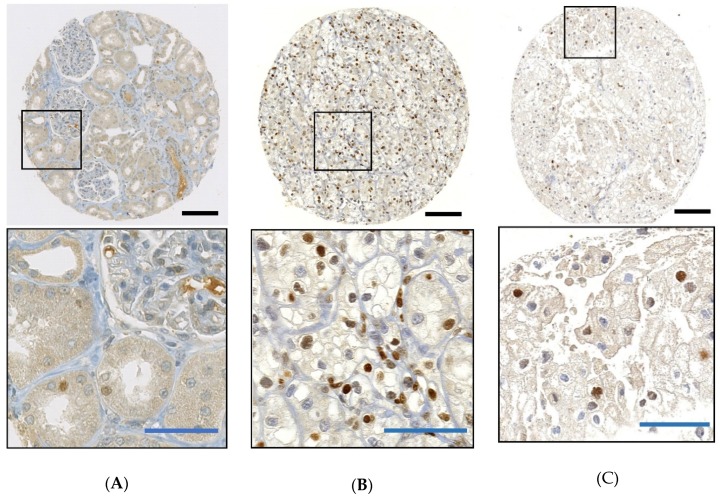
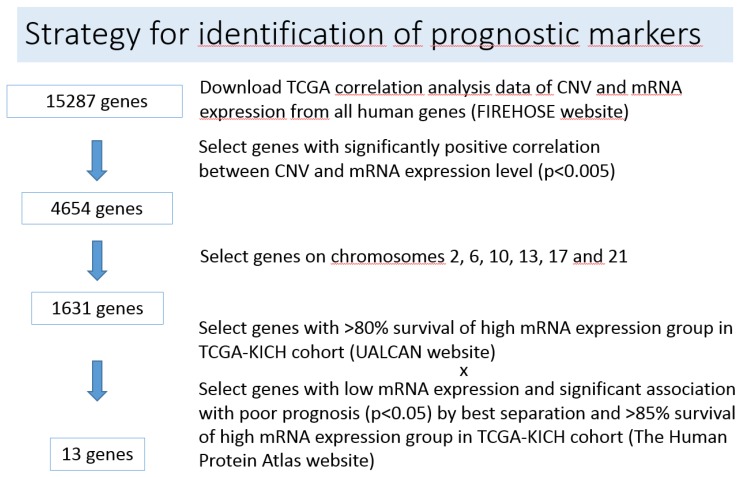
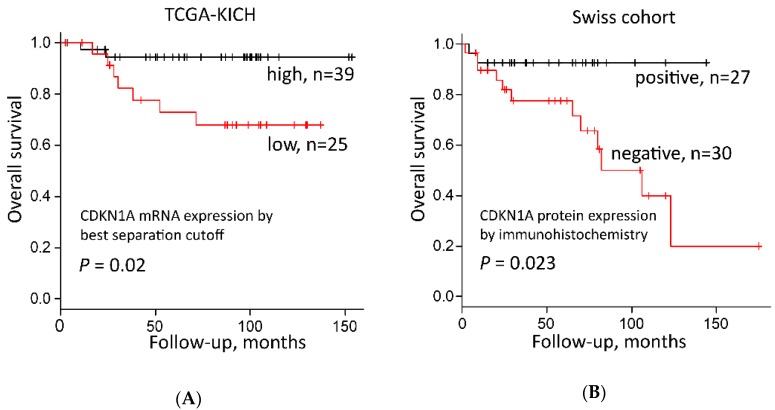
Chromophobe renal cell carcinoma (chRCC) patients have good prognosis. Only 5%-10% patients die of metastatic disease after tumorectomy, but tumor progression cannot be predicted by histopathological parameters alone. chRCC are characterized by losses of many chromosomes, whereas gene mutations are rare. In this study, we aim at identifying genes indicating chRCC progression. A bioinformatic approach was used to correlate chromosomal loss and mRNA expression from 15287 genes from The Cancer Genome Atlas (TCGA) database. All genes in TCGA chromophobe renal cancer dataset (KICH) for which a significant correlation between chromosomal loss and mRNA expression was shown, were identified and their associations with outcome was assessed. Genome-wide DNA copy-number alterations were analyzed by Affymetrix OncoScan CNV FFPE Microarrays in a second cohort of Swiss chRCC. In both cohorts, tumors with loss of chromosomes 2, 6, 10, 13, 17 and 21 had signs of tumor progression. There were 4654 genes located on these chromosomes, and 13 of these genes had reduced mRNA levels, which was associated with poor outcome in chRCC. Decreased CDKN1A expression at mRNA ( = 0.02) and protein levels ( = 0.02) were associated with short overall survival and were independent predictors of prognosis ( <0.01 and <0.05 respectively). CDKN1A expression status is a prognostic biomarker independent of tumor stage. CDKN1A immunohistochemistry may be used to identify chRCC patients at greater risk of disease progression.
嫌色性肾细胞癌(chRCC)患者预后良好。肿瘤切除术后仅有5%-10%的患者死于转移性疾病,但仅靠组织病理学参数无法预测肿瘤进展。chRCC的特征是多条染色体缺失,而基因突变罕见。在本研究中,我们旨在鉴定指示chRCC进展的基因。采用生物信息学方法将来自癌症基因组图谱(TCGA)数据库的15287个基因的染色体缺失与mRNA表达进行关联分析。鉴定出TCGA嫌色性肾癌数据集(KICH)中所有染色体缺失与mRNA表达存在显著相关性的基因,并评估它们与预后的关联。在另一组瑞士chRCC患者中,通过Affymetrix OncoScan CNV FFPE微阵列分析全基因组DNA拷贝数改变。在这两组研究中,染色体2、6、10、13、17和21缺失的肿瘤均有肿瘤进展迹象。这些染色体上共有4654个基因,其中13个基因的mRNA水平降低,这与chRCC的不良预后相关。CDKN1A mRNA水平降低( = 0.02)和蛋白水平降低( = 0.02)与总生存期缩短相关,且是独立的预后预测指标(分别<0.01和<0.05)。CDKN1A表达状态是独立于肿瘤分期的预后生物标志物。CDKN1A免疫组化可用于识别疾病进展风险较高的chRCC患者。