Da Qingen, Ren Mingming, Huang Lei, Qu Jianhua, Yang Qiuhua, Xu Jiean, Ma Qian, Mao Xiaoxiao, Cai Yongfeng, Zhao Dingwei, Luo Junhua, Yan Zilong, Sun Lu, Ouyang Kunfu, Zhang Xiaowei, Han Zhen, Liu Jikui, Wang Tao
Department of Hepatobiliary Surgery, Peking University Shenzhen Hospital, Shenzhen Peking University-The Hong Kong University of Science and Technology Medical Center, Shenzhen, People's Republic of China.
Department of Cardiovascular Surgery, Peking University Shenzhen Hospital, Shenzhen Peking University-The Hong Kong University of Science and Technology Medical Center, Shenzhen, People's Republic of China.
Int J Gen Med. 2022 Mar 15;15:2963-2977. doi: 10.2147/IJGM.S354882. eCollection 2022.
We aimed to explore the prognostic patterns of ferroptosis-related genes in papillary renal cell carcinoma (PRCC) and investigate the relationship between ferroptosis-related genes and PRCC tumor immune microenvironment.
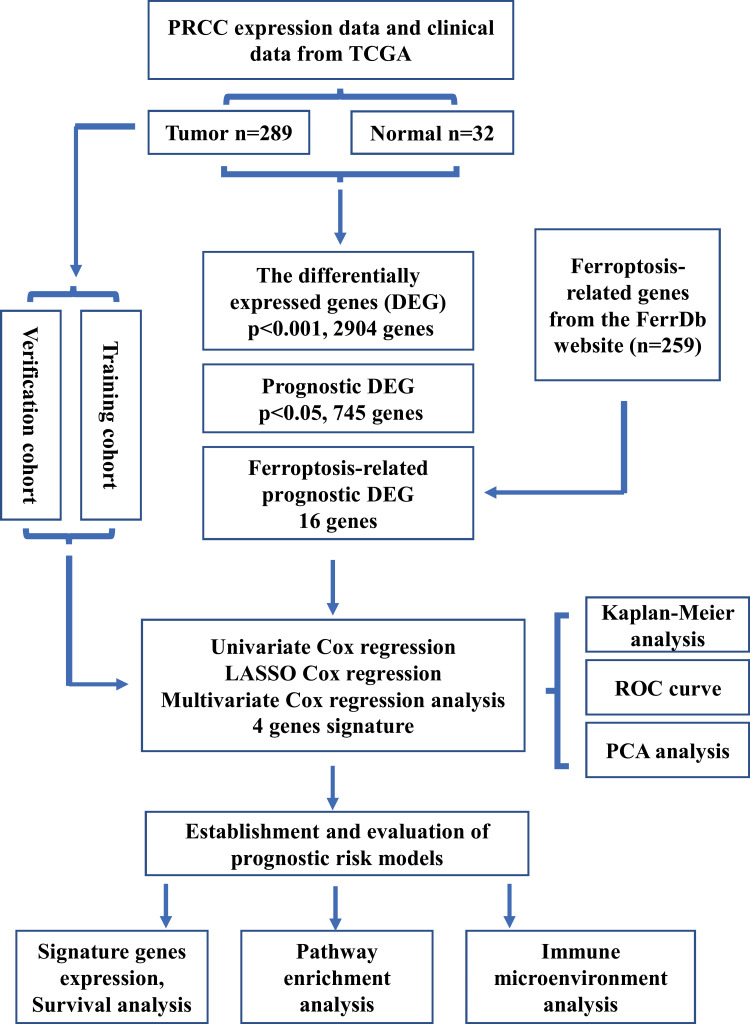
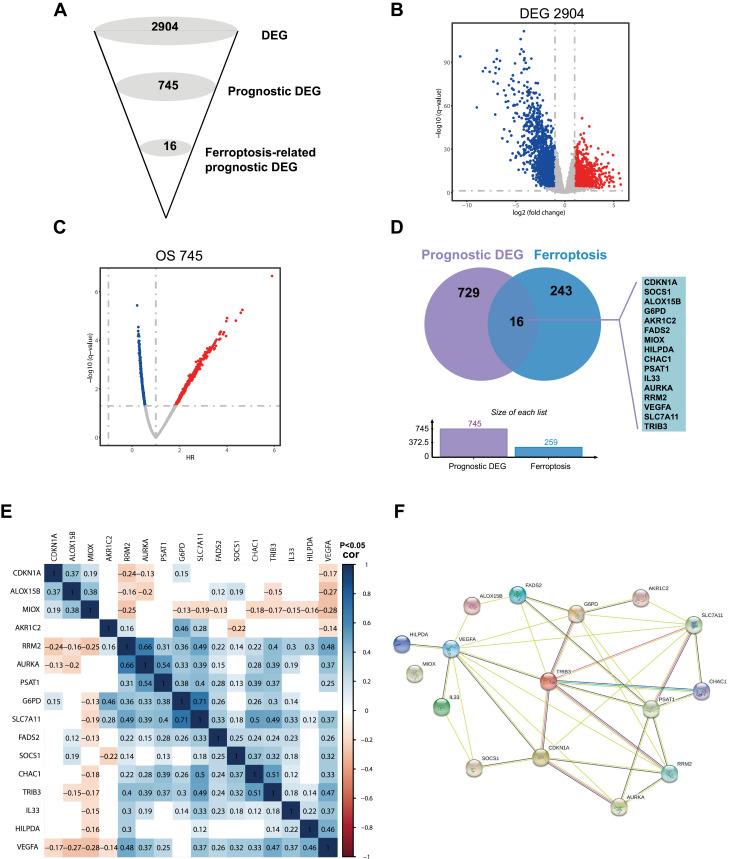
We obtained the mRNA expression and corresponding clinical data of PRCC from the public tumor cancer genome atlas database (TCGA). The PRCC patients were randomly divided into two cohort, training cohort and verification cohort, respectively. Univariate Cox regression, LASSO Cox regression, multivariate Cox regression analysis were utilized to construct ferroptosis signature for PRCC patients. And then, risk prognostic model was established and verified. The correlation of ferroptosis-related signature with survival and immune microenvironment was systematically analyzed.
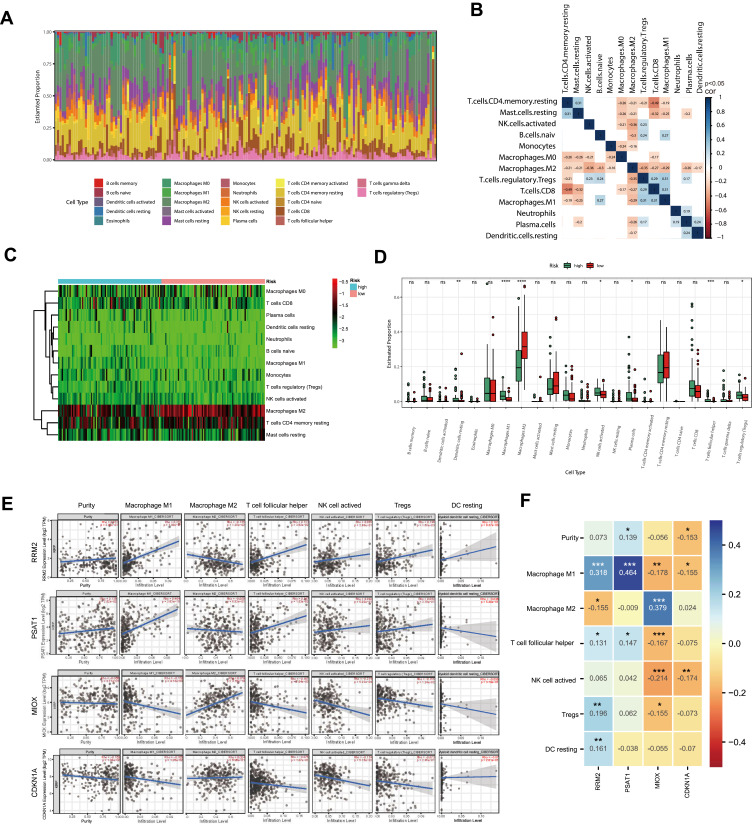
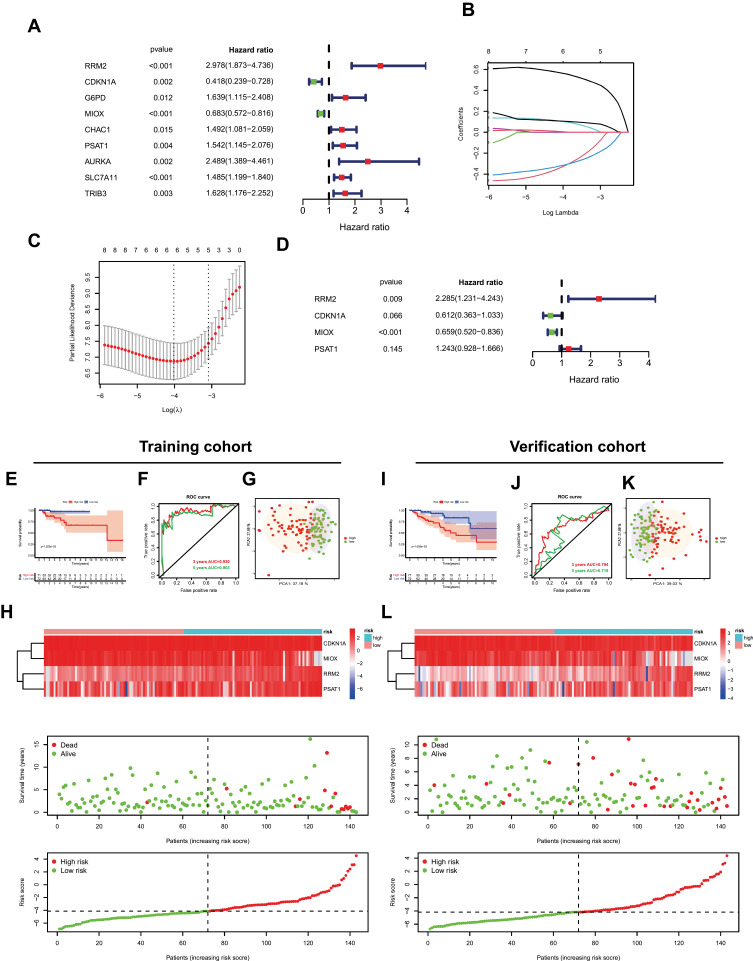
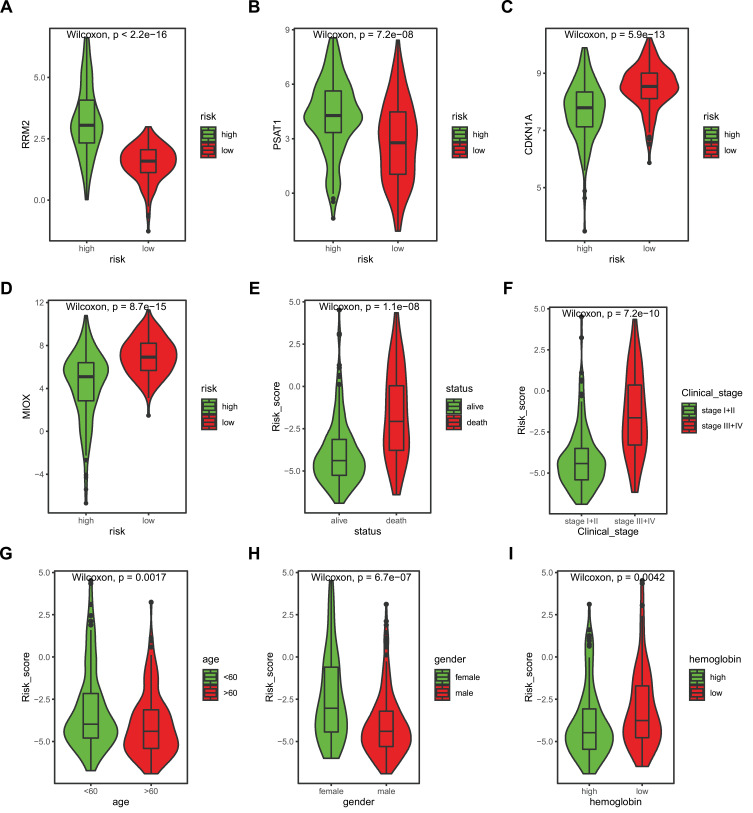
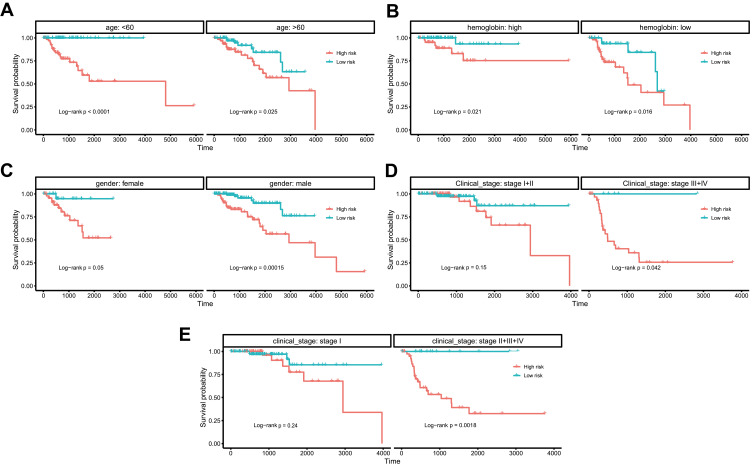
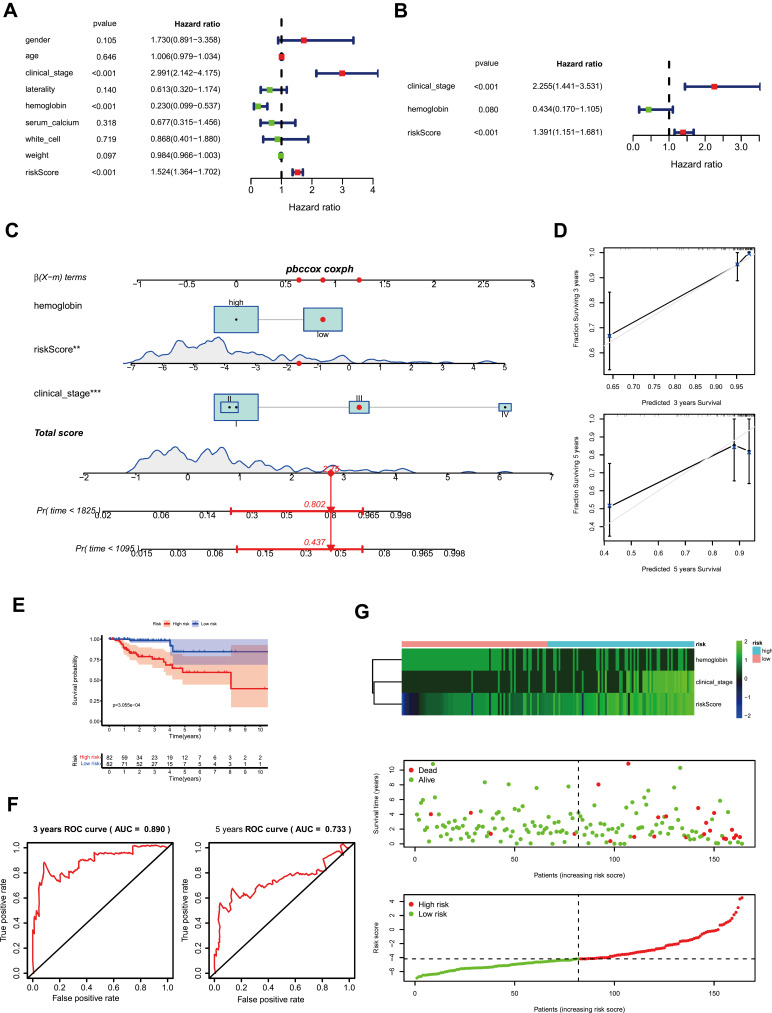
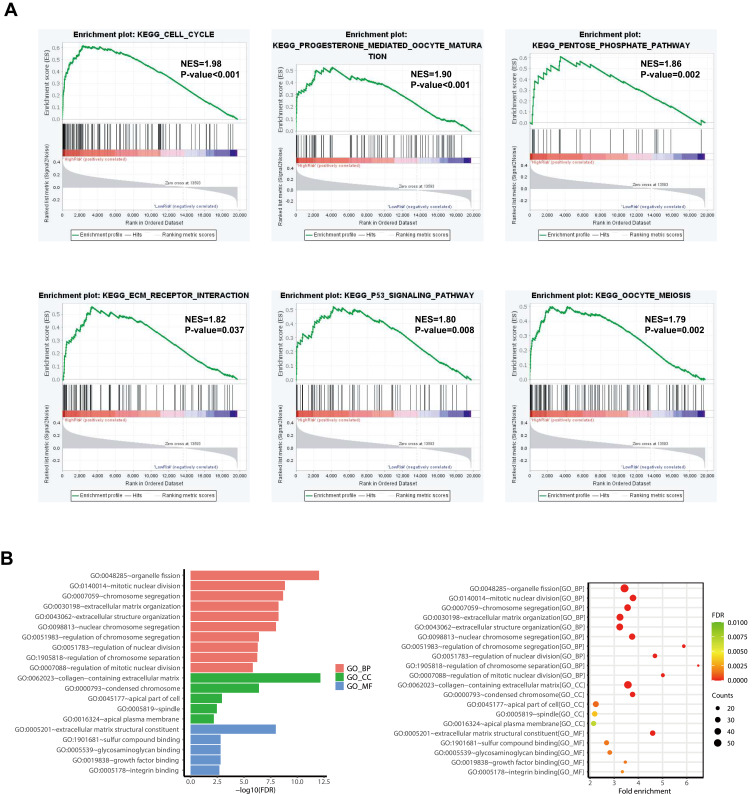
A 4-genes ferroptosis signature (CDKN1A, MIOX, PSAT1, and RRM2) was constructed. Multivariate Cox regression assay indicates that the risk score of ferroptosis signature was an independent prognostic indicator (HR=1.391, p<0.001). The survival curve shows that the high-risk group has a poorer prognosis than the low-risk group (p<0.001). The risk prognostic model was established based on prognostic factors of clinical-stage, hemoglobin, and risk score. The time-dependent receiver operating characteristic curve (ROC) analysis proves the predictive capacity of the ferroptosis signature, the 3 years area under the curve (AUC) is 0.890, and the 5 years AUC is 0.733. Further analysis suggested that cell cycle, pentose phosphate pathway, P53 signaling pathway were significantly enriched in the high-risk group. The significantly different fractions of dendritic cells resting, macrophage cells, and T cells follicular helper were observed in risk groups.
This study implicates a ferroptosis signature which has a good predict capacity of the prognosis in PRCC patients. Ferroptosis-related genes may have a key role in the process of anti-tumor and serve as therapeutic targets for PRCC.
我们旨在探索乳头状肾细胞癌(PRCC)中铁死亡相关基因的预后模式,并研究铁死亡相关基因与PRCC肿瘤免疫微环境之间的关系。
我们从公共肿瘤癌症基因组图谱数据库(TCGA)中获取了PRCC的mRNA表达及相应临床数据。PRCC患者被随机分为两个队列,分别为训练队列和验证队列。采用单因素Cox回归、LASSO Cox回归、多因素Cox回归分析为PRCC患者构建铁死亡特征。然后,建立并验证风险预后模型。系统分析铁死亡相关特征与生存及免疫微环境的相关性。
构建了一个由4个基因组成的铁死亡特征(CDKN1A、MIOX、PSAT1和RRM2)。多因素Cox回归分析表明,铁死亡特征的风险评分是一个独立的预后指标(HR=1.391,p<0.001)。生存曲线显示,高风险组的预后比低风险组差(p<0.001)。基于临床分期、血红蛋白和风险评分这些预后因素建立了风险预后模型。时间依赖性受试者工作特征曲线(ROC)分析证明了铁死亡特征的预测能力,3年曲线下面积(AUC)为0.890,5年AUC为0.733。进一步分析表明,细胞周期、磷酸戊糖途径、P53信号通路在高风险组中显著富集。在风险组中观察到静息树突状细胞、巨噬细胞和滤泡辅助性T细胞的比例存在显著差异。
本研究表明一种铁死亡特征对PRCC患者的预后具有良好的预测能力。铁死亡相关基因可能在抗肿瘤过程中起关键作用,并可作为PRCC的治疗靶点。