
E2F1/2转录表达在嫌色性肾细胞癌患者中的预后价值:来自生物信息学分析的证据
Prognostic Values of E2F1/2 Transcriptional Expressions in Chromophobe Renal Cell Carcinoma Patients: Evidence from Bioinformatics Analysis.
作者信息
Hu Dingtao, Meng Nana, Lou Xiaoqi, Li Zhen, Teng Ying, Tu Bizhi, Zou Yanfeng, Wang Fang
机构信息
Department of Oncology, The First Affiliated Hospital of Anhui Medical University, Hefei, Anhui, People's Republic of China.
Department of Quality Management Office, The Second Affiliated Hospital of Anhui Medical University, Hefei, Anhui, People's Republic of China.
出版信息
Int J Gen Med. 2021 Jul 16;14:3593-3609. doi: 10.2147/IJGM.S321585. eCollection 2021.
BACKGROUND
Numerous studies on the E2F transcription factors have led to increasing insights that E2Fs could be an important driver of the formation and progression of many human cancers. Little is known about the function of distinct E2Fs in chromophobe renal cell carcinoma (chRCC).
METHODS
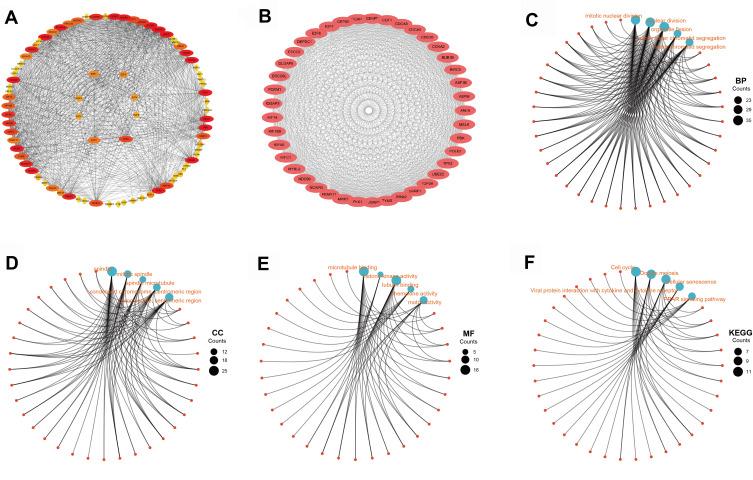
We utilized the UALCAN, GEPIA, Cancer Genome Atlas (TCGA) database, cBioPortal, Metascape, STRING, Cytoscape, GeneMANIA, TIMER, TISIDB, GSCALite, and MEXPRESS databases to investigate the transcription level, genetic alteration, methylation, and biological function of E2Fs in chRCC patients, and its association with the occurrence, progress, prognosis, and immune cell infiltration in patients with chRCC.
RESULTS
We found that E2F1/2/4/7/8 were more expressed in chRCC tissues than in normal tissues, while the expression of E2F5/6 was lower in the former than in the latter, and the expression levels of E2F1/2/4/5/6//7/8 were also associated with the histological parameters of chRCC, including T-stage and N-stage. Higher expression of E2F1/2/7/8 was found to be significantly correlated with worse overall survival (OS) in chRCC patients. Cox regression and time-dependent ROC analysis further suggested that E2F1/2 could be the potential independent biomarkers for chRCC prognosis. Besides, a moderate mutation rate of E2Fs (34%) was noticed in chRCC, and the genetic mutations in E2Fs were associated with poor survival of chRCC patients. We noticed that the expression of E2Fs was statistically correlated with the immune cell infiltration in chRCC. Moreover, we also found that the expression of E2F1 was significantly correlated with tumor-infiltrating lymphocytes and immunomodulators, E2F7 expression was associated with MHC molecules, and the expression of E2F1/8 was correlated to their methylation levels.
CONCLUSION
Our results provide novel insights for selecting the prognostic biomarkers for chRCC and suggest that E2F1/2 could act as potential prognostic biomarkers for the survival of chRCC patients. However, more in-depth experiments are required to identify the underlying mechanisms and verify the clinical value of E2F1/2 in the prognosis of chRCC.
背景
大量关于E2F转录因子的研究使人们越来越认识到,E2F可能是许多人类癌症形成和进展的重要驱动因素。关于不同E2F在嫌色性肾细胞癌(chRCC)中的功能知之甚少。
方法
我们利用UALCAN、GEPIA、癌症基因组图谱(TCGA)数据库、cBioPortal、Metascape、STRING、Cytoscape、GeneMANIA、TIMER、TISIDB、GSCALite和MEXPRESS数据库,研究chRCC患者中E2F的转录水平、基因改变、甲基化和生物学功能,及其与chRCC患者的发生、进展、预后和免疫细胞浸润的关系。
结果
我们发现,E2F1/2/4/7/8在chRCC组织中的表达高于正常组织,而E2F5/6在前者中的表达低于后者,且E2F1/2/4/5/6/7/8的表达水平也与chRCC的组织学参数相关,包括T分期和N分期。发现E2F1/2/7/8的高表达与chRCC患者较差的总生存期(OS)显著相关。Cox回归和时间依赖性ROC分析进一步表明,E2F1/2可能是chRCC预后的潜在独立生物标志物。此外,在chRCC中观察到E2F的中等突变率(34%),且E2F的基因突变与chRCC患者的不良生存相关。我们注意到,E2F的表达与chRCC中的免疫细胞浸润在统计学上相关。此外,我们还发现,E2F1的表达与肿瘤浸润淋巴细胞和免疫调节剂显著相关,E2F7的表达与MHC分子相关,E2F1/8的表达与其甲基化水平相关。
结论
我们的结果为选择chRCC的预后生物标志物提供了新的见解,并表明E2F1/2可能作为chRCC患者生存的潜在预后生物标志物。然而,需要更深入的实验来确定潜在机制并验证E2F1/2在chRCC预后中的临床价值。



 Zotero 插件