Department of Epidemiology, School of Public Health and Tropical Medicine, Tulane University, New Orleans, Louisiana.
Clinical and Translational Epidemiology Unit and Division of Gastroenterology, Massachusetts General Hospital and Harvard Medical School, Boston, Massachusetts.
J Am Coll Cardiol. 2020 Feb 25;75(7):763-772. doi: 10.1016/j.jacc.2019.11.060.
A gut-microbial metabolite, trimethylamine N-oxide (TMAO), has been associated with coronary atherosclerotic burden. No previous prospective study has addressed associations of long-term changes in TMAO with coronary heart disease (CHD) incidence.
The purpose of this study was to investigate whether 10-year changes in plasma TMAO levels were significantly associated with CHD incidence.
This prospective nested case-control study included 760 healthy women at baseline. Plasma TMAO levels were measured both at the first (1989 to 1990) and the second (2000 to 2002) blood collections; 10-year changes (Δ) in TMAO were calculated. Incident cases of CHD (n = 380) were identified after the second blood collection through 2016 and were matched to controls (n = 380).
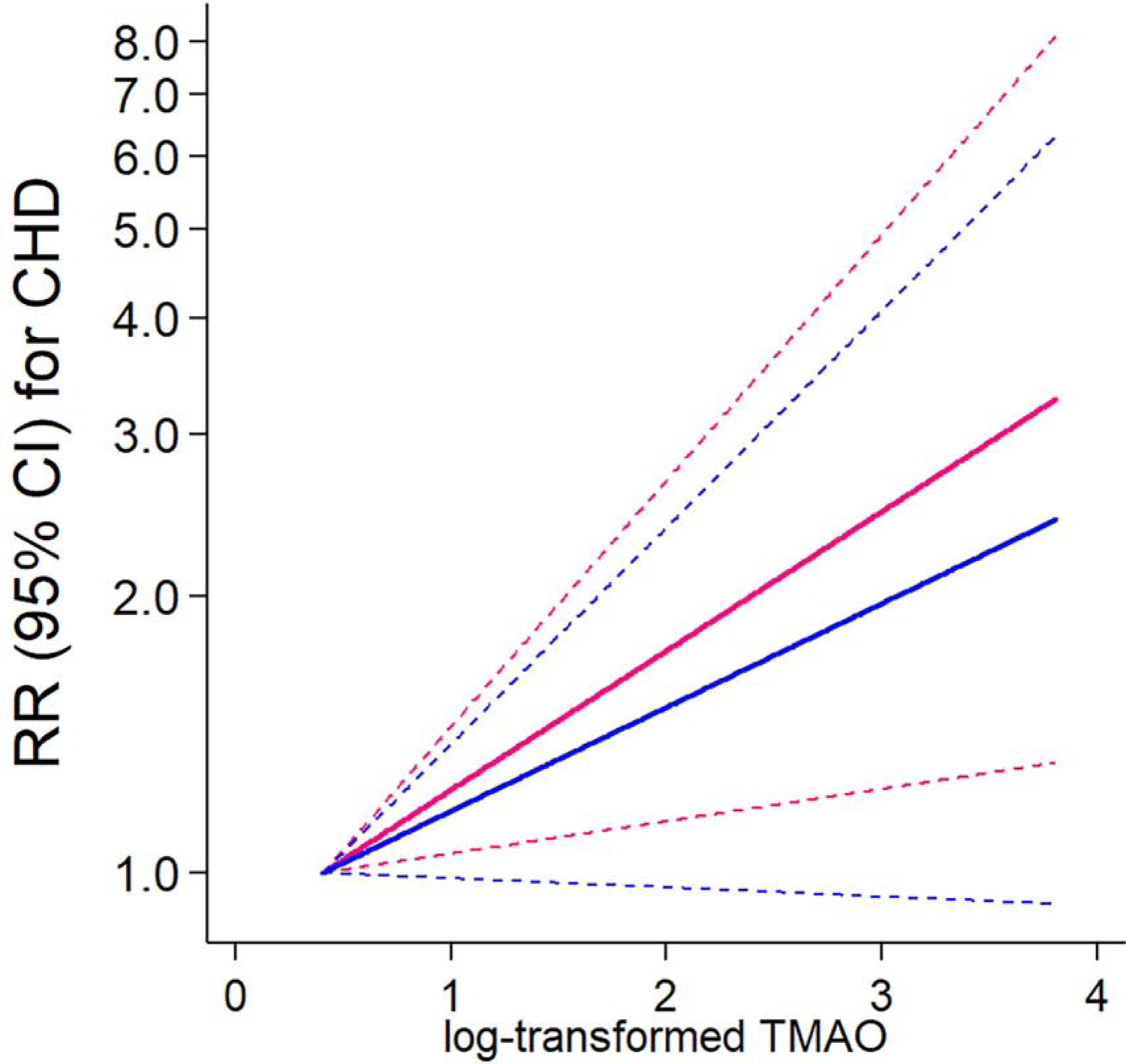
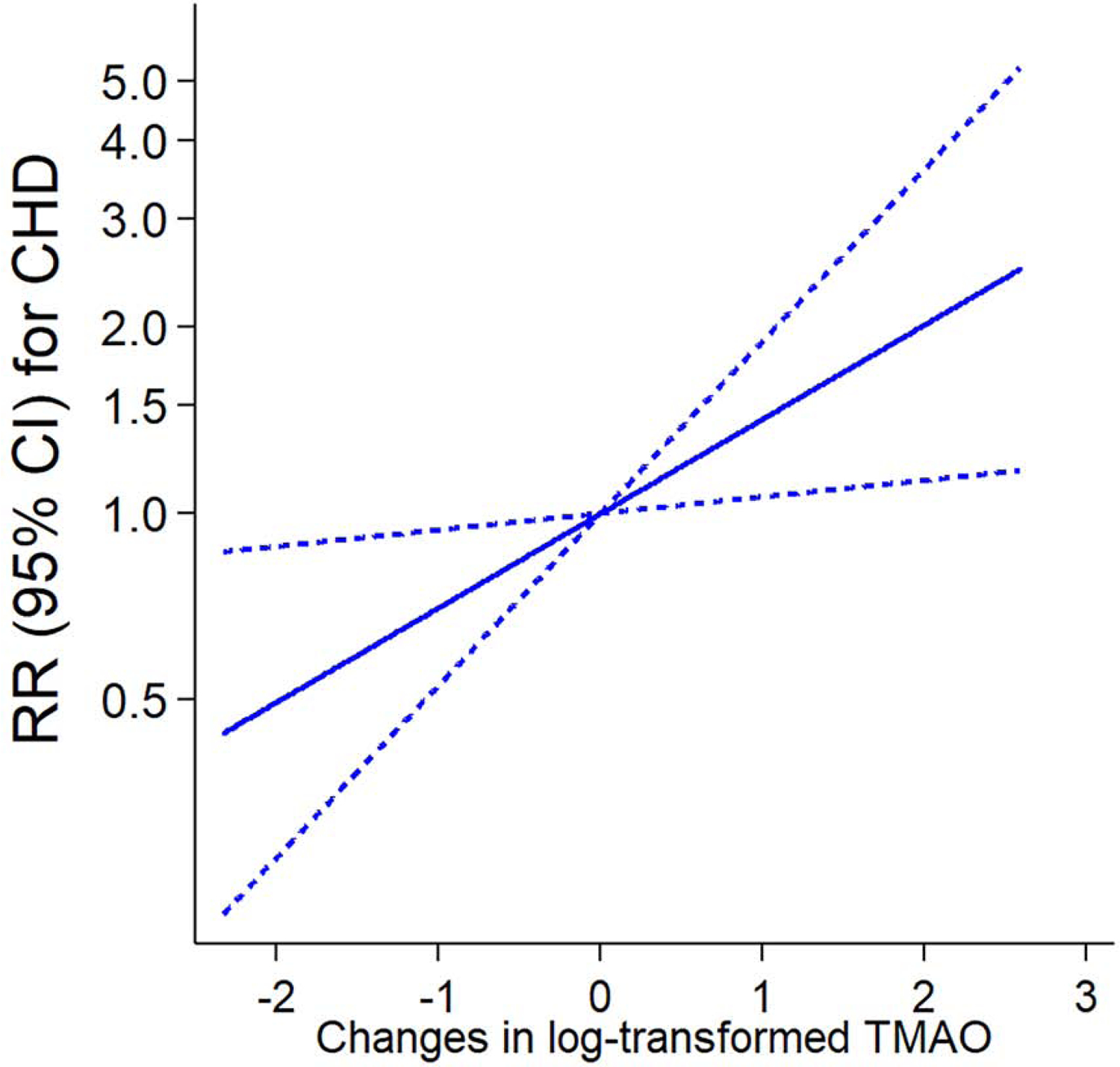
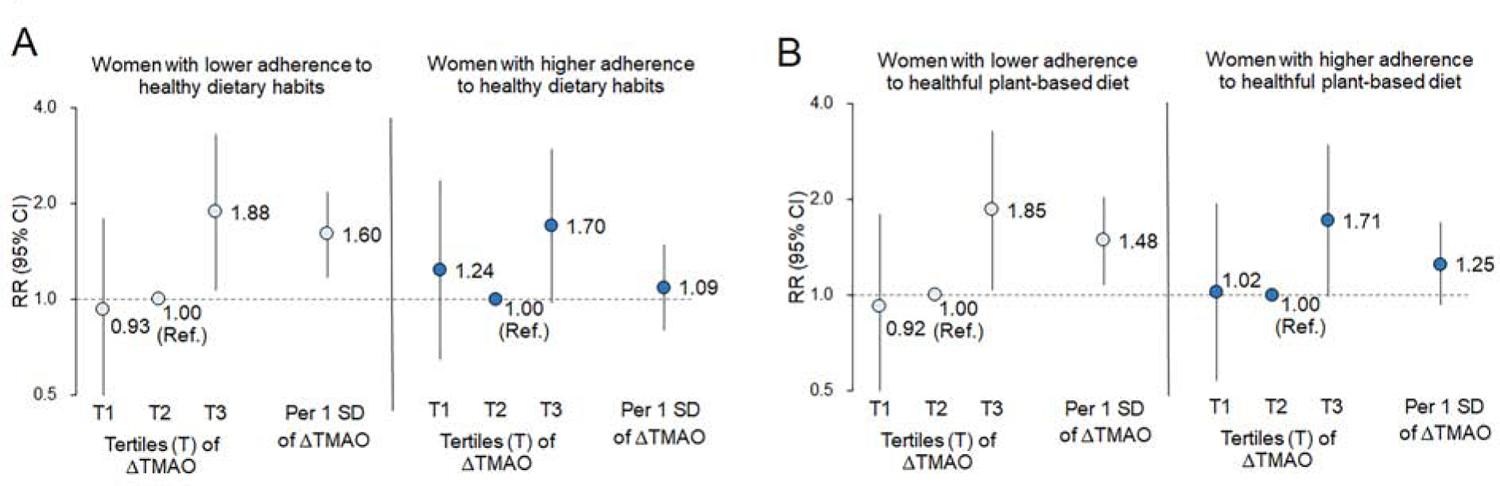
Regardless of the initial TMAO levels, 10-year increases in TMAO from the first to second blood collection were significantly associated with an increased risk of CHD (relative risk [RR] in the top tertile: 1.58 [95% confidence interval (CI): 1.05 to 2.38]; RR per 1-SD increment: 1.33 [95% CI: 1.06 to 1.67]). Participants with elevated TMAO levels (the top tertile) at both time points showed the highest RR of 1.79 (95% CI: 1.08 to 2.96) for CHD as compared with those with consistently low TMAO levels. Further, we found that the ΔTMAO-CHD relationship was strengthened by unhealthy dietary patterns (assessed by the Alternate Healthy Eating Index) and was attenuated by healthy dietary patterns (p interaction = 0.008).
Long-term increases in TMAO were associated with higher CHD risk, and repeated assessment of TMAO over 10 years improved the identification of people with a higher risk of CHD. Diet may modify the associations of ΔTMAO with CHD risk.
肠道微生物代谢产物三甲胺 N-氧化物(TMAO)与冠状动脉粥样硬化负担有关。以前没有前瞻性研究探讨 TMAO 的长期变化与冠心病(CHD)发病率之间的关系。
本研究旨在探讨血浆 TMAO 水平的 10 年变化是否与 CHD 发病率显著相关。
本前瞻性嵌套病例对照研究纳入了基线时的 760 名健康女性。在第一次(1989 年至 1990 年)和第二次(2000 年至 2002 年)采血时测量了血浆 TMAO 水平;计算了 10 年的 TMAO 变化(Δ)。在第二次采血后通过 2016 年确定了 CHD(n=380)的病例,并与对照组(n=380)相匹配。
无论初始 TMAO 水平如何,从第一次采血到第二次采血的 TMAO 10 年增加与 CHD 风险增加显著相关(最高三分位 TMAO 水平的相对风险 [RR]:1.58 [95%置信区间(CI):1.05 至 2.38];每增加 1-SD 的 RR:1.33 [95%CI:1.06 至 1.67])。与始终保持低 TMAO 水平的患者相比,在两个时间点均存在 TMAO 水平升高(最高三分位)的患者发生 CHD 的 RR 最高,为 1.79(95%CI:1.08 至 2.96)。此外,我们发现,通过不健康的饮食模式(通过替代健康饮食指数评估)可增强 TMAO 与 CHD 风险之间的关系,而通过健康的饮食模式则可减弱这种关系(p 交互=0.008)。
TMAO 的长期增加与 CHD 风险增加相关,并且在 10 年内重复评估 TMAO 可提高对 CHD 风险较高人群的识别能力。饮食可能会改变 TMAO 与 CHD 风险之间的关系。