Optophysiology, University of Freiburg, Faculty of Biology, 79104 Freiburg, Germany.
Optophysiology, University of Freiburg, Faculty of Biology, BrainLinks-BrainTools, Bernstein Center Freiburg, 79104 Freiburg, Germany.
J Neurosci Methods. 2020 Apr 15;336:108636. doi: 10.1016/j.jneumeth.2020.108636. Epub 2020 Feb 17.
In accordance with the three R principles of research, animal usage should be limited as much as possible. Especially for the training of entry-level scientists in surgical techniques underlying opto- and electrophysiology, alternative training tools are required before moving on to live animals. We have developed a cost-effective rat brain model for training a wide range of surgical techniques, including, but not limited to optogenetics, electrophysiology, and intracranial pharmacological treatments.
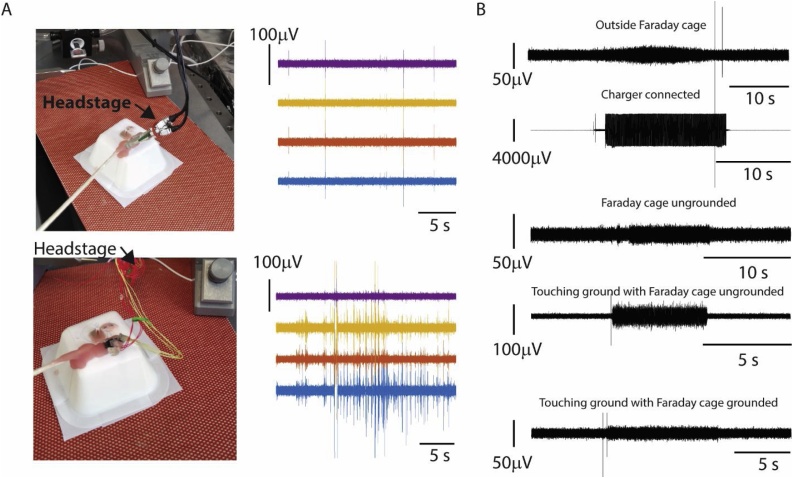
Our brain model creates a realistic training experience in animal surgery. The success of the surgeries (e.g. implantation accuracy) is readily assessable in cross sections of the model brain. Moreover, the model allows practicing electrophysiological recordings as well as testing for movement or light related artefacts.
COMPARISON WITH EXISTING METHOD(S): The surgery and recording experience in our model closely resembles that in an actual rat in terms of the necessary techniques, considerations and time span. A few differences to an actual rat brain slightly reduce the difficulty in our model compared to a live animal. Thus, entry level scientists can first learn basic techniques in our model before moving on to the slightly more complex procedures in live animals.
Our brain model is a useful training tool to equip scientist who are new in the field of electrophysiology and optogenetic manipulations with a basic skill set before applying it in live animals. It can be adapted to fit the desired training content or even to serve in testing and optimizing new lab equipment for more senior scientists.
根据研究的三 R 原则,应尽可能减少动物的使用。特别是对于从事光遗传学和电生理学基础手术技术的入门级科学家的培训,在使用活体动物之前,需要替代培训工具。我们开发了一种具有成本效益的大鼠脑模型,用于培训广泛的手术技术,包括但不限于光遗传学、电生理学和颅内药物治疗。
我们的大脑模型为动物手术提供了逼真的培训体验。手术的成功率(例如植入的准确性)可以在模型脑的横截面上进行评估。此外,该模型还允许进行电生理记录以及测试运动或光相关伪影。
我们的模型在手术和记录方面的经验与实际大鼠非常相似,涉及的技术、考虑因素和时间跨度都相同。与实际大鼠大脑相比,我们模型中的一些差异略微降低了难度。因此,入门级科学家可以先在我们的模型中学习基本技术,然后再在活体动物中进行稍微复杂的操作。
我们的大脑模型是一种有用的培训工具,可以为新涉足电生理学和光遗传学领域的科学家提供基本技能,然后再将其应用于活体动物。它可以适应所需的培训内容,甚至可以用于测试和优化新的实验室设备,供更资深的科学家使用。