Zhou Qing, Zhang Wei-Xin, He Zong-Qi, Wu Ben-Sheng, Shen Zhao-Feng, Shang Hong-Tao, Chen Tuo, Wang Qiong, Chen Yu-Gen, Han Shu-Tang
Affiliated Hospital of Nanjing University of Chinese Medicine, Nanjing, Jiangsu, China.
Suzhou Hospital of Traditional Chinese Medicine, Suzhou, Jiangsu, China.
Evid Based Complement Alternat Med. 2020 Jan 30;2020:5659738. doi: 10.1155/2020/5659738. eCollection 2020.
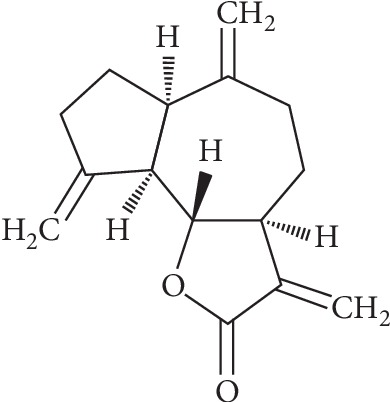
Dehydrocostus lactone (DL), one of the main active constituents in . (Muxiang), reported to have anti-inflammatory, antiulcer, and immunomodulatory properties. However, the effect of DL on ulcerative colitis (UC) has not been reported. To analyze the anti-inflammatory potential role of DL in UC, we provide a mechanism for the pharmacological action of DL.
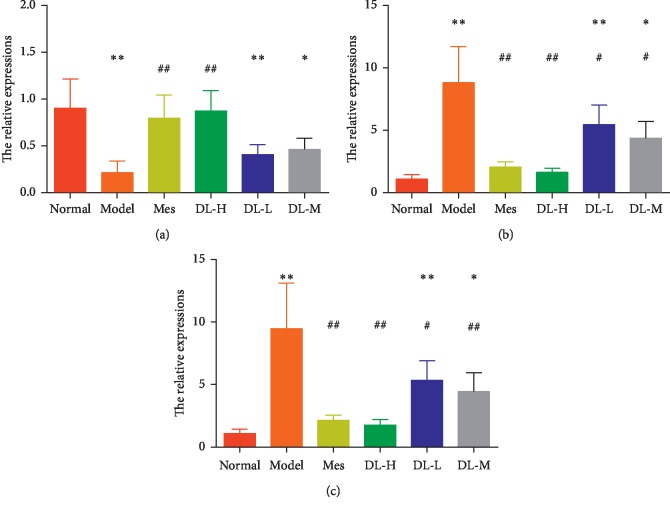
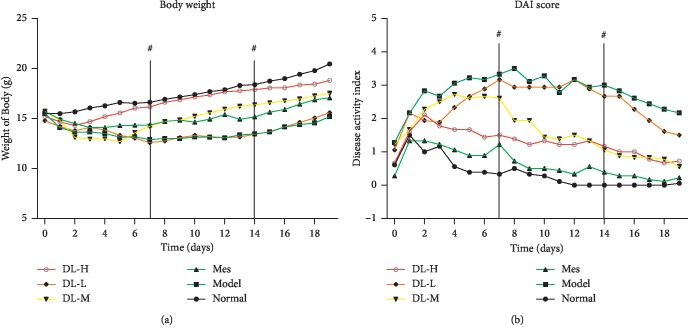
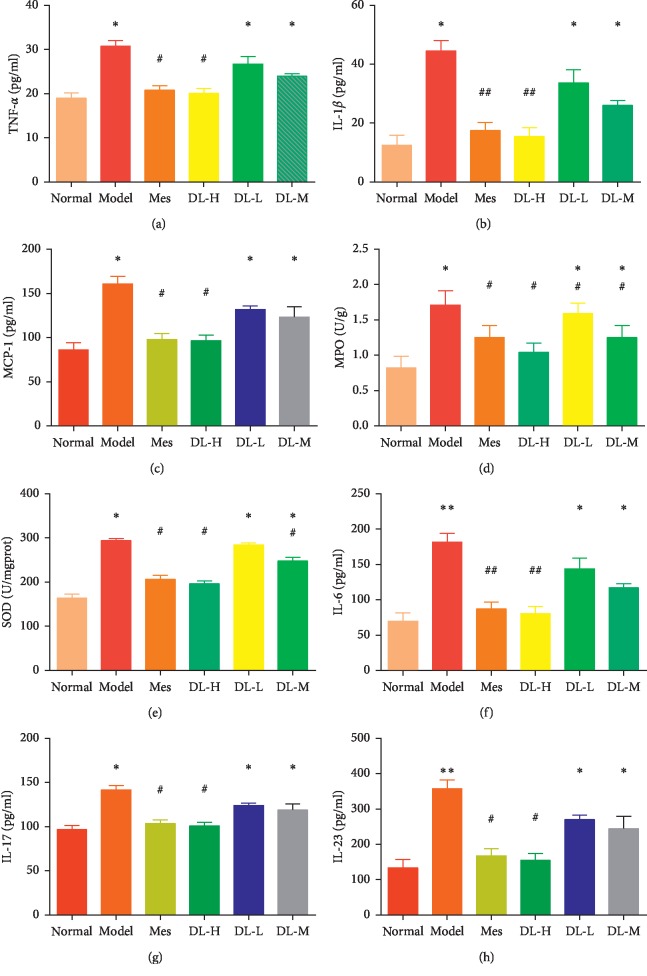
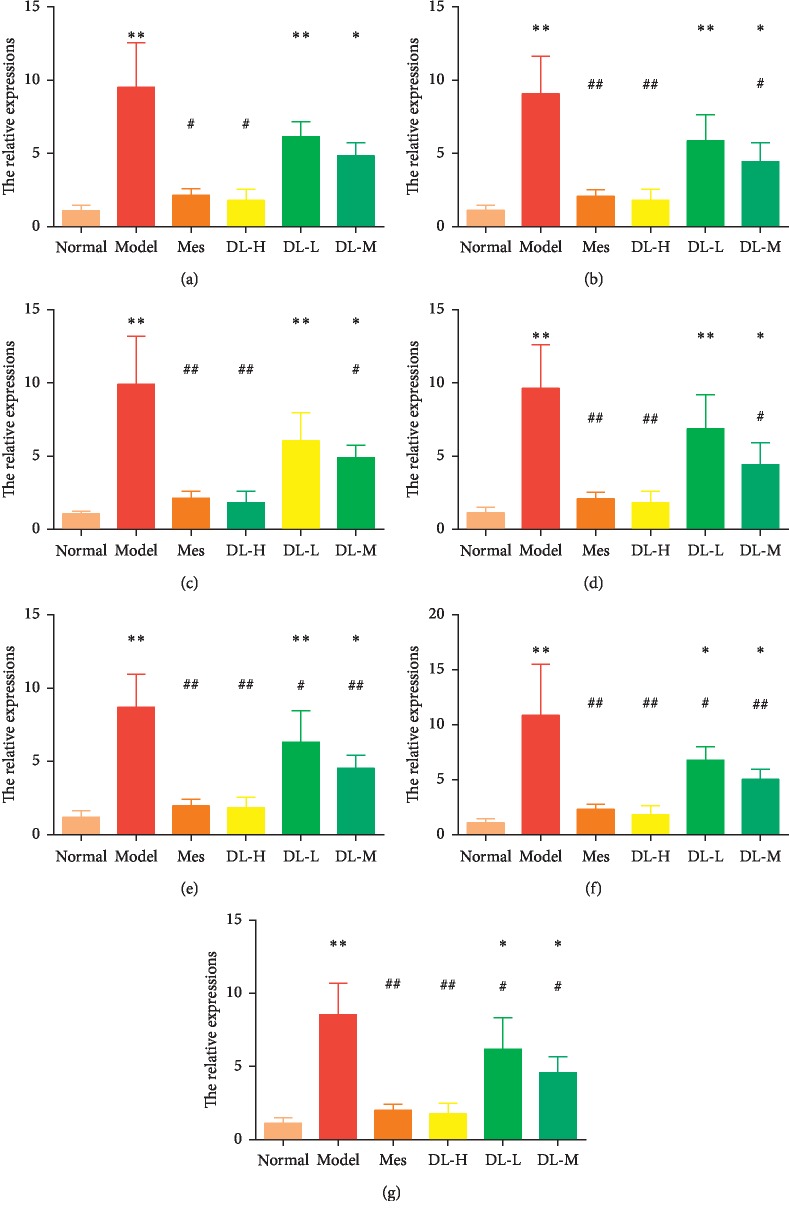
The experimental model of UC was induced by using oral administration of 2% dextran sulfate sodium (DSS) with drinking water in BALB/c mice. Mesalazine (Mes, 0.52 g/kg/d), DL-high doses (DL-H, 20 mg/kg/d), DL-middle doses (DL-M, 15 mg/kg/d), DL-low doses (DL-L, 10 mg/kg/d) were gavaged once a day from day 4 to day 17. Disease activity index (DAI) was calculated daily. On day 18, mice were rapidly dissected and the colorectal tissues were used to detect the levels of UC-related inflammatory cytokines (TNF-, IL-1, MCP-1, MPO, SOD, IL-6, IL-17, and IL-23), IL-6/STAT3 inflammatory signaling pathway (iNOS, COX2, IL-6, GP130, L-17, and IL-23), and colorectal mucosal barrier-related regulatory factors (MUC2, XBP1s, and , IL-1.
DL reduced the colorectal inflammation histological assessment, decreased UC-related inflammatory cytokines (TNF-, IL-1, MCP-1, MPO, SOD, IL-6, IL-17, and IL-23), IL-6/STAT3 inflammatory signaling pathway (iNOS, COX2, IL-6, GP130, L-17, and IL-23), and colorectal mucosal barrier-related regulatory factors (MUC2, XBP1s, and , IL-1.
DL possessed the potential of anti-inflammatory effect to treated colitis. The protective mechanism of DL may involve in reducing inflammation and improving colorectal barrier function via downregulating the IL-6/STAT3 signaling.
去氢木香内酯(DL)是木香的主要活性成分之一,据报道具有抗炎、抗溃疡和免疫调节特性。然而,DL对溃疡性结肠炎(UC)的影响尚未见报道。为分析DL在UC中的抗炎潜在作用,我们提供了DL药理作用的机制。
通过给BALB/c小鼠饮用含2%葡聚糖硫酸钠(DSS)的水诱导UC实验模型。从第4天到第17天,每天一次灌胃给予美沙拉嗪(Mes,0.52 g/kg/d)、高剂量DL(DL-H,20 mg/kg/d)、中剂量DL(DL-M,15 mg/kg/d)、低剂量DL(DL-L,10 mg/kg/d)。每天计算疾病活动指数(DAI)。在第18天,迅速解剖小鼠,取结直肠组织检测UC相关炎性细胞因子(TNF-、IL-1、MCP-1、MPO、SOD、IL-6、IL-17和IL-23)、IL-6/STAT3炎性信号通路(iNOS、COX2、IL-6、GP130、L-17和IL-23)以及结直肠黏膜屏障相关调节因子(MUC2、XBP1s和,IL-1)。
DL减轻了结直肠炎症组织学评估,降低了UC相关炎性细胞因子(TNF-、IL-1、MCP-1、MPO、SOD、IL-6、IL-17和IL-23)、IL-6/STAT3炎性信号通路(iNOS、COX2、IL-6、GP130、L-17和IL-23)以及结直肠黏膜屏障相关调节因子(MUC-2、XBP1s和,IL-1)。
DL具有治疗结肠炎的抗炎作用潜力。DL的保护机制可能涉及通过下调IL-6/STAT3信号通路减轻炎症和改善结直肠屏障功能。