School of Biology and Biological Engineering, South China University of Technology, Guangzhou, China.
BGI-Shenzhen, Shenzhen, China.
Front Cell Infect Microbiol. 2020 Jan 29;9:470. doi: 10.3389/fcimb.2019.00470. eCollection 2019.
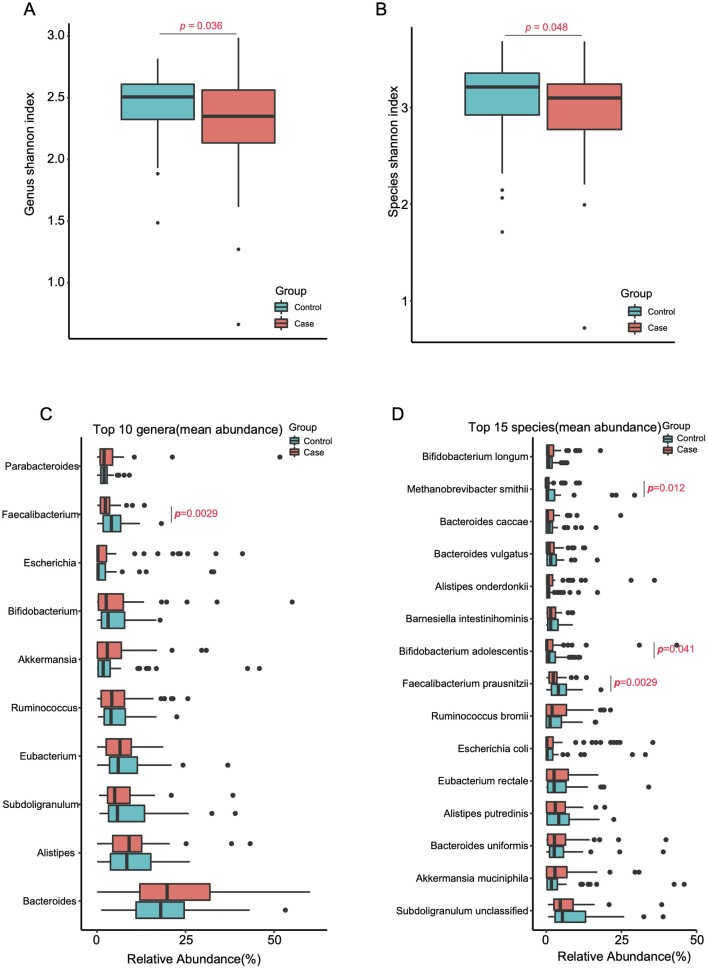
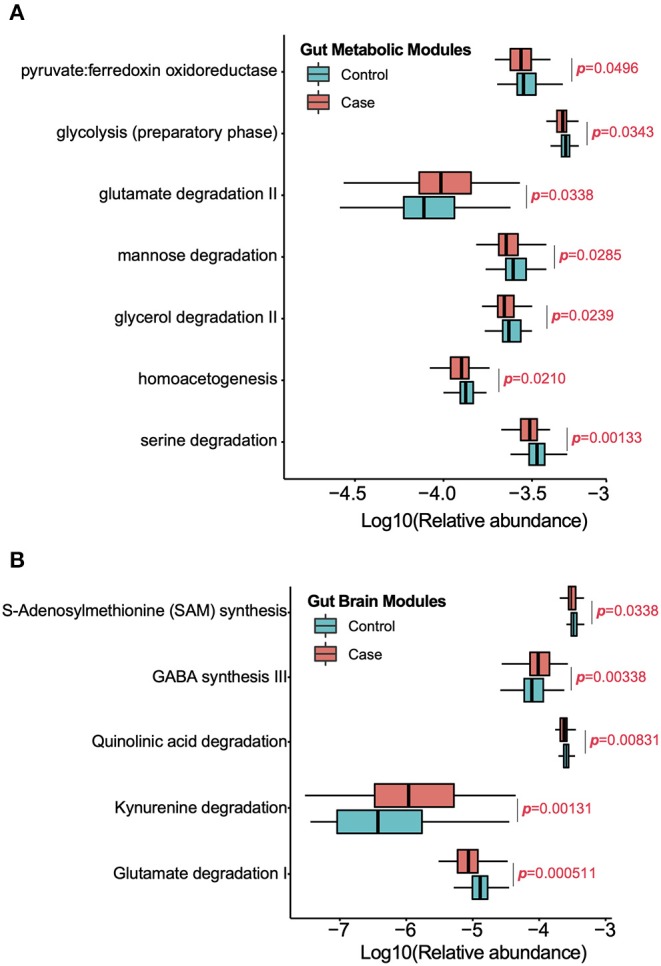
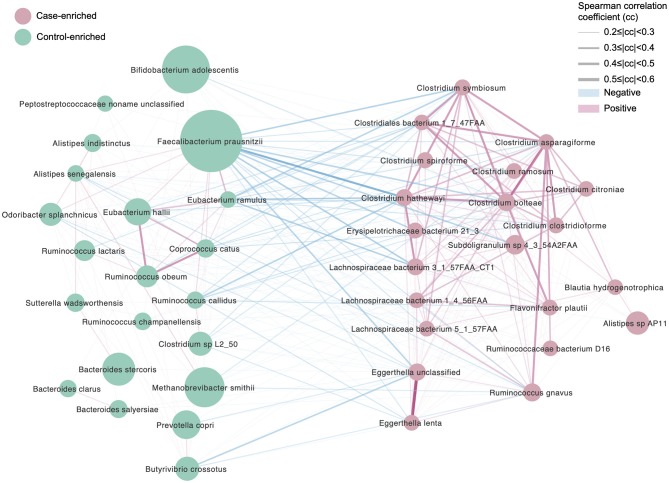
Migraine is a very common, multifactorial, and recurrent central nervous system disorder that causes throbbing headache, photophobia, phonophobia, nausea, and disability. Migraine occurs more often in females, and its complex physiopathology is not yet fully understood. An increasing number of gastrointestinal disorders have been linked to the occurrence of migraine suggesting that gut microbiota might play a pivotal role in migraine through the gut-brain axis. In the present work, we performed a metagenome-wide association study (MWAS) to determine the relationship between gut microbiota and migraine by analyzing 108 shotgun-sequenced fecal samples obtained from elderly women who suffer from migraine and matched healthy controls. Notably, the alpha diversity was significantly decreased in the migraine group at species, genus, and Kyoto Encyclopedia of Genes and Genomes (KEGG) orthologous levels. Firmicutes, especially the "unfriendly" spp., were significantly enriched in the migraine group. Conversely, the healthy controls held more beneficial microorganisms, such as , and . For functional modules, the migraine group was enriched in gut-brain modules (GBMs) including kynurenine degradation and γ-aminobutyric acid (GABA) synthesis. However, the healthy controls held higher gut metabolic modules (GMMs) including glycolysis, homoacetogenesis, and GBMs including quinolinic acid degradation and -adenosyl methionine (SAM) synthesis. The differences in gut microbiota composition and function between the migraine and healthy groups provided new information as well as novel therapeutic targets and strategies for migraine treatment, which could help to improve the early diagnosis of the disease, as well as the long-term prognosis and the life quality of patients suffering from migraine.
偏头痛是一种非常常见的、多因素的、反复发作的中枢神经系统疾病,可引起搏动性头痛、畏光、畏声、恶心和残疾。偏头痛更常见于女性,其复杂的病理生理学尚未完全了解。越来越多的胃肠道疾病与偏头痛的发生有关,这表明肠道微生物群可能通过肠-脑轴在偏头痛中发挥关键作用。在本研究中,我们通过分析 108 个来自患有偏头痛的老年女性和匹配的健康对照者的粪便样本的宏基因组关联研究(MWAS),确定了肠道微生物群与偏头痛之间的关系。值得注意的是,在偏头痛组中,物种、属和京都基因与基因组百科全书(KEGG)直系同源水平的 alpha 多样性显著降低。厚壁菌门,特别是"不友好"的 spp.,在偏头痛组中明显富集。相反,健康对照组拥有更多有益的微生物,如、和。对于功能模块,偏头痛组富集了包括犬尿氨酸降解和γ-氨基丁酸(GABA)合成在内的肠-脑模块(GBMs)。然而,健康对照组具有更高的肠道代谢模块(GMMs),包括糖酵解、同型乙酰生成和包括喹啉酸降解和 -腺苷甲硫氨酸(SAM)合成在内的 GBMs。偏头痛组和健康组之间的肠道微生物群落组成和功能的差异为偏头痛的治疗提供了新的信息、新的治疗靶点和策略,这有助于改善疾病的早期诊断,以及偏头痛患者的长期预后和生活质量。