,.
Invest Ophthalmol Vis Sci. 2020 Feb 7;61(2):32. doi: 10.1167/iovs.61.2.32.
To characterize the evolution and structure of soft drusen in aged rhesus macaques using in vivo multimodal retinal imaging and ex vivo histologic and ultrastructural analyses as a nonhuman primate model of early age-related macular degeneration (AMD).
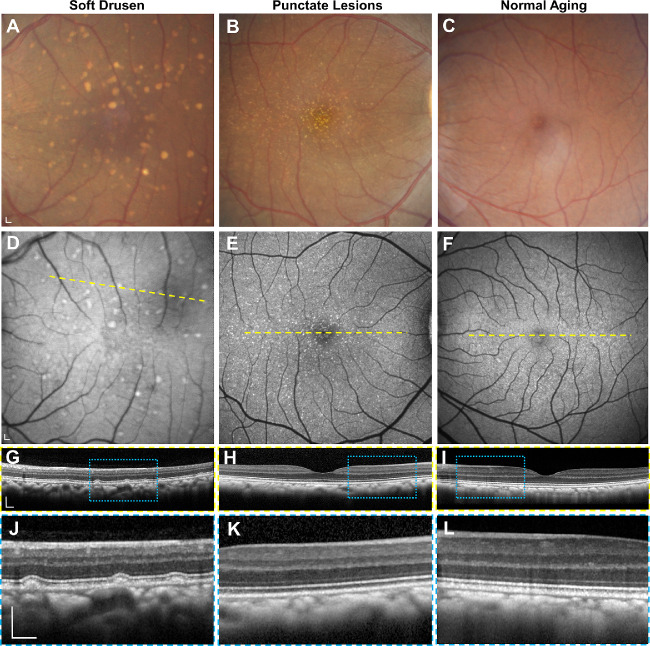
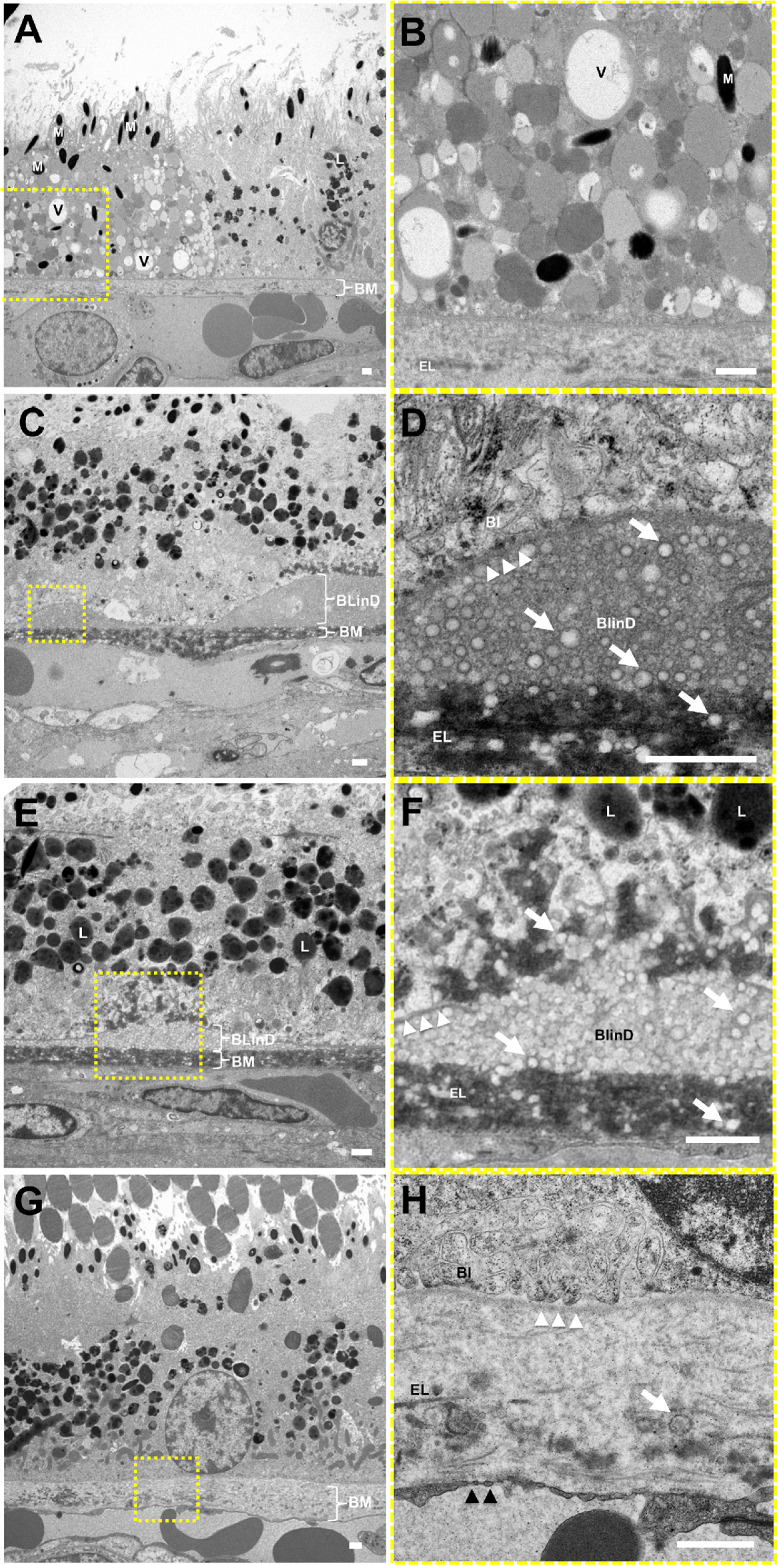
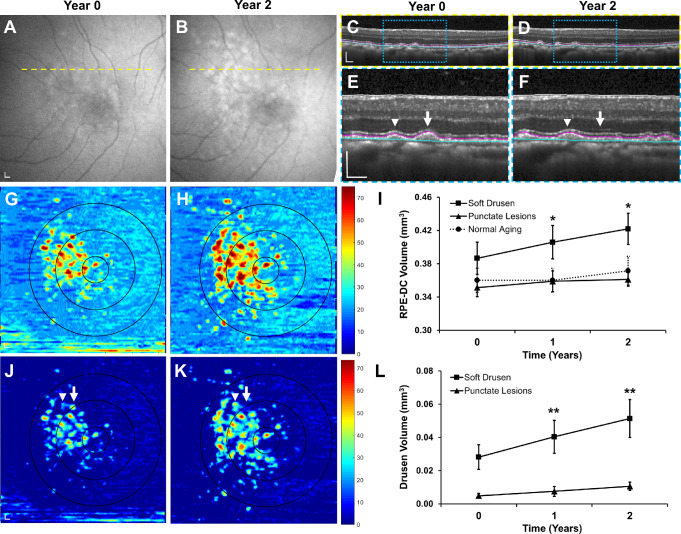
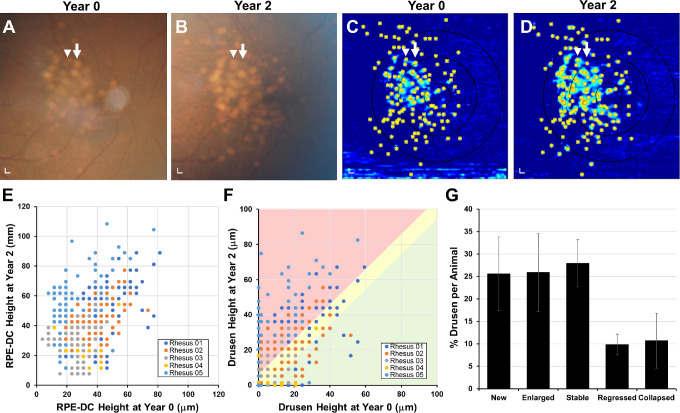
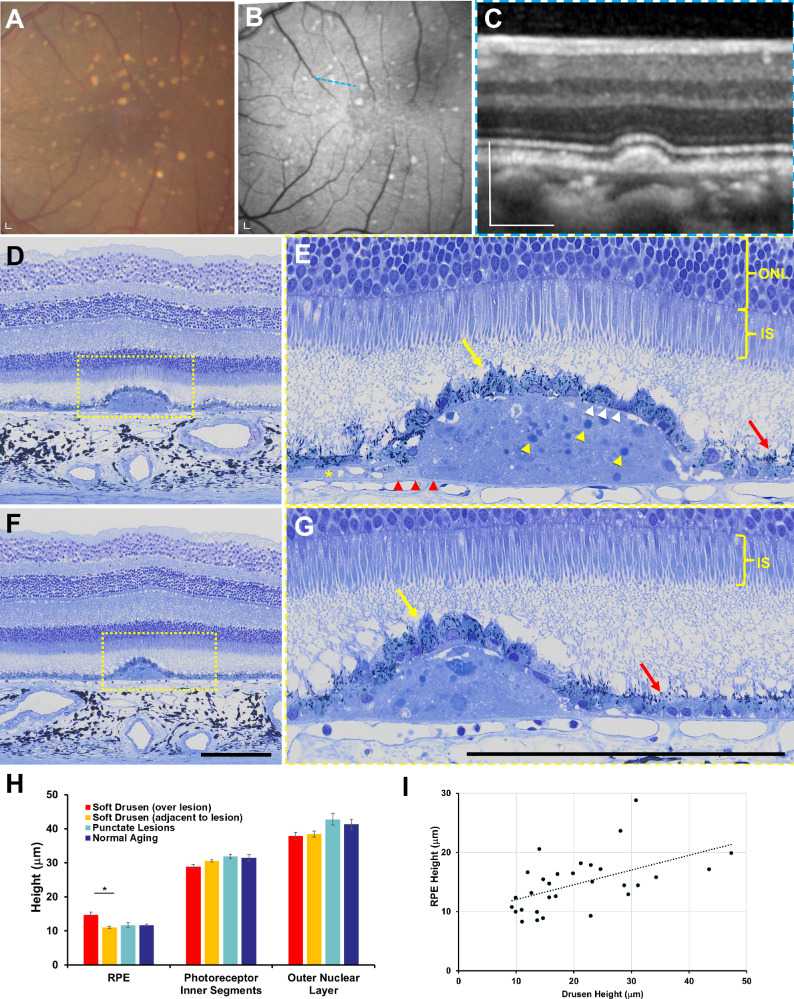
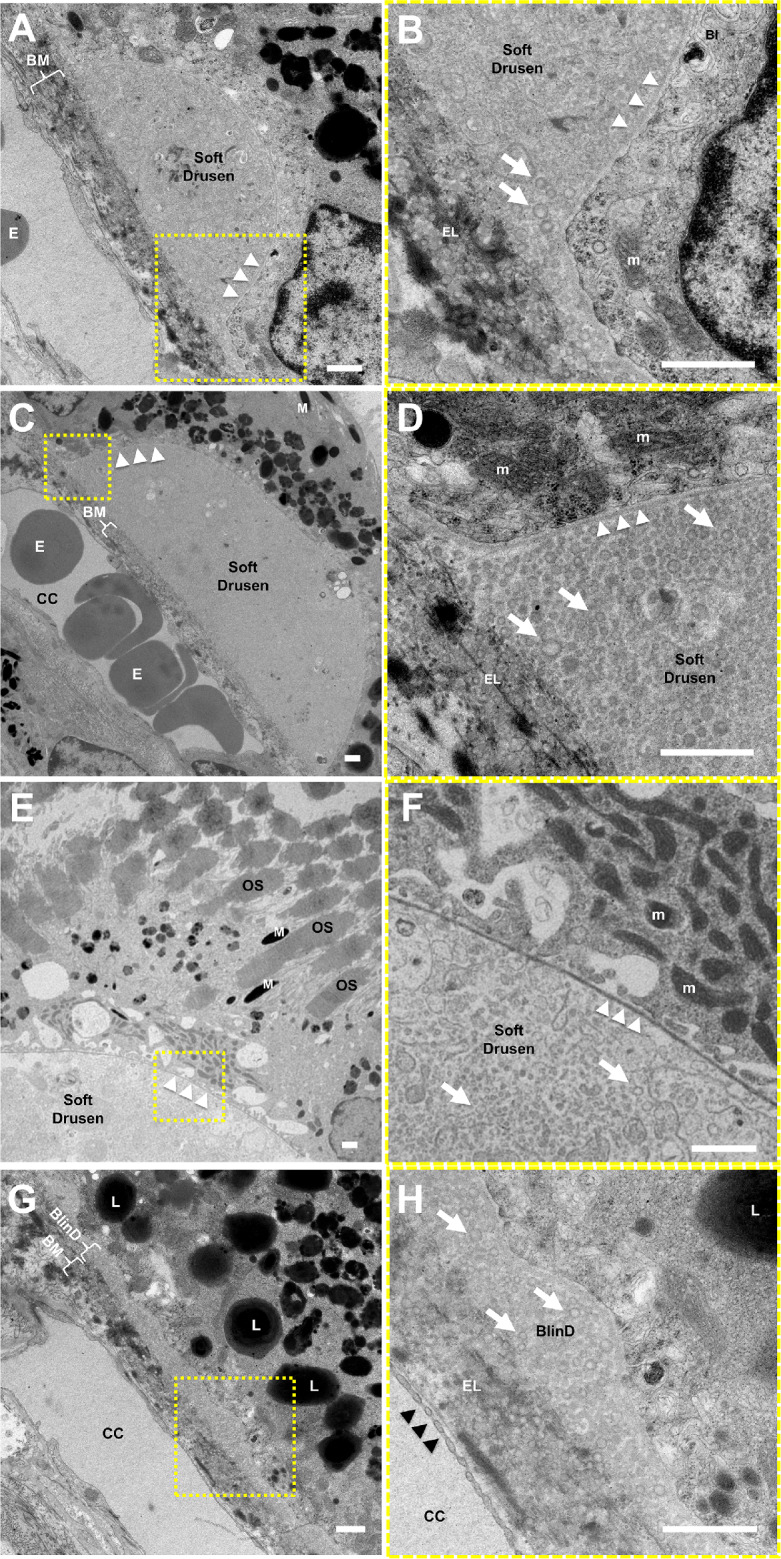
Multimodal imaging including fundus photography, spectral domain optical coherence tomography (SD-OCT), and fundus autofluorescence (FAF) were used to characterize and track individual drusen lesions in 20 aged rhesus macaques (mean age 23.3 ± 2.7 years) with drusenoid lesions over 2 years, followed by semithin histologic analysis and transmission electron microscopy (TEM).
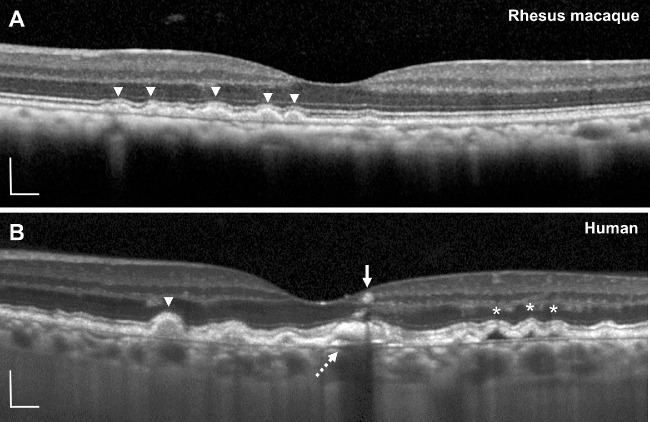
Although most drusen gradually increased in size, a portion spontaneously regressed or collapsed over 2 years. Histologic analyses showed that soft drusen exhibit hypertrophy and dysmorphia of overlying retinal pigment epithelium (RPE), as seen in early and intermediate AMD, but do not exhibit RPE atrophy, RPE migration, or photoreceptor degeneration characteristic of advanced AMD. Ultrastructure of soft drusen showed abundant lipid particles within Bruch's membrane and AMD-related basal linear deposits (BlinD) resembling those in human drusen.
The dynamic remodeling, histologic findings, and ultrastructural features of soft drusen in aged rhesus macaques support nonhuman primates as an animal model of early AMD and reveal important insights into drusen biogenesis and AMD development.
利用活体多模态视网膜成像和离体组织学及超微结构分析,以研究恒河猴为模型的早期年龄相关性黄斑变性(AMD),对老年恒河猴软性玻璃膜疣的演变和结构进行特征描述。
对 20 只年龄在 23.3 ± 2.7 岁、有软性玻璃膜疣病变超过 2 年的老年恒河猴进行多模态成像(包括眼底照相、谱域光学相干断层扫描[SD-OCT]和眼底自发荧光[FAF]),以对单个玻璃膜疣病变进行特征描述和跟踪,随后进行半薄组织学分析和透射电子显微镜(TEM)检查。
尽管大多数玻璃膜疣逐渐增大,但部分在 2 年内自发消退或塌陷。组织学分析显示,软性玻璃膜疣表现为视网膜色素上皮(RPE)的过度肥大和形态异常,这与早期和中期 AMD 所见相似,但不表现为 RPE 萎缩、RPE 迁移或与晚期 AMD 相关的光感受器变性。软性玻璃膜疣的超微结构显示,Bruch 膜内有大量的脂质颗粒和 AMD 相关的基底线性沉积(BlinD),类似于人类玻璃膜疣中的情况。
老年恒河猴软性玻璃膜疣的动态重塑、组织学发现和超微结构特征支持将非人类灵长类动物作为早期 AMD 的动物模型,并深入了解玻璃膜疣的发生和 AMD 的发展。