Institute of Clinical Pharmacy, The Second Affiliated Hospital of Harbin Medical University (The University Key Laboratory of Drug Research, Heilongjiang Province, Harbin 150086, China.
Department of Clinical Pharmacology, College of Pharmacy, Harbin Medical University, Harbin 150086, China.
Mediators Inflamm. 2020 Feb 5;2020:6318520. doi: 10.1155/2020/6318520. eCollection 2020.
Aloe emodin (AE) is a lipid-lowering agent, which could be used to treat hyperlipidemia, thereby reducing the risk of cardiovascular disease. Recent evidence suggests that hyperlipidemia is associated with many cardiac pathological alterations and might worsen myocardial damages.
The purpose of this study is to evaluate the potential roles and mechanisms of AE in hyperlipidemia-induced oxidative stress and inflammation in the heart. . We established a hyperlipidemia-induced cardiac inflammation model in rats and cells then administered AE and observed its effect on hyperlipidemia-induced cardiac inflammation.
We used a mouse model of hyperlipidemia caused by a high-fat diet (HFD) for 10 weeks and cell culture experimental models of inflammation in the heart stimulated by PA for 14 h. Inflammatory markers were detected by qRT-PCR, WB, and immunofluorescence.
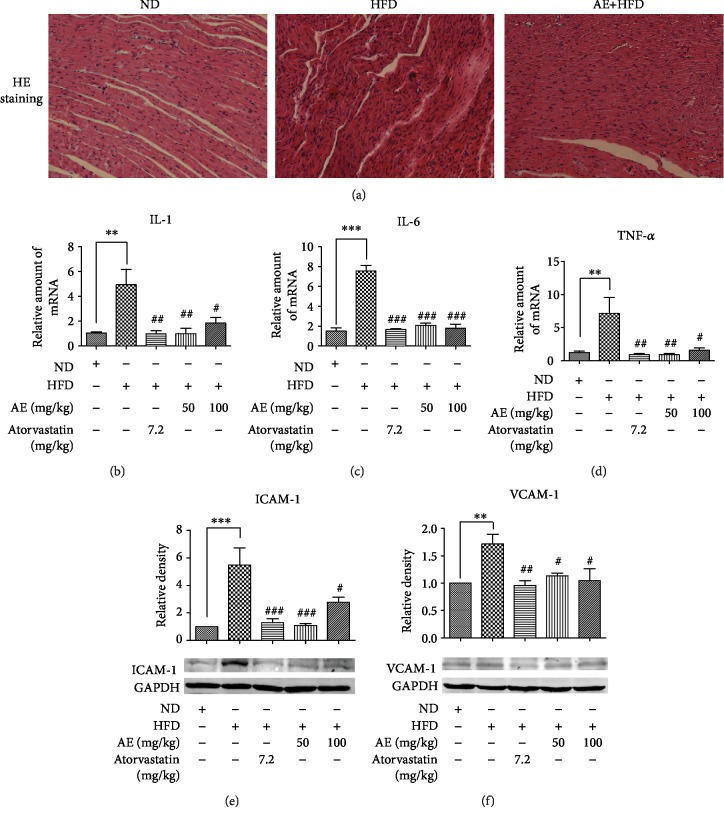
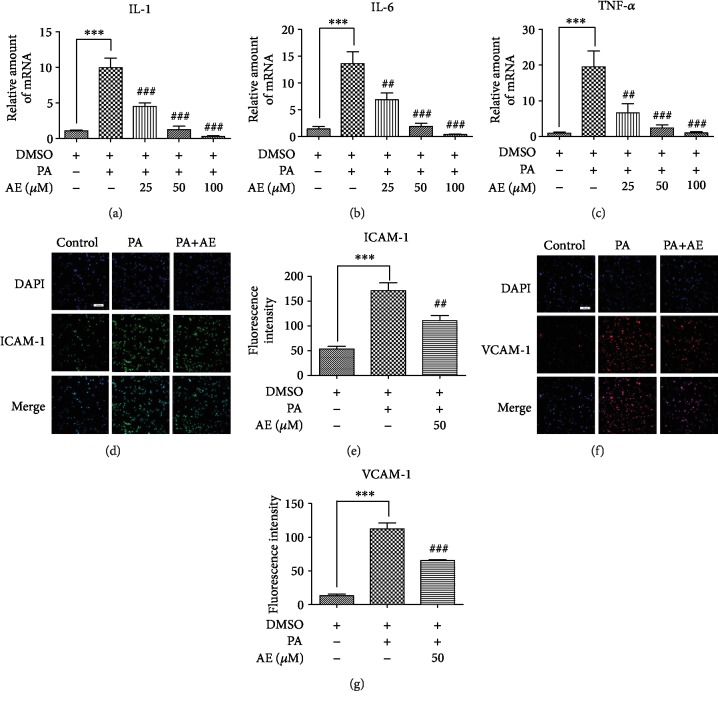
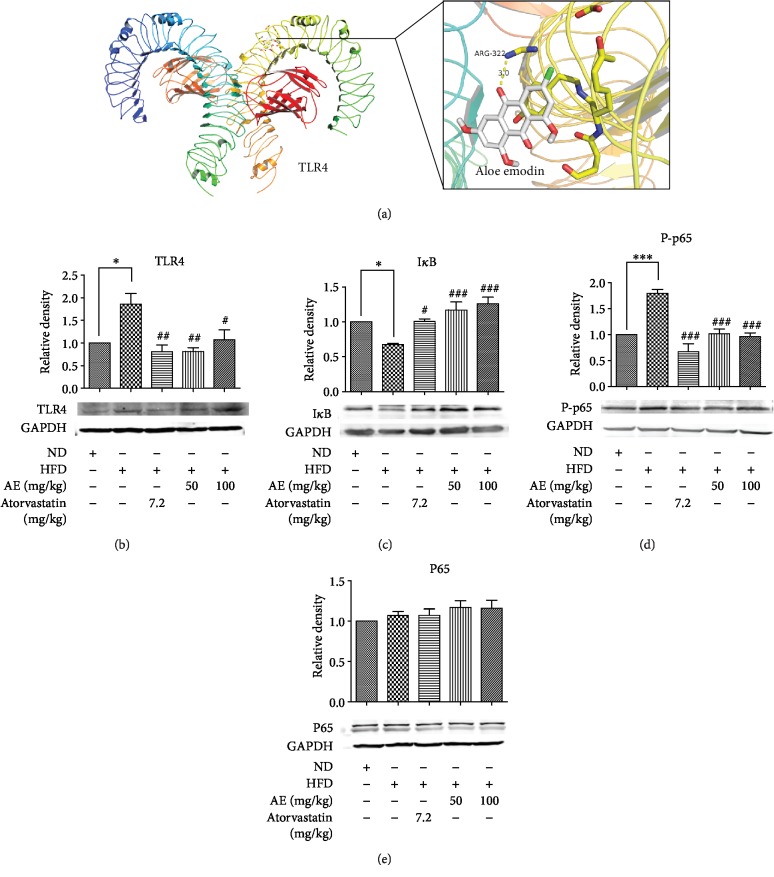
We demonstrated that the expression levels of proinflammatory cytokines IL-1, IL-6, and TNF- were increased in the HFD group compared to the normal diet (ND) group, whereas AE treatment significantly reduced their levels in the myocardium. In addition, vascular cell adhesion molecule 1 (VCAM1) and intercellular adhesion molecule 1 (ICAM-1) protein expressions were also inhibited by AE. Our study showed AE treatment dose-dependently decreased the expression of IL-1, IL-6, and TNF- were increased in the HFD group compared to the normal diet (ND) group, whereas AE treatment significantly reduced their levels in the myocardium. In addition, vascular cell adhesion molecule 1 (VCAM1) and intercellular adhesion molecule 1 (ICAM-1) protein expressions were also inhibited by AE. Our B, and p-P65l and study showed AE treatment dose-dependently decreased the expression of IL-1.
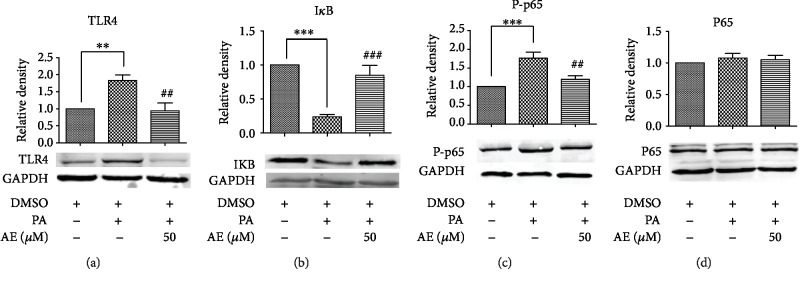
Taken together, our findings disclose that AE could alleviate HFD/PA-induced cardiac inflammation via inhibition of the TLR4/NF-B signaling pathway. Thus, AE may be a promising therapeutic strategy for preventing hyperlipidemia-induced myocardial injury.B, and p-P65l.
大黄素(AE)是一种降脂药,可用于治疗高脂血症,从而降低心血管疾病的风险。最近的证据表明,高脂血症与许多心脏病理改变有关,并可能加重心肌损伤。
本研究旨在评估 AE 在高脂血症诱导的心脏氧化应激和炎症中的潜在作用和机制。我们建立了高脂血症诱导的大鼠心脏炎症模型和细胞炎症模型,然后给予 AE 并观察其对高脂血症诱导的心脏炎症的影响。
我们使用高脂肪饮食(HFD)喂养 10 周的小鼠高脂血症模型和 PA 刺激 14 小时的心脏炎症细胞培养实验模型。通过 qRT-PCR、WB 和免疫荧光检测炎症标志物。
我们证明与正常饮食(ND)组相比,HFD 组促炎细胞因子 IL-1、IL-6 和 TNF-α 的表达水平升高,而 AE 治疗显著降低了心肌中的这些细胞因子的水平。此外,AE 还抑制了血管细胞黏附分子 1(VCAM1)和细胞间黏附分子 1(ICAM-1)的蛋白表达。我们的研究表明,AE 治疗呈剂量依赖性地降低了 HFD 组中 IL-1、IL-6 和 TNF-α的表达,与 ND 组相比,AE 治疗显著降低了心肌中的这些细胞因子的水平。此外,AE 还抑制了血管细胞黏附分子 1(VCAM1)和细胞间黏附分子 1(ICAM-1)的蛋白表达。我们的研究表明,AE 治疗呈剂量依赖性地降低了 HFD 组中 IL-1 的表达。
综上所述,我们的研究结果表明,AE 可通过抑制 TLR4/NF-κB 信号通路缓解 HFD/PA 诱导的心脏炎症。因此,AE 可能是预防高脂血症诱导的心肌损伤的一种有前途的治疗策略。