Division of Gastroenterology, Beth Israel Deaconess Medical Center, Harvard Medical School, 330 Brookline Avenue, Boston, MA 02215, USA.
Department of Neonatology, Beth Israel Deaconess Medical Center, Harvard Medical School, 330 Brookline Avenue, Boston, MA 02215, USA.
Nutrients. 2020 Feb 19;12(2):534. doi: 10.3390/nu12020534.
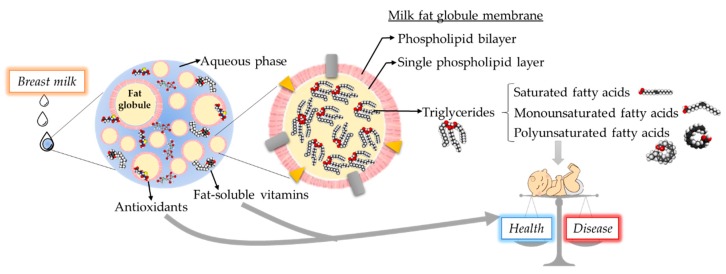
Human breast milk is the optimal source of nutrition for infant growth and development. Breast milk fats and their downstream derivatives of fatty acids and fatty acid-derived terminal mediators not only provide an energy source but also are important regulators of development, immune function, and metabolism. The composition of the lipids and fatty acids determines the nutritional and physicochemical properties of human milk fat. Essential fatty acids, including long-chain polyunsaturated fatty acids (LCPUFAs) and specialized pro-resolving mediators, are critical for growth, organogenesis, and regulation of inflammation. Combined data including in vitro, in vivo, and human cohort studies support the beneficial effects of human breast milk in intestinal development and in reducing the risk of intestinal injury. Human milk has been shown to reduce the occurrence of necrotizing enterocolitis (NEC), a common gastrointestinal disease in preterm infants. Preterm infants fed human breast milk are less likely to develop NEC compared to preterm infants receiving infant formula. Intestinal development and its physiological functions are highly adaptive to changes in nutritional status influencing the susceptibility towards intestinal injury in response to pathological challenges. In this review, we focus on lipids and fatty acids present in breast milk and their impact on neonatal gut development and the risk of disease.
人乳是婴儿生长发育的最佳营养来源。乳脂肪及其下游衍生物脂肪酸和脂肪酸衍生的终末介质不仅提供能量来源,还是发育、免疫功能和代谢的重要调节剂。脂质和脂肪酸的组成决定了人乳脂肪的营养和物理化学性质。必需脂肪酸,包括长链多不饱和脂肪酸(LCPUFA)和专门的促解决介质,对于生长、器官发生和炎症调节至关重要。包括体外、体内和人类队列研究在内的综合数据支持人乳在肠道发育和降低肠道损伤风险方面的有益作用。人乳已被证明可降低坏死性小肠结肠炎(NEC)的发生,NEC 是早产儿常见的胃肠道疾病。与接受婴儿配方奶粉的早产儿相比,喂养人乳的早产儿发生 NEC 的可能性较小。肠道发育及其生理功能对营养状况的变化具有高度适应性,影响对病理挑战引起的肠道损伤的易感性。在这篇综述中,我们重点关注存在于人乳中的脂质和脂肪酸及其对新生儿肠道发育和疾病风险的影响。