Division of Newborn Medicine, Boston Children's Hospital, Boston, MA 02115, USA.
Department of Pediatric Newborn Medicine, Department of Nursing, Brigham and Women's Hospital, Boston, MA 02115, USA.
Nutrients. 2020 Feb 23;12(2):581. doi: 10.3390/nu12020581.
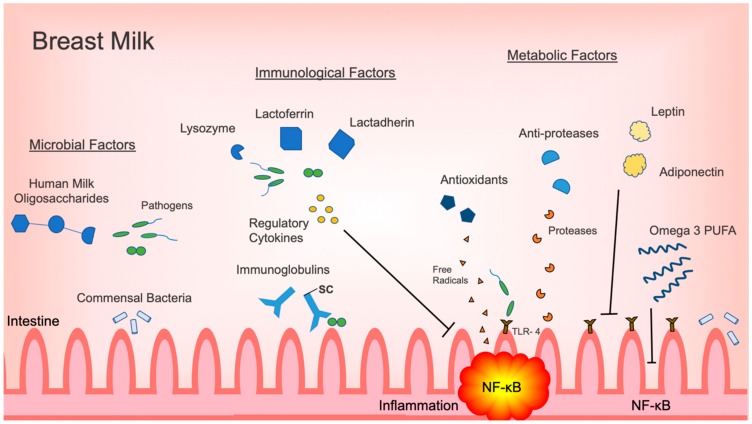
Human breast milk is well known as the ideal source of nutrition during early life, ensuring optimal growth during infancy and early childhood. Breast milk is also the source of many unique and dynamic bioactive components that play a key role in the development of the immune system. These bioactive components include essential microbes, human milk oligosaccharides (HMOs), immunoglobulins, lactoferrin and dietary polyunsaturated fatty acids. These factors all interact with intestinal commensal bacteria and/or immune cells, playing a critical role in establishment of the intestinal microbiome and ultimately influencing intestinal inflammation and gut health during early life. Exposure to breast milk has been associated with a decreased incidence and severity of necrotizing enterocolitis (NEC), a devastating disease characterized by overwhelming intestinal inflammation and high morbidity among preterm infants. For this reason, breast milk is considered a protective factor against NEC and aberrant intestinal inflammation common in preterm infants. In this review, we will describe the key microbial, immunological, and metabolic components of breast milk that have been shown to play a role in the mechanisms of intestinal inflammation and/or NEC prevention.
人乳是生命早期理想的营养来源,可确保婴儿和幼儿期的最佳生长。母乳也是许多独特和动态生物活性成分的来源,这些成分在免疫系统发育中起着关键作用。这些生物活性成分包括必需微生物、人乳寡糖(HMOs)、免疫球蛋白、乳铁蛋白和膳食多不饱和脂肪酸。这些因素都与肠道共生菌和/或免疫细胞相互作用,在建立肠道微生物组方面发挥着关键作用,并最终影响生命早期的肠道炎症和肠道健康。接触母乳与坏死性小肠结肠炎(NEC)的发病率和严重程度降低有关,NEC 是一种破坏性疾病,其特征是肠道炎症严重,早产儿发病率高。出于这个原因,母乳被认为是预防 NEC 和早产儿常见的异常肠道炎症的保护因素。在这篇综述中,我们将描述母乳中已被证明在肠道炎症和/或 NEC 预防机制中发挥作用的关键微生物、免疫学和代谢成分。