Department of Psychology, Yale University, New Haven, CT, USA.
Department of Psychology, University of Turin, Torino, Italy.
Nat Neurosci. 2020 Apr;23(4):565-574. doi: 10.1038/s41593-020-0593-y. Epub 2020 Feb 24.
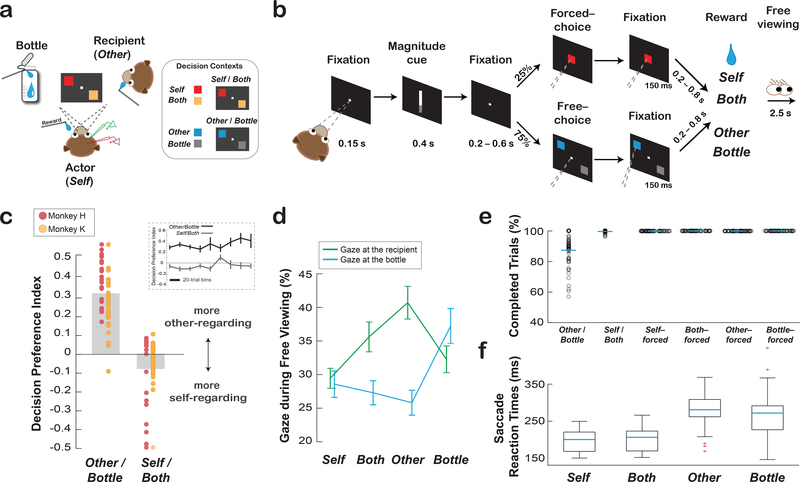
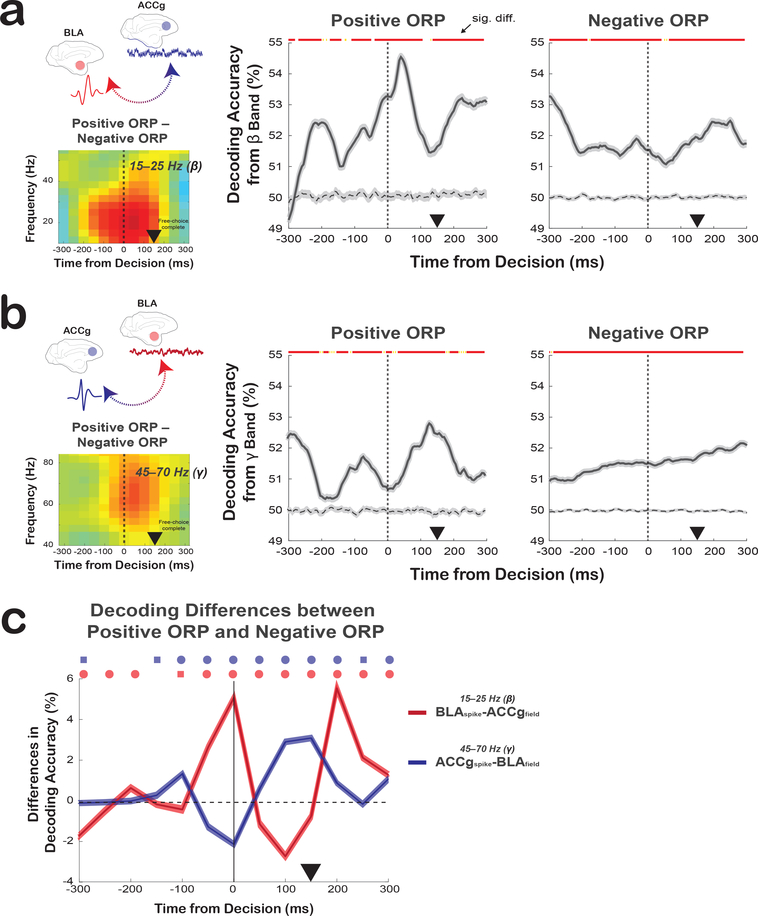
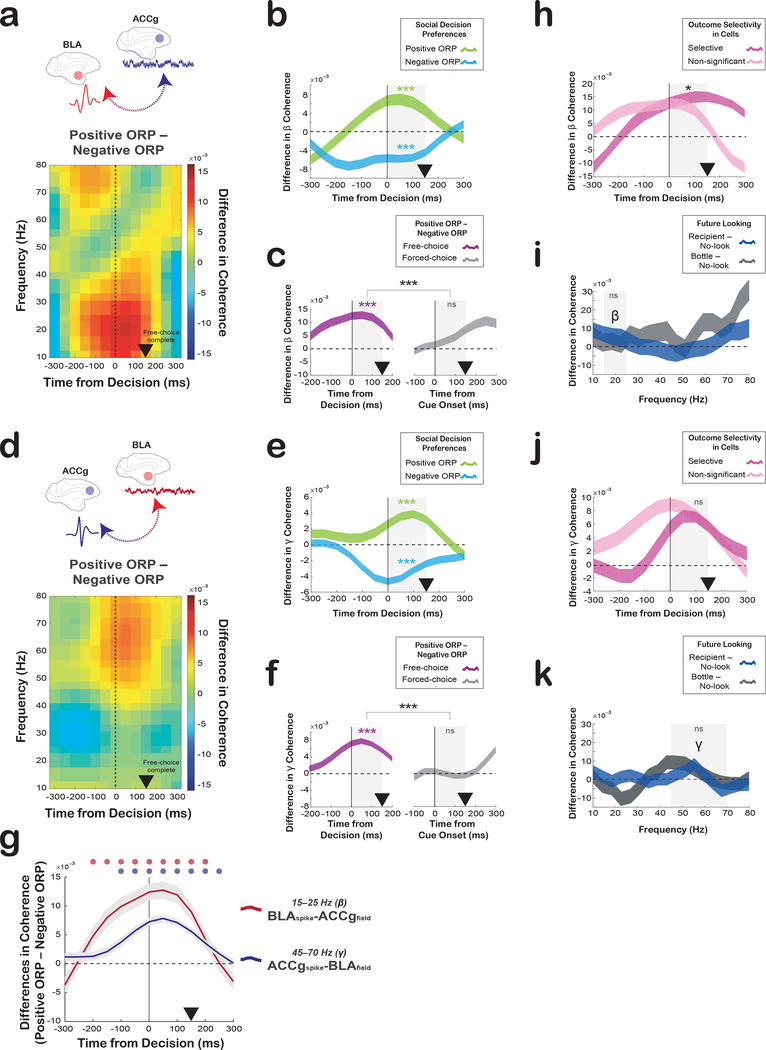
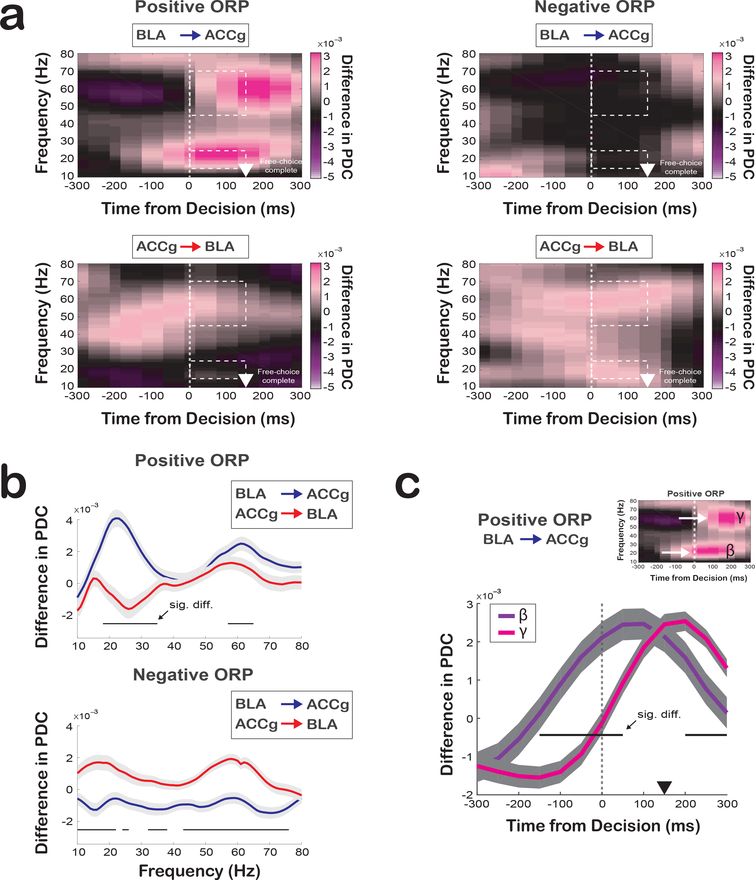
Social behaviors recruit multiple cognitive operations that require interactions between cortical and subcortical brain regions. Interareal synchrony may facilitate such interactions between cortical and subcortical neural populations. However, it remains unknown how neurons from different nodes in the social brain network interact during social decision-making. Here we investigated oscillatory neuronal interactions between the basolateral amygdala and the rostral anterior cingulate gyrus of the medial prefrontal cortex while monkeys expressed context-dependent positive or negative other-regarding preference (ORP), whereby decisions affected the reward received by another monkey. Synchronization between the two nodes was enhanced for a positive ORP but suppressed for a negative ORP. These interactions occurred in beta and gamma frequency bands depending on the area contributing the spikes, exhibited a specific directionality of information flow associated with a positive ORP and could be used to decode social decisions. These findings suggest that specialized coordination in the medial prefrontal-amygdala network underlies social-decision preferences.
社会行为需要皮质和皮质下脑区之间的相互作用来招募多种认知操作。脑区间同步可能有助于皮质和皮质下神经群体之间的这种相互作用。然而,目前尚不清楚社交大脑网络中不同节点的神经元在进行社交决策时如何相互作用。在这里,当猴子表达依赖于上下文的积极或消极的他人相关偏好(ORP)时,我们研究了基底外侧杏仁核和内侧前额叶皮质的额前扣带回之间的振荡神经元相互作用,其中决策会影响另一只猴子的奖励。对于积极的 ORP,两个节点之间的同步性增强,但对于消极的 ORP,同步性受到抑制。这些相互作用发生在β和γ频段,具体取决于产生尖峰的区域,表现出与积极的 ORP 相关的信息流的特定方向性,并且可以用于解码社交决策。这些发现表明,内侧前额叶-杏仁核网络中的专门协调是社交决策偏好的基础。