Huzzen Brynn E, Hale Amanda M, Bennett Victoria J
Department of Environmental Sciences, Texas Christian University, Fort Worth, TX, United States of America.
Department of Biology, Texas Christian University, Fort Worth, TX, United States of America.
PeerJ. 2020 Feb 12;8:e8438. doi: 10.7717/peerj.8438. eCollection 2020.
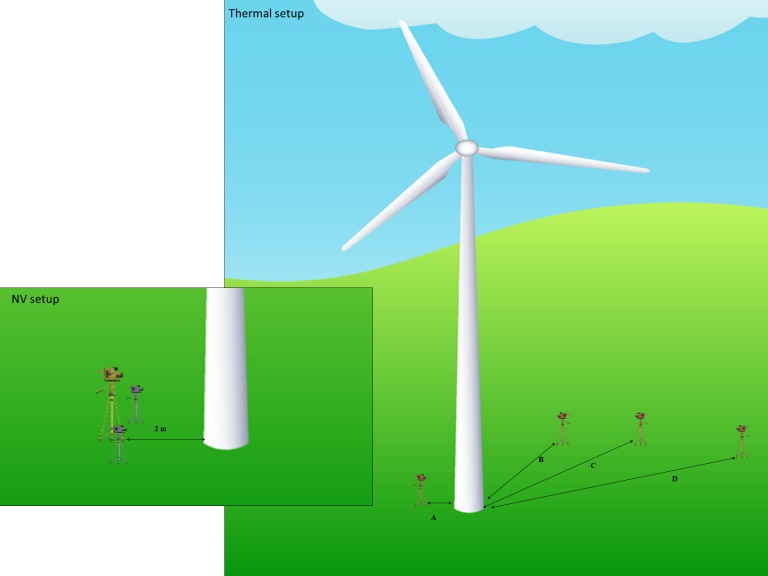
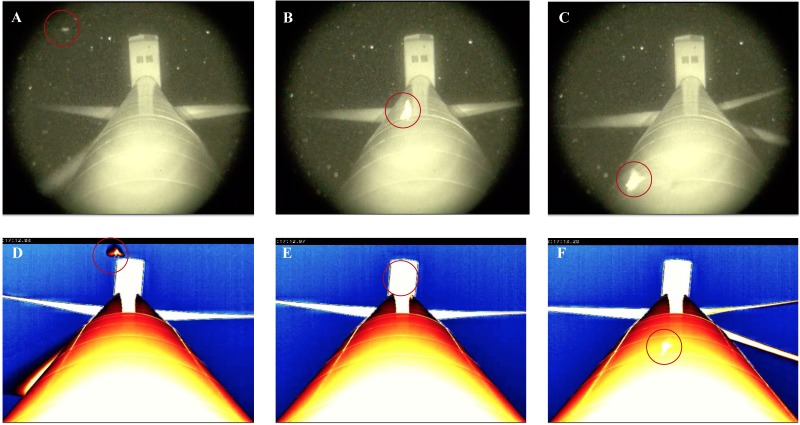
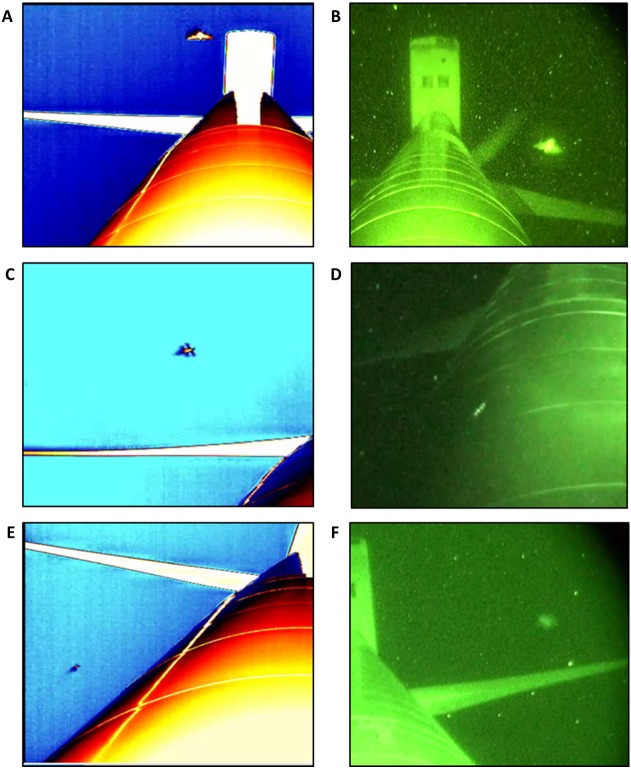
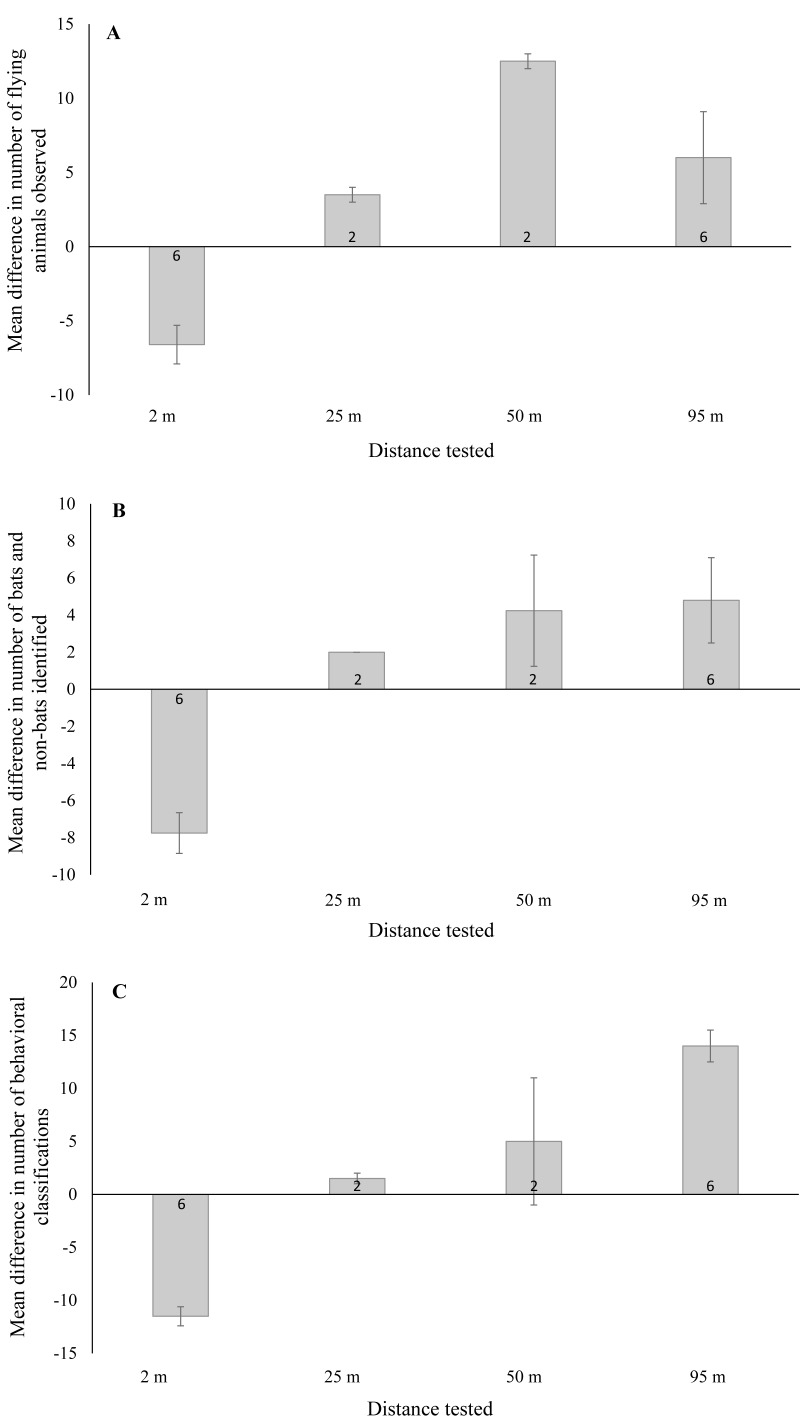
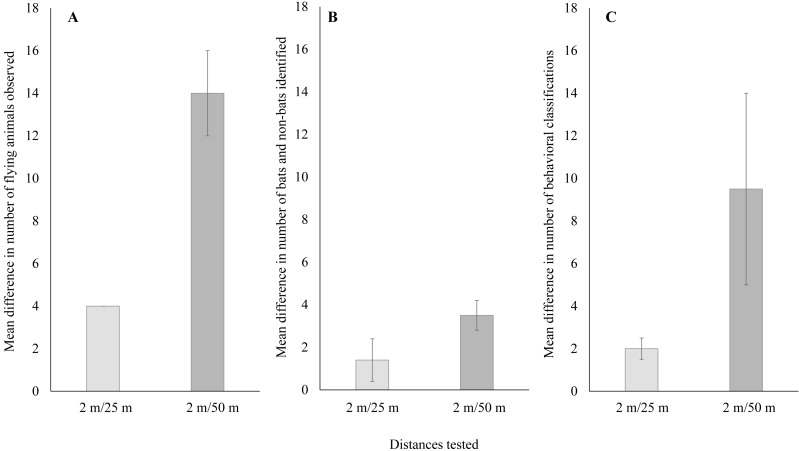
The effects of anthropogenic modification of air space on wildlife, particularly volant species, is not fully understood. Thus, it is essential to understand wildlife-interactions with tall structures to implement effective mitigation strategies. Yet, we are currently lacking standard protocols for visual surveys of wildlife behavior at such heights. Our study sought to determine an effective, repeatable method using readily available night vision and thermal technology to survey wildlife at tall structures. Using bats as the taxonomic group of interest, we (1) created a key to identify bats and their behavior, (2) compared the effectiveness of 2 different technologies, and (3) assessed optimal equipment placement to visually capture bat activity and behavior in proximity to wind turbine towers. For the latter, we tested thermal cameras at four distances from the base of the tower. The results of our study revealed that thermal cameras captured ∼34% more flying animals than night vision at a 2 m distance. However, due to the heat signature of the turbine towers themselves, it was challenging to identify behaviors and interactions that occurred in close proximity to the towers. In contrast, it was difficult to identify bats approaching the towers using night vision, yet we were able to clearly observe interactions with the towers themselves. With regards to equipment placement, we visually captured more bats with the thermal cameras placed 2 m from the tower base compared to farther distances. From our findings, we recommend that when using either thermal or night vision technology at tall structures, they be placed 2 m from the base to effectively observe interactions along the length of these structures. In addition, we further recommend that consideration be given to the use of these two technology types together to effectively conduct such surveys. If these survey techniques are incorporated into standard protocols, future surveys at a variety of tall structures are likely to become comparable and repeatable, thereby more effectively informing any mitigation strategies that may be required.
人为改变空域对野生动物,尤其是飞行物种的影响尚未完全明了。因此,了解野生动物与高大结构之间的相互作用对于实施有效的缓解策略至关重要。然而,目前我们缺乏在如此高度对野生动物行为进行视觉调查的标准方案。我们的研究旨在确定一种有效、可重复的方法,利用现成的夜视和热成像技术在高大结构处调查野生动物。以蝙蝠作为感兴趣的分类群体,我们(1)创建了一个识别蝙蝠及其行为的关键方法,(2)比较了两种不同技术的有效性,(3)评估了在风力涡轮机塔附近视觉捕捉蝙蝠活动和行为的最佳设备放置位置。对于后者,我们在距离塔基四个不同距离处测试了热成像相机。我们的研究结果显示,在距离塔基2米处,热成像相机捕捉到的飞行动物比夜视设备多约34%。然而,由于涡轮机塔本身的热信号,识别在塔附近发生的行为和相互作用具有挑战性。相比之下,使用夜视设备很难识别接近塔的蝙蝠,但我们能够清晰地观察到它们与塔本身的相互作用。关于设备放置,与更远的距离相比,将热成像相机放置在距离塔基2米处时,我们在视觉上捕捉到了更多的蝙蝠。根据我们的研究结果,我们建议在高大结构处使用热成像或夜视技术时,将设备放置在距离塔基2米处,以便有效地观察这些结构沿线的相互作用。此外,我们进一步建议考虑同时使用这两种技术类型来有效地进行此类调查。如果将这些调查技术纳入标准方案,未来在各种高大结构处进行的调查可能会变得具有可比性和可重复性,从而更有效地为可能需要的任何缓解策略提供信息。