Department of Chemistry, The University of Sheffield, Sheffield, England, United Kingdom.
Faculty of Biological Sciences, The University of Leeds, Leeds, England, United Kingdom.
PLoS One. 2020 Feb 25;15(2):e0228708. doi: 10.1371/journal.pone.0228708. eCollection 2020.
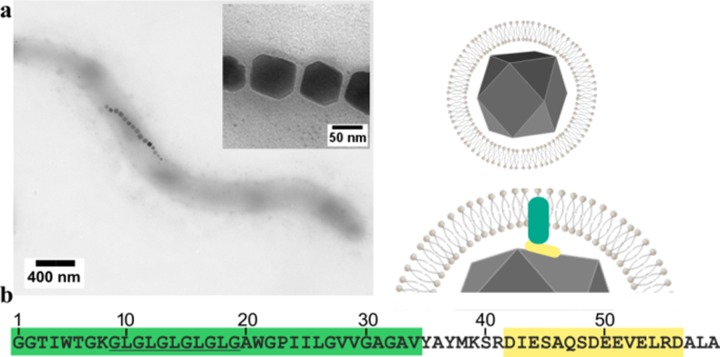
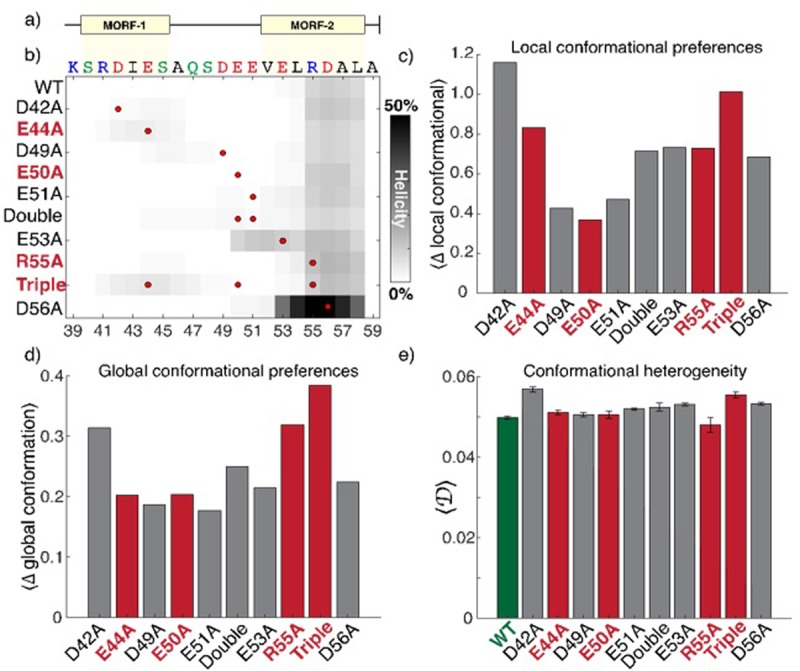
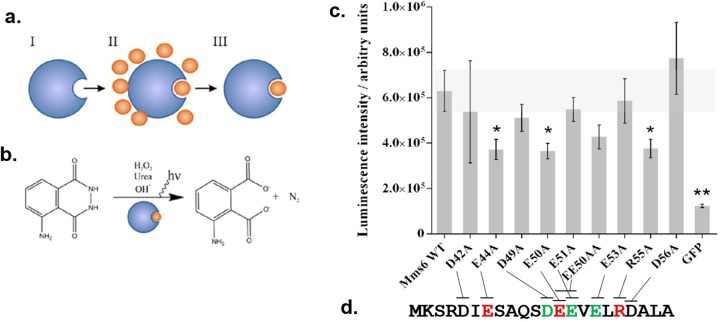
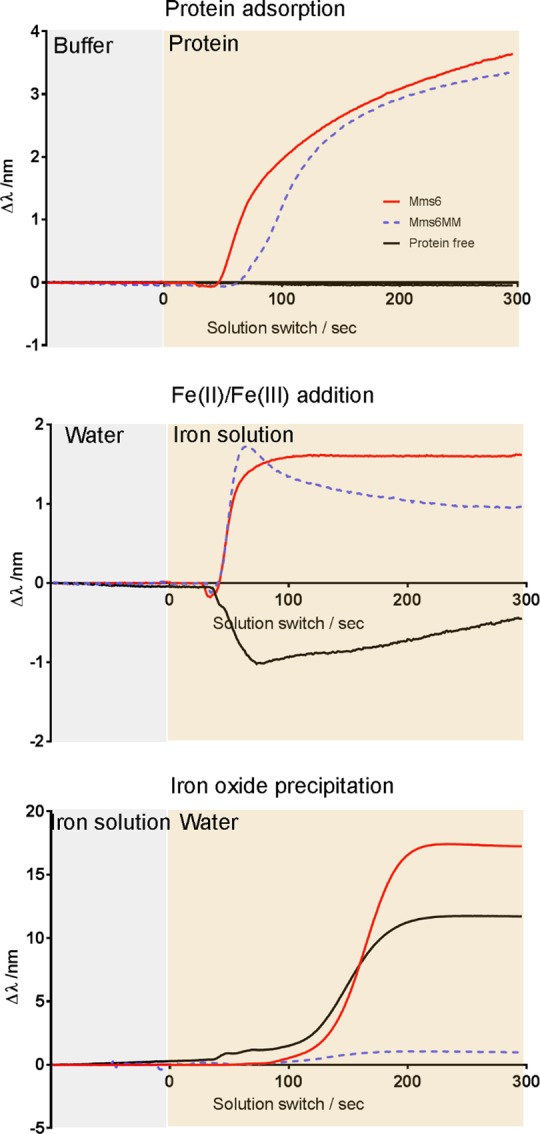
The biomineralization protein Mms6 has been shown to be a major player in the formation of magnetic nanoparticles both within the magnetosomes of magnetotactic bacteria and as an additive in synthetic magnetite precipitation assays. Previous studies have highlighted the ferric iron binding capability of the protein and this activity is thought to be crucial to its mineralizing properties. To understand how this protein binds ferric ions we have prepared a series of single amino acid substitutions within the C-terminal binding region of Mms6 and have used a ferric binding assay to probe the binding site at the level of individual residues which has pinpointed the key residues of E44, E50 and R55 involved in Mms6 ferric binding. No aspartic residues bound ferric ions. A nanoplasmonic sensing experiment was used to investigate the unstable EER44, 50,55AAA triple mutant in comparison to native Mms6. This suggests a difference in interaction with iron ions between the two and potential changes to the surface precipitation of iron oxide when the pH is increased. All-atom simulations suggest that disruptive mutations do not fundamentally alter the conformational preferences of the ferric binding region. Instead, disruption of these residues appears to impede a sequence-specific motif in the C-terminus critical to ferric ion binding.
生物矿化蛋白 Mms6 已被证明是形成磁性纳米颗粒的主要参与者,无论是在趋磁细菌的磁小体中,还是作为合成磁铁矿沉淀测定的添加剂。先前的研究强调了该蛋白与三价铁的结合能力,并且这种活性被认为对其矿化特性至关重要。为了了解该蛋白如何结合三价铁离子,我们在 Mms6 的 C 末端结合区域内制备了一系列单一氨基酸取代,并使用三价铁结合测定法在单个残基水平上探测结合位点,从而确定了 E44、E50 和 R55 这些关键残基在 Mms6 三价铁结合中的作用。没有天冬氨酸残基结合三价铁离子。纳米等离子体传感实验用于研究不稳定的 EER44、50、55AAA 三突变体与天然 Mms6 的比较。这表明两者与铁离子的相互作用存在差异,并且当 pH 值增加时,氧化铁的表面沉淀可能发生变化。全原子模拟表明,破坏性突变不会从根本上改变铁结合区域的构象偏好。相反,这些残基的破坏似乎阻碍了 C 末端对铁离子结合至关重要的序列特异性基序。