Department of Pathology, University of Pisa, Pisa, Italy.
Thyroid. 2020 Aug;30(8):1099-1105. doi: 10.1089/thy.2020.0071. Epub 2020 Apr 7.
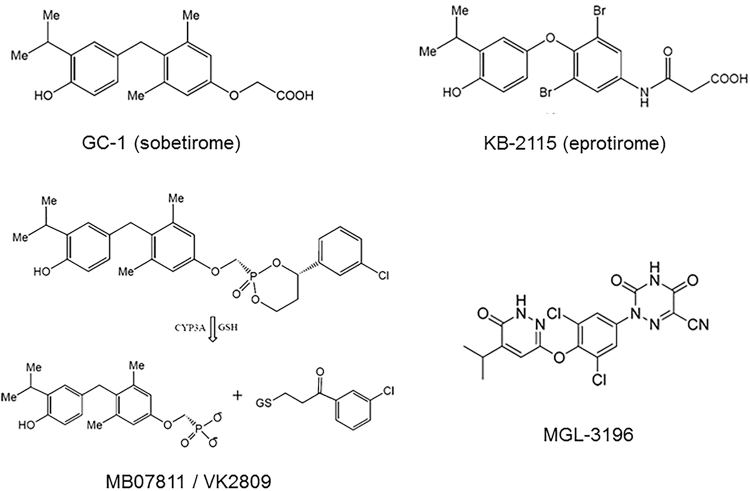
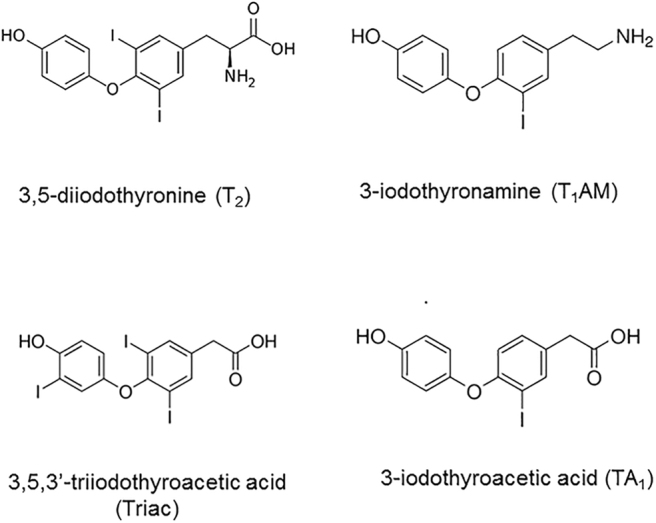
The development of thyroid hormone (TH) analogues was prompted by the attempt to exploit the effects of TH on lipid metabolism, avoiding cardiac thyrotoxicosis. Analysis of the relative distribution of the α and β subtypes of nuclear TH receptors (TRα and TRβ) showed that TRα and TRβ are responsible for cardiac and metabolic responses, respectively. Therefore, analogues with TRβ selectivity were developed, and four different compounds have been used in clinical trials: GC-1 (sobetirome), KB-2115 (eprotirome), MB07344/VK2809, and MGL-3196 (resmetirom). Each of these compounds was able to reduce low-density lipoprotein cholesterol, but a phase 3 trial with eprotirome was interrupted because of a significant increase in liver enzymes and the contemporary report of cartilage side effects in animals. As a consequence, the other projects were terminated as well. However, in recent years, TRβ agonists have raised new interest for the treatment of nonalcoholic fatty liver disease (NAFLD). After obtaining excellent results in experimental models, clinical trials have been started with MGL-3196 and VK2809, and the initial reports are encouraging. Sobetirome turned out to be effective also in experimental models of demyelinating disease. Aside TRβ agonists, TH analogues include some TH metabolites that are biologically active on their own, and their synthetic analogues. 3,5,3'-triiodothyroacetic acid has already found clinical use in the treatment of some cases of TH resistance due to TRβ mutations, and interesting results have recently been reported in patients with the Allan-Herndon-Dudley syndrome, a rare disease caused by mutations in the TH transporter MCT8. 3,5-diiodothyronine (T2) has been used with success in rat models of dyslipidemia and NAFLD, but the outcome of a clinical trial with a synthetic T2 analogue was disappointing. 3-iodothyronamine (T1AM) is the last entry in the group of active TH metabolites. Promising results have been obtained in animal models of neurological injury induced by β-amyloid or by convulsive agents, but no clinical data are available so far.
甲状腺激素(TH)类似物的开发是为了利用 TH 对脂质代谢的影响,同时避免心脏甲状腺毒症。对核 TH 受体(TRα 和 TRβ)的 α 和 β 亚型的相对分布进行分析表明,TRα 和 TRβ 分别负责心脏和代谢反应。因此,开发了具有 TRβ 选择性的类似物,已有四种不同的化合物在临床试验中使用:GC-1(索贝替雷莫)、KB-2115(eprotirome)、MB07344/VK2809 和 MGL-3196(resmetirom)。这些化合物都能够降低低密度脂蛋白胆固醇,但 eprotirome 的 3 期试验因肝酶显著升高和同时报告动物软骨副作用而中断。因此,其他项目也被终止。然而,近年来,TRβ 激动剂在治疗非酒精性脂肪性肝病(NAFLD)方面引起了新的兴趣。在实验模型中取得优异结果后,已开始使用 MGL-3196 和 VK2809 进行临床试验,初步报告令人鼓舞。Sobetirome 在脱髓鞘疾病的实验模型中也显示出疗效。除了 TRβ 激动剂外,TH 类似物还包括一些本身具有生物活性的 TH 代谢物及其合成类似物。3,5,3'-三碘甲状腺原氨酸(T3)已因 TRβ 突变导致的 TH 抵抗的一些病例中找到临床应用,最近在 Allan-Herndon-Dudley 综合征患者中报告了有趣的结果,这是一种由 TH 转运蛋白 MCT8 突变引起的罕见疾病。3,5-二碘甲状腺氨酸(T2)在大鼠血脂异常和 NAFLD 模型中已成功应用,但合成 T2 类似物的临床试验结果令人失望。3-碘甲状腺原氨酸胺(T1AM)是活性 TH 代谢物组的最后一个成员。在β-淀粉样蛋白或惊厥剂诱导的神经损伤的动物模型中获得了有希望的结果,但目前尚无临床数据。