Department of Chemical Engineering, Northeastern University, Boston, MA 02115, USA.
Department of Pharmaceutical Sciences, Northeastern University, Boston, MA 02115, USA.
Int J Nanomedicine. 2020 Jan 28;15:513-519. doi: 10.2147/IJN.S200505. eCollection 2020.
In recent years, numerous bacteria have become resistant to conventional antibiotics. Fortunately, an increasing body of research indicates that through the addition of specific metabolites (like sugars), the antibacterial activity of certain drugs can be enhanced. A new type of self-assembled nano-peptide amphiphile (SANPA) was designed in this study to treat antibiotic-resistant bacterial infections and to reduce the use of antibiotics.
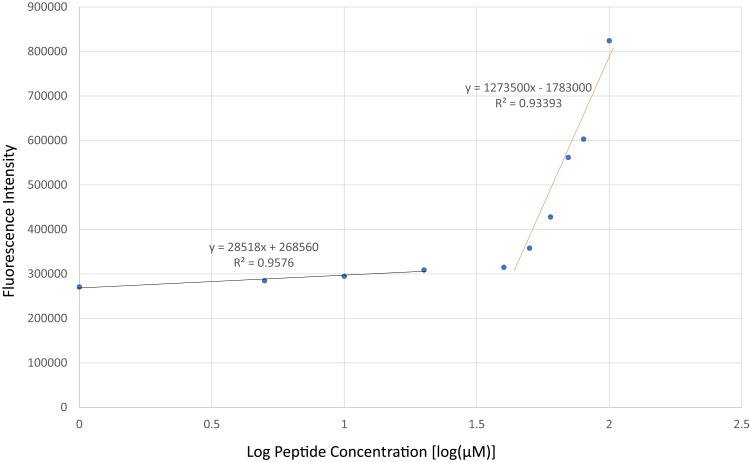
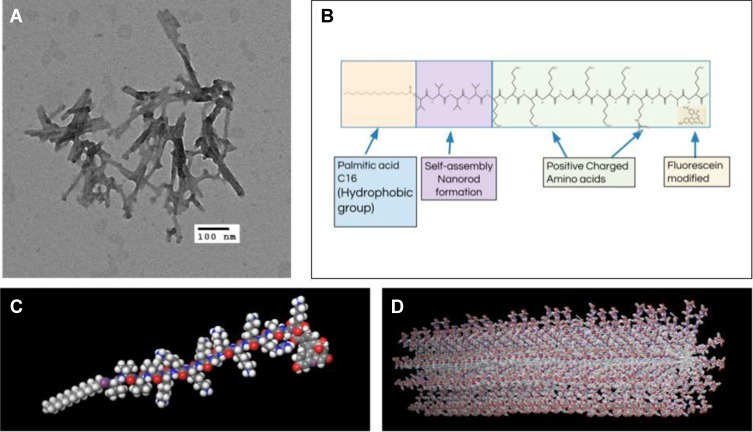
Here, SANPAs were self-assembled into nanorod structures with a diameter of . 10.5 nm at concentrations greater than the critical micelle concentration (CMC) of 44.67 μM. Both Gram-positive and Gram-negative bacteria were treated with SANPAs with fructose supplementation.
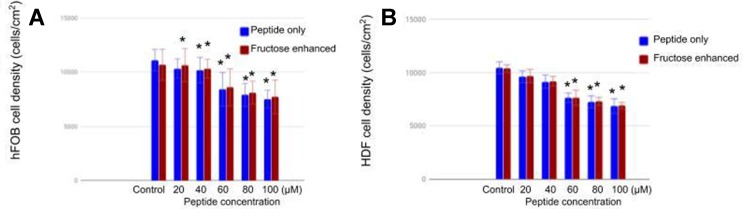
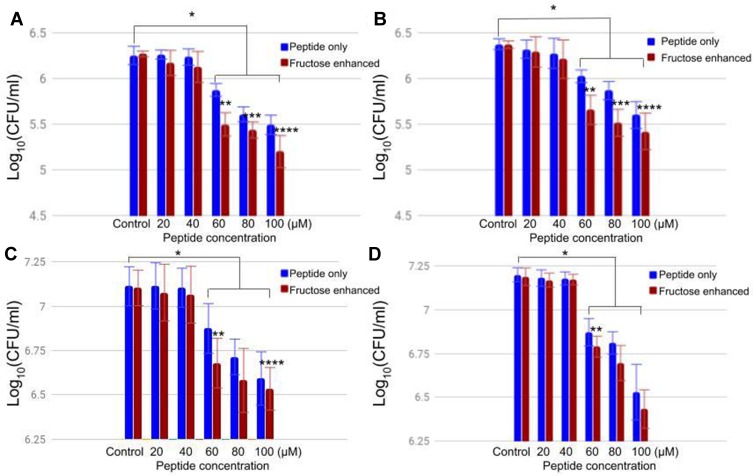
After a 30-min fructose pre-incubation, SANPAs reduced bacteria growth relative to non-fructose treatments at all concentrations. Cytotoxicity assays indicated that the presence of fructose seemed to slightly ameliorate the cytotoxic effect of the treatment on model human fetal osteoblasts (or bone-forming cells) and human dermal fibroblasts.
We demonstrated here that SANPAs-like nanomaterials have a promising potential to treat antibiotic-resistant bacteria, especially when added to fructose, potentially limiting their associated infections.
近年来,许多细菌对传统抗生素产生了耐药性。幸运的是,越来越多的研究表明,通过添加特定的代谢物(如糖),某些药物的抗菌活性可以增强。本研究设计了一种新型自组装纳米肽两亲体(SANPA),以治疗抗生素耐药性细菌感染并减少抗生素的使用。
在这里,SANPA 在浓度大于临界胶束浓度(CMC)44.67 μM 的 44.67 μM 时自组装成直径为. 10.5 nm 的纳米棒结构。用 SANPA 处理革兰氏阳性菌和革兰氏阴性菌,并补充果糖。
经过 30 分钟的果糖预孵育,SANPA 在所有浓度下均能减少细菌生长,而无需果糖处理。细胞毒性试验表明,果糖的存在似乎略微减轻了治疗对模型人胎成骨细胞(或成骨细胞)和人真皮成纤维细胞的细胞毒性作用。
我们在这里证明,SANPA 样纳米材料具有治疗抗生素耐药细菌的巨大潜力,尤其是当添加果糖时,可能会限制其相关感染。