Optical Approaches to Brain Function Laboratory, Istituto Italiano di Tecnologia, Genova, Italy; Neural Coding Laboratory, Istituto Italiano di Tecnologia, Genova and Rovereto, Italy.
Neural Coding Laboratory, Istituto Italiano di Tecnologia, Genova and Rovereto, Italy; Neural Computation Laboratory, Center for Neuroscience and Cognitive Systems @UniTn, Istituto Italiano di Tecnologia, Rovereto, Italy; Center for Mind and Brain Sciences (CIMeC), University of Trento, Trento, Italy.
Cell Rep. 2020 Feb 25;30(8):2567-2580.e6. doi: 10.1016/j.celrep.2020.01.105.
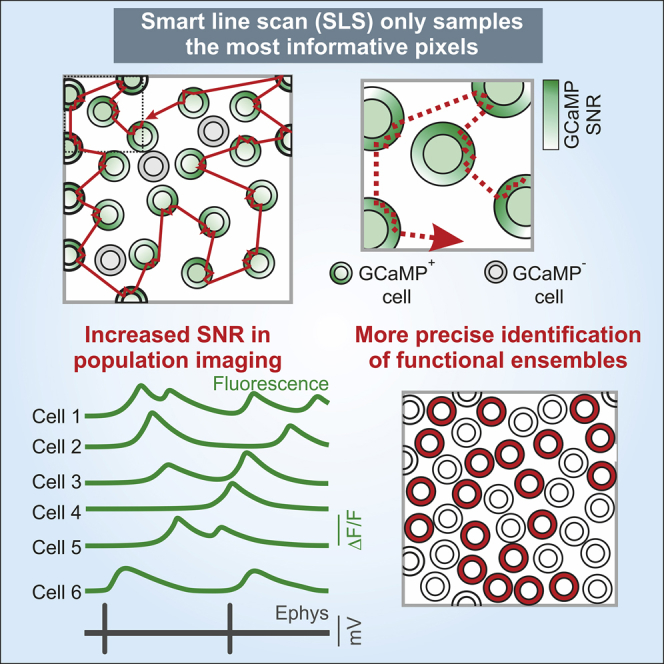
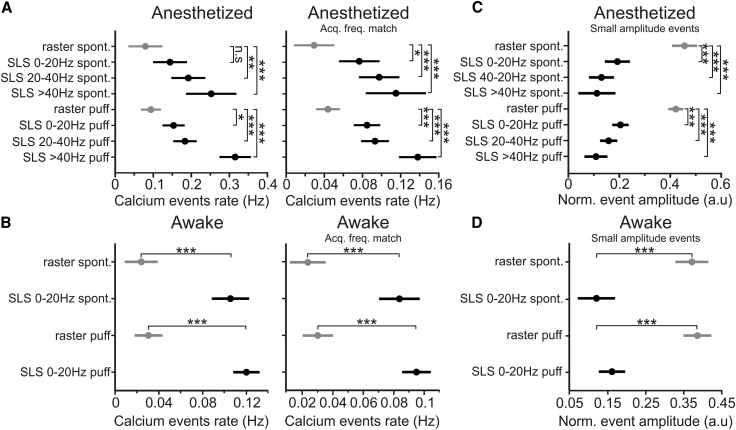
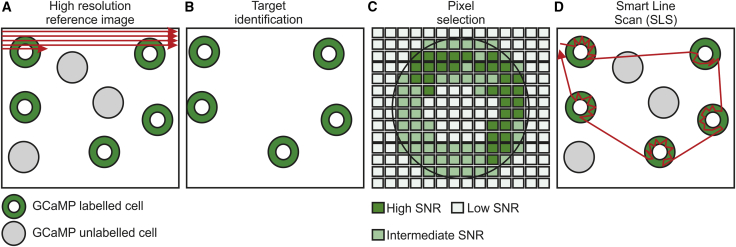
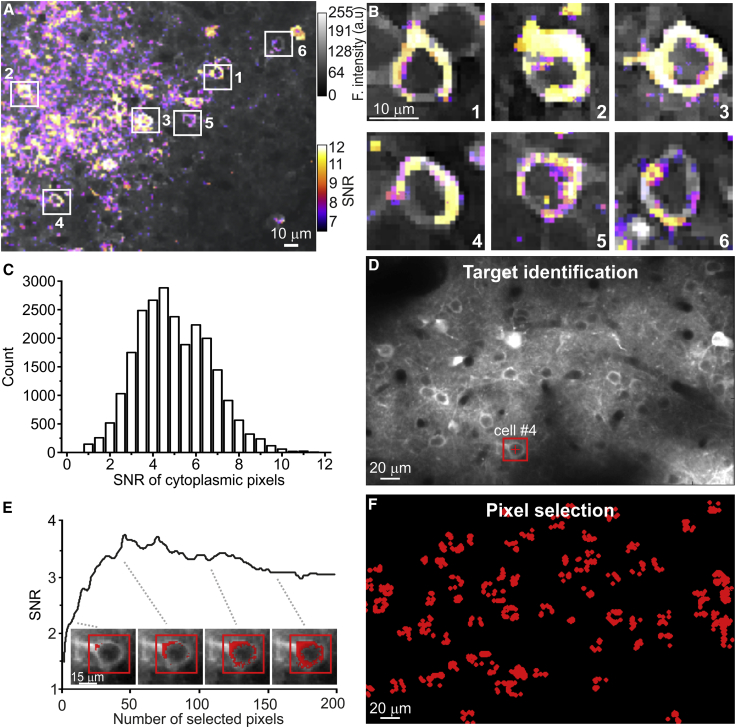
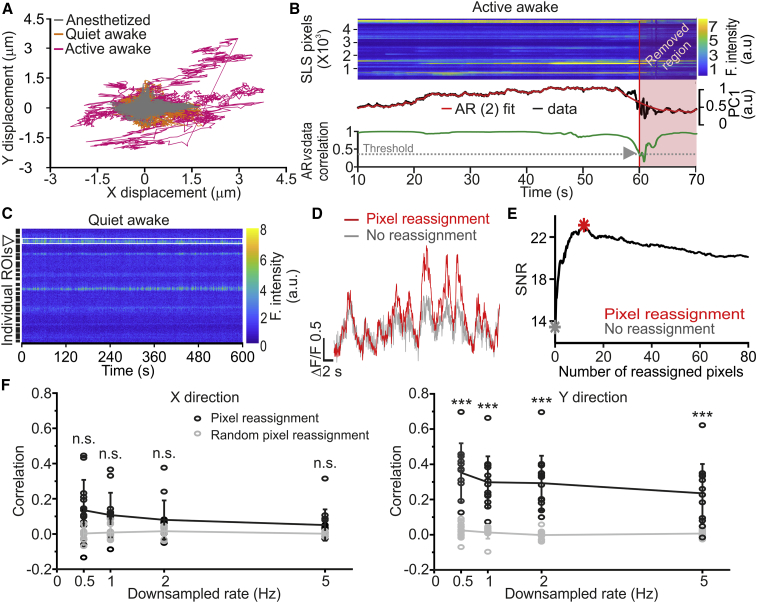
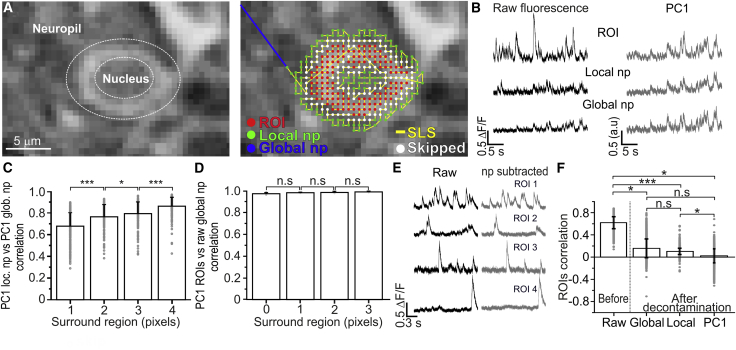
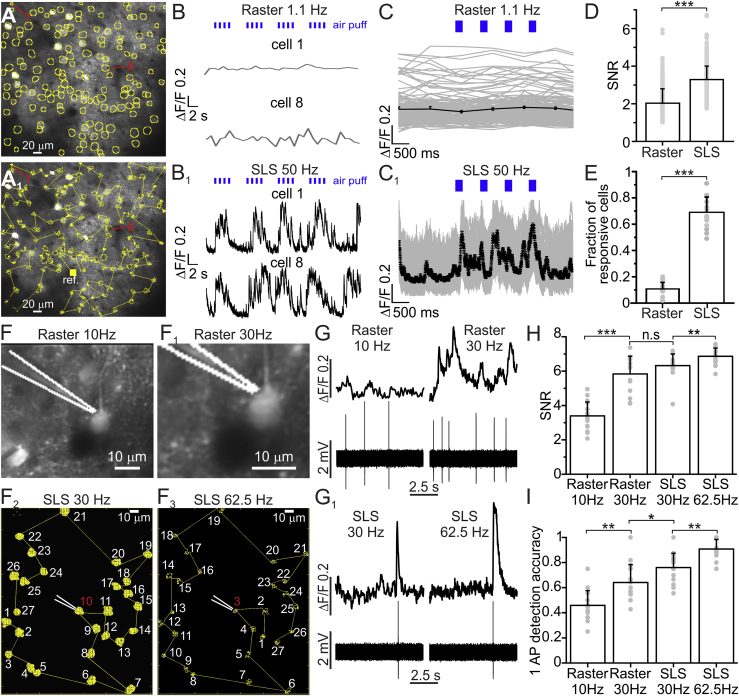
Two-photon functional imaging using genetically encoded calcium indicators (GECIs) is one prominent tool to map neural activity. Under optimized experimental conditions, GECIs detect single action potentials in individual cells with high accuracy. However, using current approaches, these optimized conditions are never met when imaging large ensembles of neurons. Here, we developed a method that substantially increases the signal-to-noise ratio (SNR) of population imaging of GECIs by using galvanometric mirrors and fast smart line scan (SLS) trajectories. We validated our approach in anesthetized and awake mice on deep and dense GCaMP6 staining in the mouse barrel cortex during spontaneous and sensory-evoked activity. Compared to raster population imaging, SLS led to increased SNR, higher probability of detecting calcium events, and more precise identification of functional neuronal ensembles. SLS provides a cheap and easily implementable tool for high-accuracy population imaging of neural GCaMP6 signals by using galvanometric-based two-photon microscopes.
使用基因编码钙指示剂 (GECI) 的双光子功能成像,是一种用于绘制神经活动的主要工具。在优化的实验条件下,GECI 可以高精度地检测单个细胞中的单个动作电位。然而,在对大量神经元进行成像时,当前的方法从未达到这些优化条件。在这里,我们开发了一种方法,该方法通过使用振镜和快速智能线扫描 (SLS) 轨迹,大大提高了 GECI 群体成像的信噪比 (SNR)。我们在麻醉和清醒的小鼠中对其进行了验证,在自发和感觉诱发活动期间,对小鼠皮层桶状结构中的深度和密集 GCaMP6 染色进行了研究。与光栅群体成像相比,SLS 提高了 SNR、提高了检测钙事件的概率,以及更精确地识别功能神经元群体。SLS 为使用基于振镜的双光子显微镜对神经 GCaMP6 信号进行高精度群体成像提供了一种廉价且易于实现的工具。