Division of Experimental Hematology and Cancer Biology, Cincinnati Children's Hospital Medical Center, Cincinnati, OH 45229, USA; Department of Cancer Biology, University of Cincinnati, Cincinnati, OH 45267, USA.
Division of Experimental Hematology and Cancer Biology, Cincinnati Children's Hospital Medical Center, Cincinnati, OH 45229, USA.
Cell Rep. 2020 Feb 25;30(8):2776-2790.e6. doi: 10.1016/j.celrep.2020.01.093.
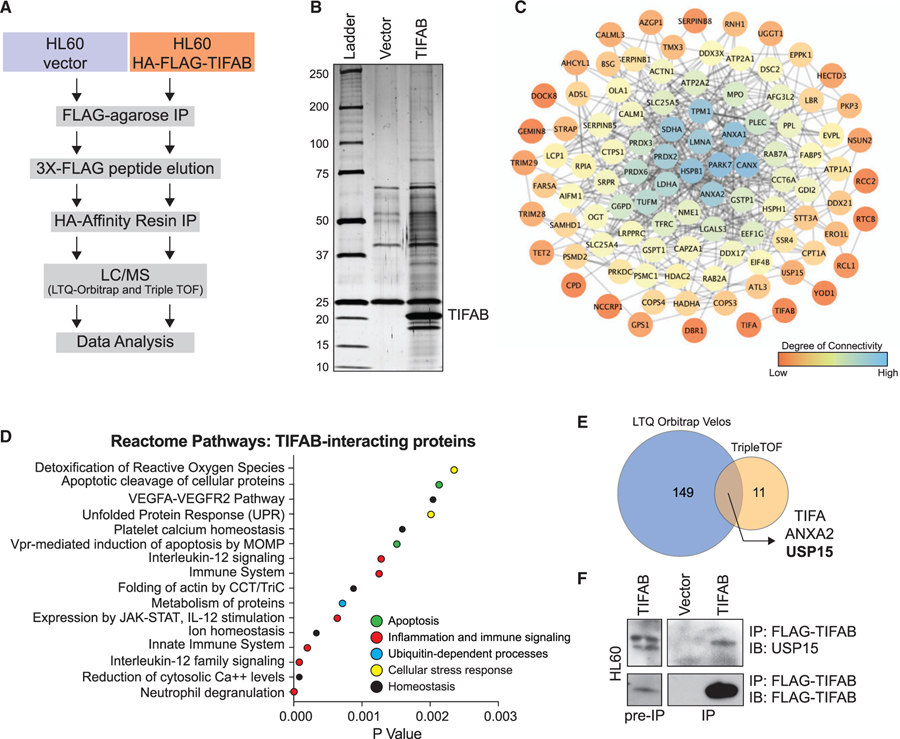
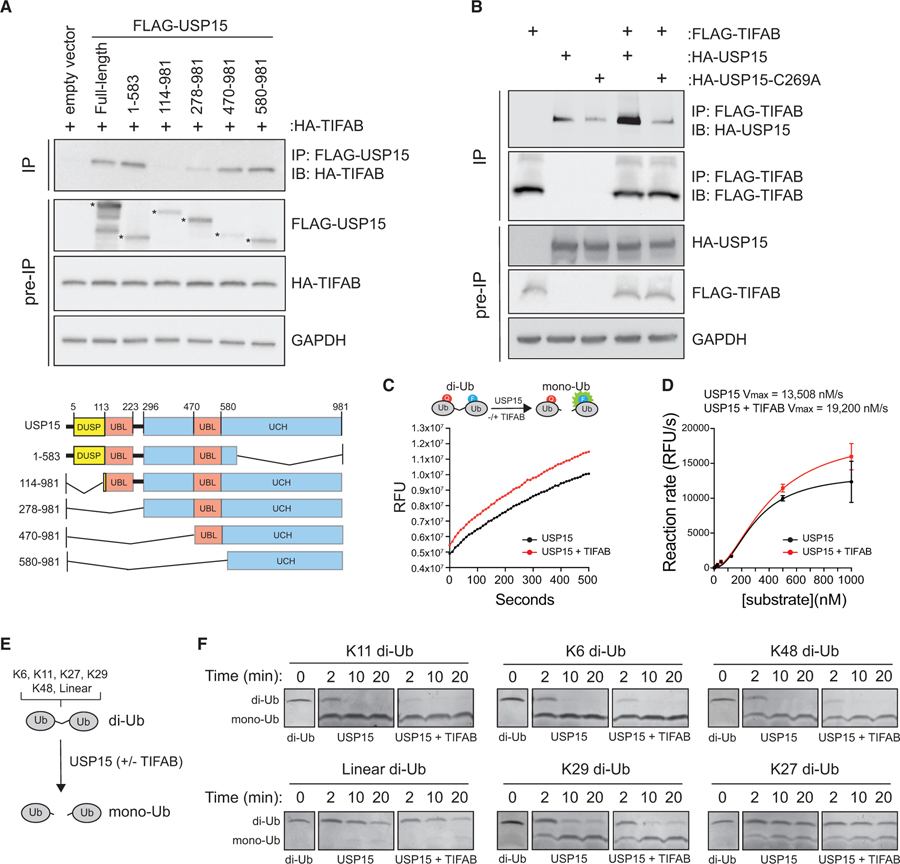
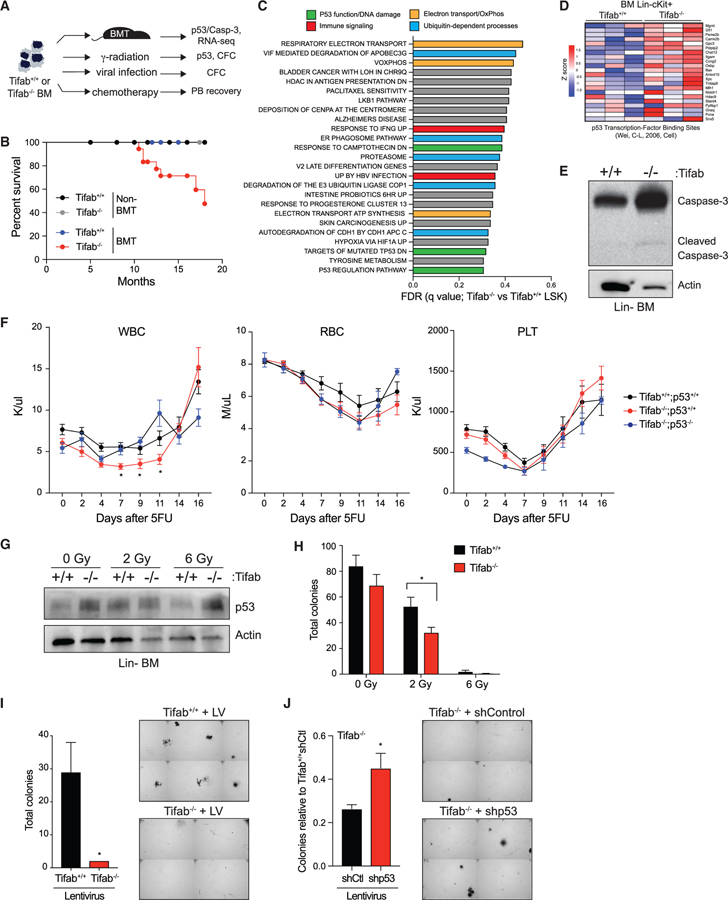
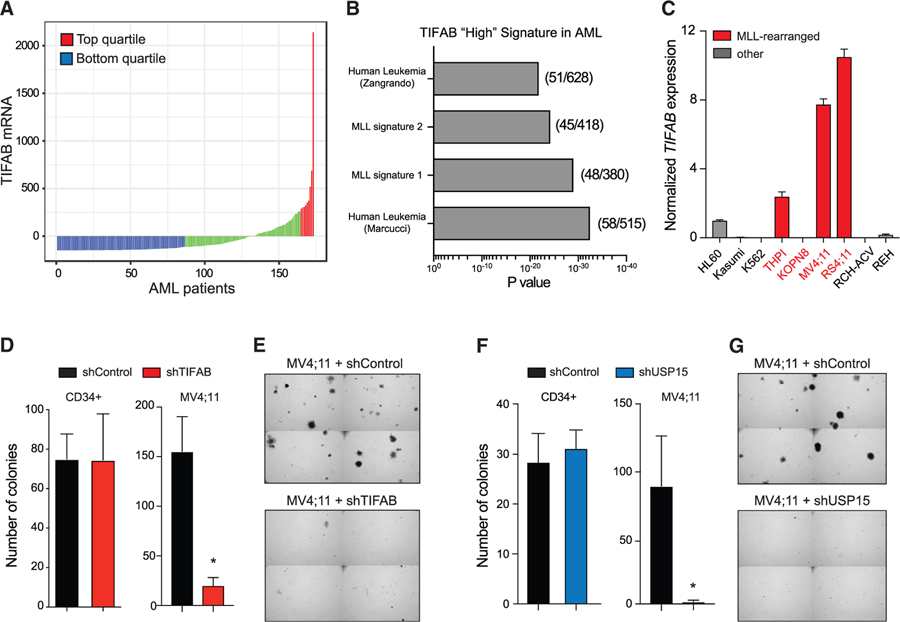
TRAF-interacting protein with a forkhead-associated domain B (TIFAB) is implicated in myeloid malignancies with deletion of chromosome 5q. Employing a combination of proteomic and genetic approaches, we find that TIFAB regulates ubiquitin-specific peptidase 15 (USP15) ubiquitin hydrolase activity. Expression of TIFAB in hematopoietic stem/progenitor cells (HSPCs) permits USP15 signaling to substrates, including MDM2 and KEAP1, and mitigates p53 expression. Consequently, TIFAB-deficient HSPCs exhibit compromised USP15 signaling and are sensitized to hematopoietic stress by derepression of p53. In MLL-AF9 leukemia, deletion of TIFAB increases p53 signaling and correspondingly decreases leukemic cell function and development of leukemia. Restoring USP15 expression partially rescues the function of TIFAB-deficient MLL-AF9 cells. Conversely, elevated TIFAB represses p53, increases leukemic progenitor function, and correlates with MLL gene expression programs in leukemia patients. Our studies uncover a function of TIFAB as an effector of USP15 activity and rheostat of p53 signaling in stressed and malignant HSPCs.
TRAF 相互作用蛋白具有一个与叉头相关的结构域 B(TIFAB),与染色体 5q 缺失有关。采用蛋白质组学和遗传方法相结合的方法,我们发现 TIFAB 调节泛素特异性肽酶 15(USP15)泛素水解酶活性。TIFAB 在造血干/祖细胞(HSPCs)中的表达允许 USP15 信号转导到底物,包括 MDM2 和 KEAP1,并减轻 p53 的表达。因此,TIFAB 缺陷的 HSPCs 表现出 USP15 信号转导受损,并通过 p53 的去抑制而对造血应激敏感。在 MLL-AF9 白血病中,TIFAB 的缺失增加了 p53 信号转导,相应地降低了白血病细胞的功能和白血病的发展。恢复 USP15 的表达部分挽救了 TIFAB 缺陷的 MLL-AF9 细胞的功能。相反,升高的 TIFAB 抑制 p53,增加白血病祖细胞的功能,并与白血病患者的 MLL 基因表达程序相关。我们的研究揭示了 TIFAB 的一个功能,作为 USP15 活性的效应物和应激和恶性 HSPCs 中 p53 信号转导的变阻器。