Johnson Peter A, Schmölzer Georg M
Centre for the Studies of Asphyxia and Resuscitation, Neonatal Research Unit, Royal Alexandra Hospital, Edmonton, AB T5A 0A1, Canada.
Department of Pediatrics, University of Alberta, Edmonton, AB T5A 0A1, Canada.
Healthcare (Basel). 2020 Feb 23;8(1):43. doi: 10.3390/healthcare8010043.
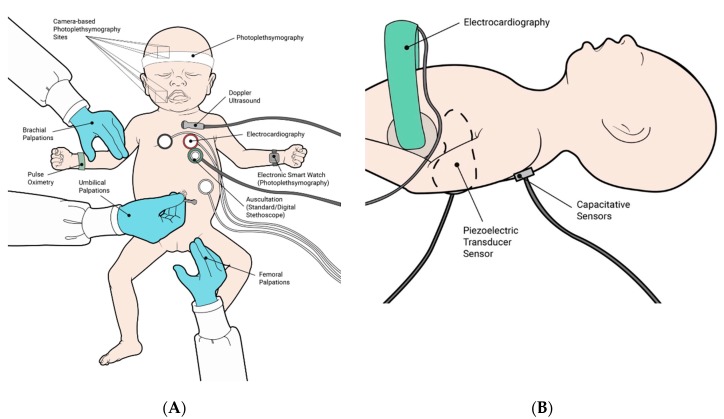
Approximately 10% of newborn infants require some form of respiratory support to successfully complete the fetal-to-neonatal transition. Heart rate (HR) determination is essential at birth to assess a newborn's wellbeing. Not only is it the most sensitive indicator to guide interventions during neonatal resuscitation, it is also valuable for assessing the infant's clinical status. As such, HR assessment is a key step at birth and throughout resuscitation, according to recommendations by the Neonatal Resuscitation Program algorithm. It is essential that HR is accurate, reliable, and fast to ensure interventions are delivered without delay and not prolonged. Ineffective HR assessment significantly increases the risk of hypoxic injury and infant mortality. The aims of this review are to summarize current practice, recommended techniques, novel technologies, and considerations for HR assessment during neonatal resuscitation at birth.
约10%的新生儿需要某种形式的呼吸支持才能成功完成从胎儿到新生儿的过渡。出生时测定心率(HR)对于评估新生儿的健康状况至关重要。它不仅是指导新生儿复苏期间干预措施的最敏感指标,对于评估婴儿的临床状态也很有价值。因此,根据新生儿复苏项目算法的建议,心率评估是出生时及整个复苏过程中的关键步骤。心率准确、可靠且快速至关重要,以确保干预措施能及时实施且不被延长。无效的心率评估会显著增加缺氧损伤和婴儿死亡的风险。本综述的目的是总结出生时新生儿复苏期间心率评估的当前实践、推荐技术、新技术及注意事项。