Cabib Simona, Campus Paolo, Conversi David, Orsini Cristina, Puglisi-Allegra Stefano
Department of Psychology, University of Rome 'La Sapienza', 00185 Rome, Italy.
Department of Experimental Neurosciences, IRCCS Fondazione Santa Lucia, 00143 Rome, Italy.
Brain Sci. 2020 Feb 24;10(2):127. doi: 10.3390/brainsci10020127.
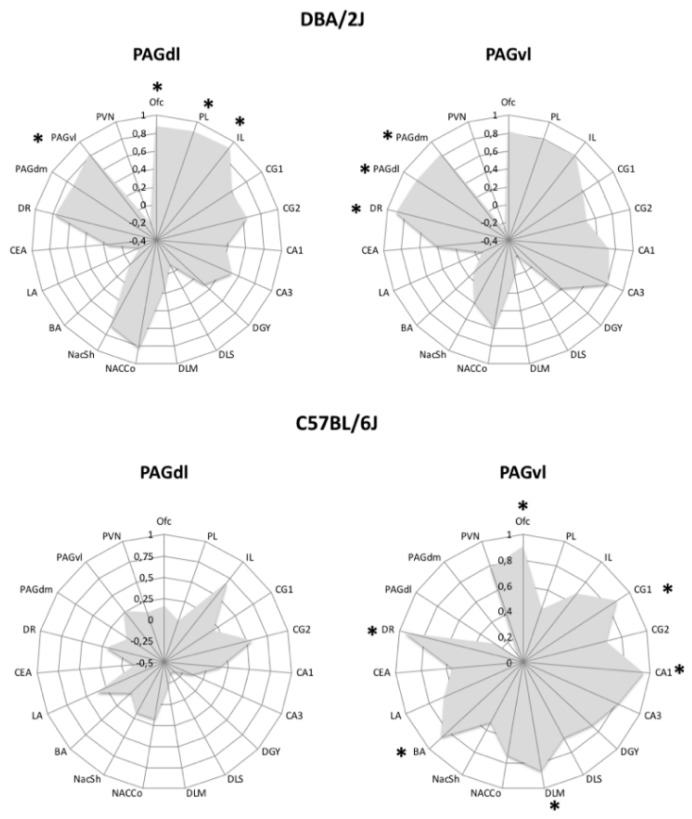
In this brief review, we present evidence of the primary role of learning-associated plasticity in the development of either adaptive or maladaptive coping strategies. Successful interactions with novel stressors foster plasticity within the neural circuits supporting acquisition, consolidation, retrieval, and extinction of instrumental learning leading to development of a rich repertoire of flexible and context-specific adaptive coping responses, whereas prolonged or repeated exposure to inescapable/uncontrollable stressors fosters dysfunctional plasticity within the learning circuits leading to perseverant and inflexible maladaptive coping strategies. Finally, the results collected using an animal model of genotype-specific coping styles indicate the engagement of different molecular networks and the opposite direction of stress effects (reduced vs. enhanced gene expression) in stressed animals, as well as different behavioral alterations, in line with differences in the symptoms profile associated with post-traumatic stress disorder.
在这篇简短的综述中,我们展示了与学习相关的可塑性在适应性或适应不良应对策略发展中的主要作用的证据。与新的应激源成功互动会促进支持工具性学习的获取、巩固、检索和消退的神经回路中的可塑性,从而导致形成丰富多样的灵活且特定情境的适应性应对反应,而长期或反复暴露于无法逃避/无法控制的应激源会促进学习回路中的功能失调可塑性,导致固执且不灵活的适应不良应对策略。最后,使用基因型特异性应对方式的动物模型收集的结果表明,应激动物中不同分子网络的参与以及应激效应的相反方向(基因表达降低与增强),以及不同的行为改变,这与创伤后应激障碍相关症状特征的差异一致。