Centre for Geographic Medicine Research-Coast, KEMRI-Wellcome Trust Research Programme, Kenya Medical Research Institute (KEMRI), Kilifi, Kenya.
KEMRI - Wellcome Trust Research Programme - Accredited Research Centre, Open University, Kilifi, Kenya.
BMC Med. 2020 Feb 27;18(1):31. doi: 10.1186/s12916-020-1502-7.
Iron deficiency (ID) is a major public health burden in African children and accurate prevalence estimates are important for effective nutritional interventions. However, ID may be incorrectly estimated in Africa because most measures of iron status are altered by inflammation and infections such as malaria. Through the current study, we have assessed different approaches to the prediction of iron status and estimated the burden of ID in African children.
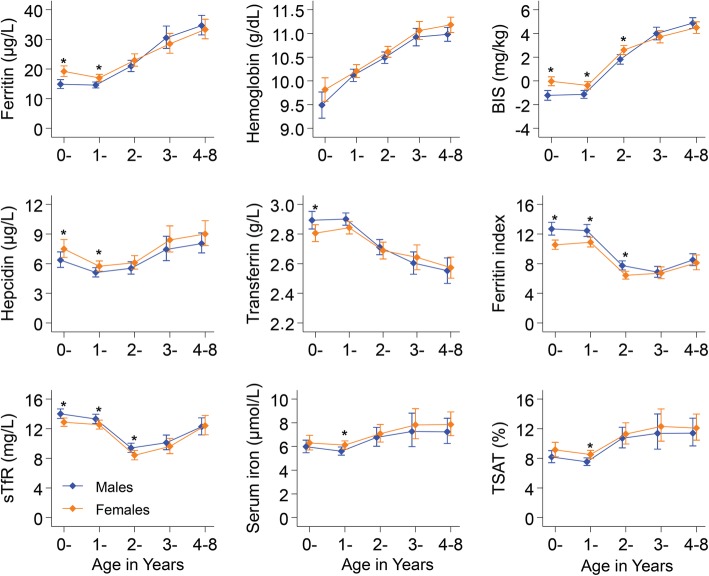
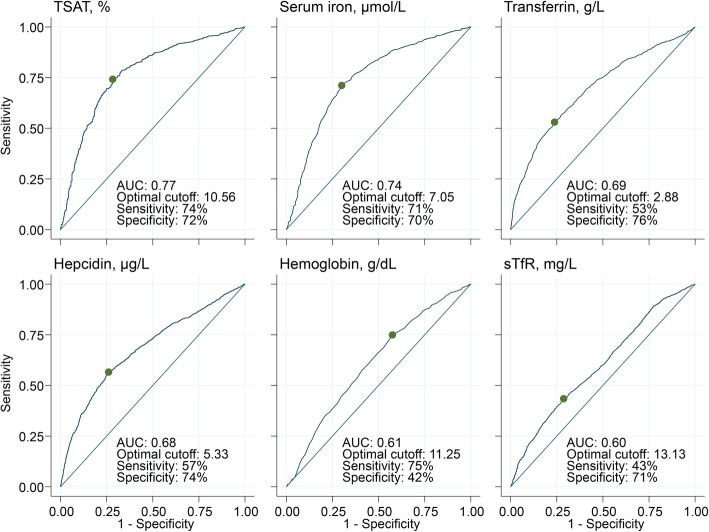
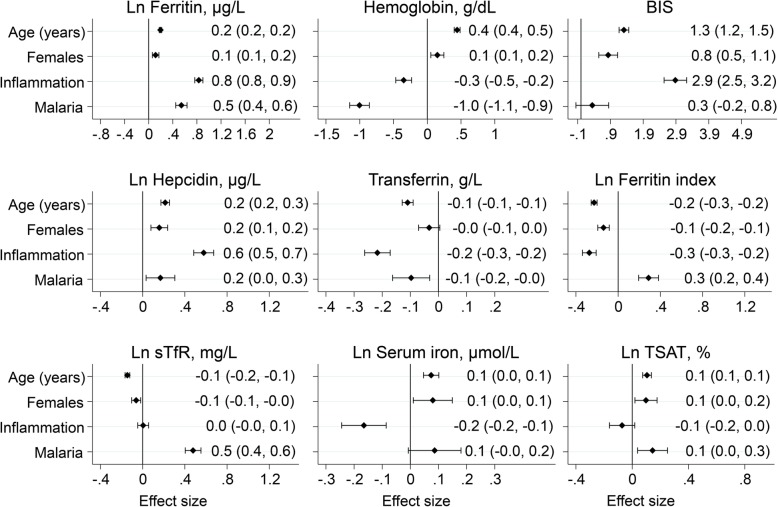
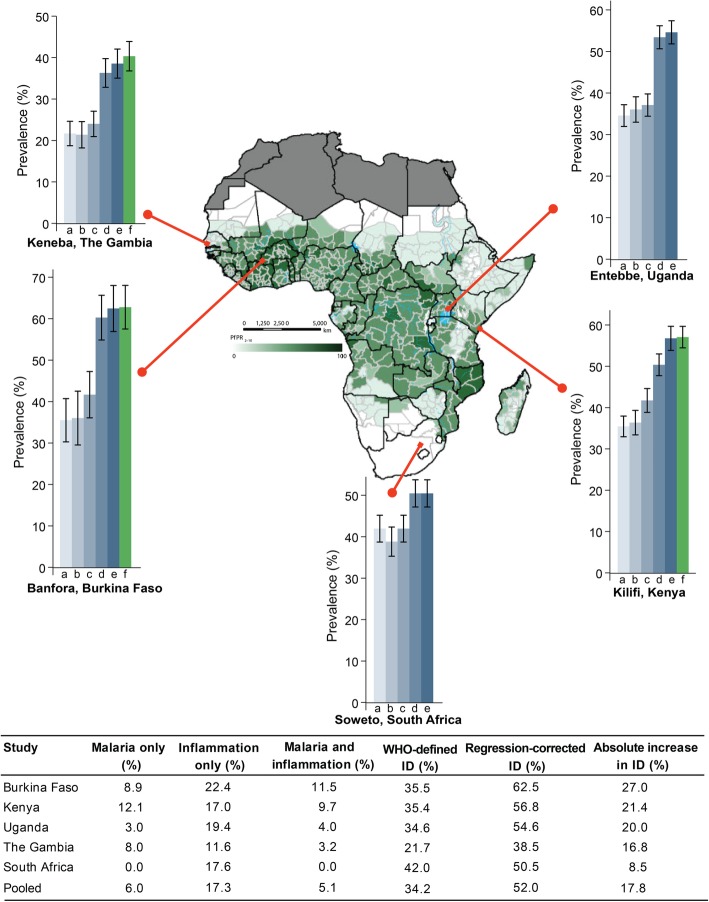
We assayed iron and inflammatory biomarkers in 4853 children aged 0-8 years from Kenya, Uganda, Burkina Faso, South Africa, and The Gambia. We described iron status and its relationship with age, sex, inflammation, and malaria parasitemia. We defined ID using the WHO guideline (ferritin < 12 μg/L or < 30 μg/L in the presence of inflammation in children < 5 years old or < 15 μg/L in children ≥ 5 years old). We compared this with a recently proposed gold standard, which uses regression-correction for ferritin levels based on the relationship between ferritin levels, inflammatory markers, and malaria. We further investigated the utility of other iron biomarkers in predicting ID using the inflammation and malaria regression-corrected estimate as a gold standard.
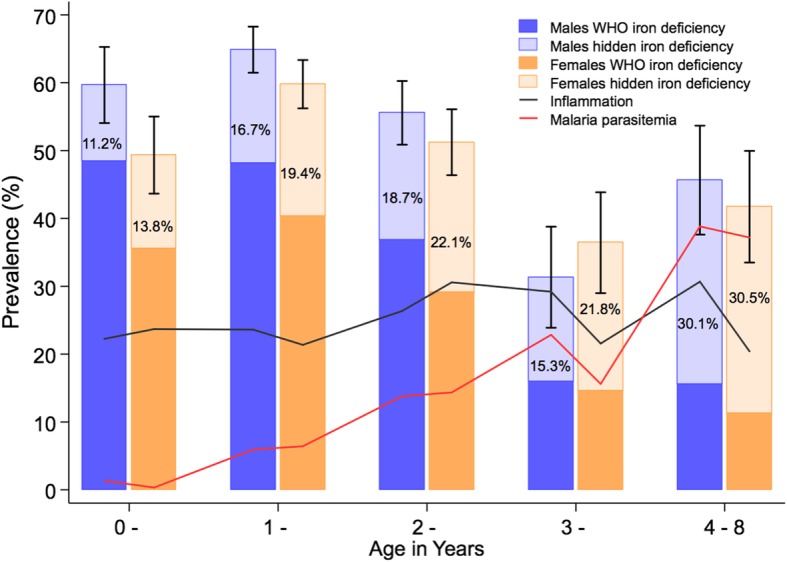
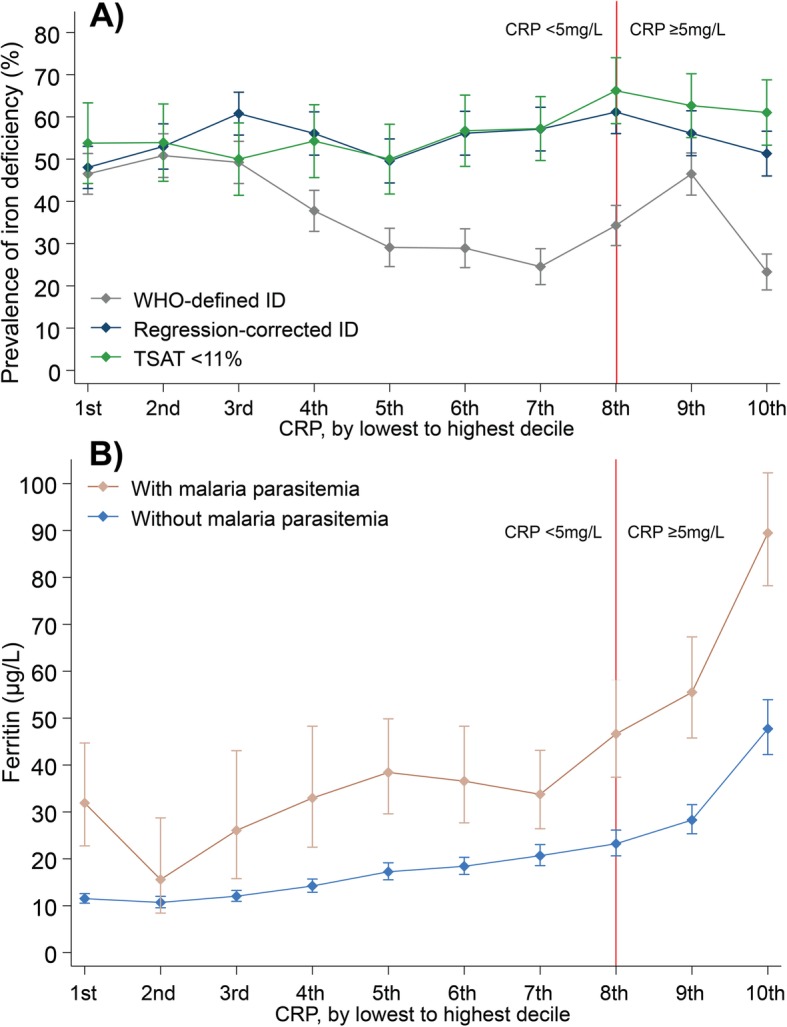
The prevalence of ID was highest at 1 year of age and in male infants. Inflammation and malaria parasitemia were associated with all iron biomarkers, although transferrin saturation was least affected. Overall prevalence of WHO-defined ID was 34% compared to 52% using the inflammation and malaria regression-corrected estimate. This unidentified burden of ID increased with age and was highest in countries with high prevalence of inflammation and malaria, where up to a quarter of iron-deficient children were misclassified as iron replete. Transferrin saturation < 11% most closely predicted the prevalence of ID according to the regression-correction gold standard.
The prevalence of ID is underestimated in African children when defined using the WHO guidelines, especially in malaria-endemic populations, and the use of transferrin saturation may provide a more accurate approach. Further research is needed to identify the most accurate measures for determining the prevalence of ID in sub-Saharan Africa.
缺铁(ID)是非洲儿童面临的主要公共卫生负担,准确的患病率估计对于有效的营养干预至关重要。然而,由于大多数铁状态的衡量标准都受到炎症和感染(如疟疾)的影响,因此在非洲可能会错误地估计 ID。通过目前的研究,我们评估了预测铁状态的不同方法,并估计了非洲儿童缺铁的负担。
我们检测了来自肯尼亚、乌干达、布基纳法索、南非和冈比亚的 4853 名 0-8 岁儿童的铁和炎症生物标志物。我们描述了铁状态及其与年龄、性别、炎症和疟疾寄生虫血症的关系。我们使用世界卫生组织(WHO)指南(铁蛋白<12μg/L,或在<5 岁儿童存在炎症时<30μg/L,或在≥5 岁儿童时<15μg/L)定义缺铁。我们将其与最近提出的金标准进行了比较,该标准使用基于铁蛋白水平、炎症标志物和疟疾之间关系的回归校正来校正铁蛋白水平。我们进一步使用炎症和疟疾回归校正估计值作为金标准,研究了其他铁生物标志物在预测缺铁方面的应用。
缺铁的患病率在 1 岁时最高,且在男婴中最高。炎症和疟疾寄生虫血症与所有铁生物标志物有关,尽管转铁蛋白饱和度受影响最小。根据 WHO 定义,ID 的总体患病率为 34%,而根据炎症和疟疾回归校正的估计值,这一比例为 52%。由于年龄的增长,这种未被识别的缺铁负担增加,在炎症和疟疾流行率高的国家,高达四分之一的缺铁儿童被错误地归类为铁充足。根据回归校正的金标准,转铁蛋白饱和度<11%最能预测 ID 的患病率。
当根据世界卫生组织指南定义时,非洲儿童的缺铁患病率被低估了,特别是在疟疾流行地区,转铁蛋白饱和度的使用可能提供了更准确的方法。需要进一步研究以确定确定撒哈拉以南非洲缺铁患病率的最准确方法。