Research School of Population Health, Colleague of Health and Medicine, The Australian National University, Canberra, ACT2601, Australia.
Nutrition and Clinical Services Division, icddr,b, Dhaka1212, Bangladesh.
Public Health Nutr. 2021 Apr;24(S1):s7-s22. doi: 10.1017/S1368980019004415. Epub 2020 Feb 27.
The aim of this paper is to identify and develop a comprehensive conceptual framework using implementation science that can be applied to assess a nutrition intervention in a real-world setting.
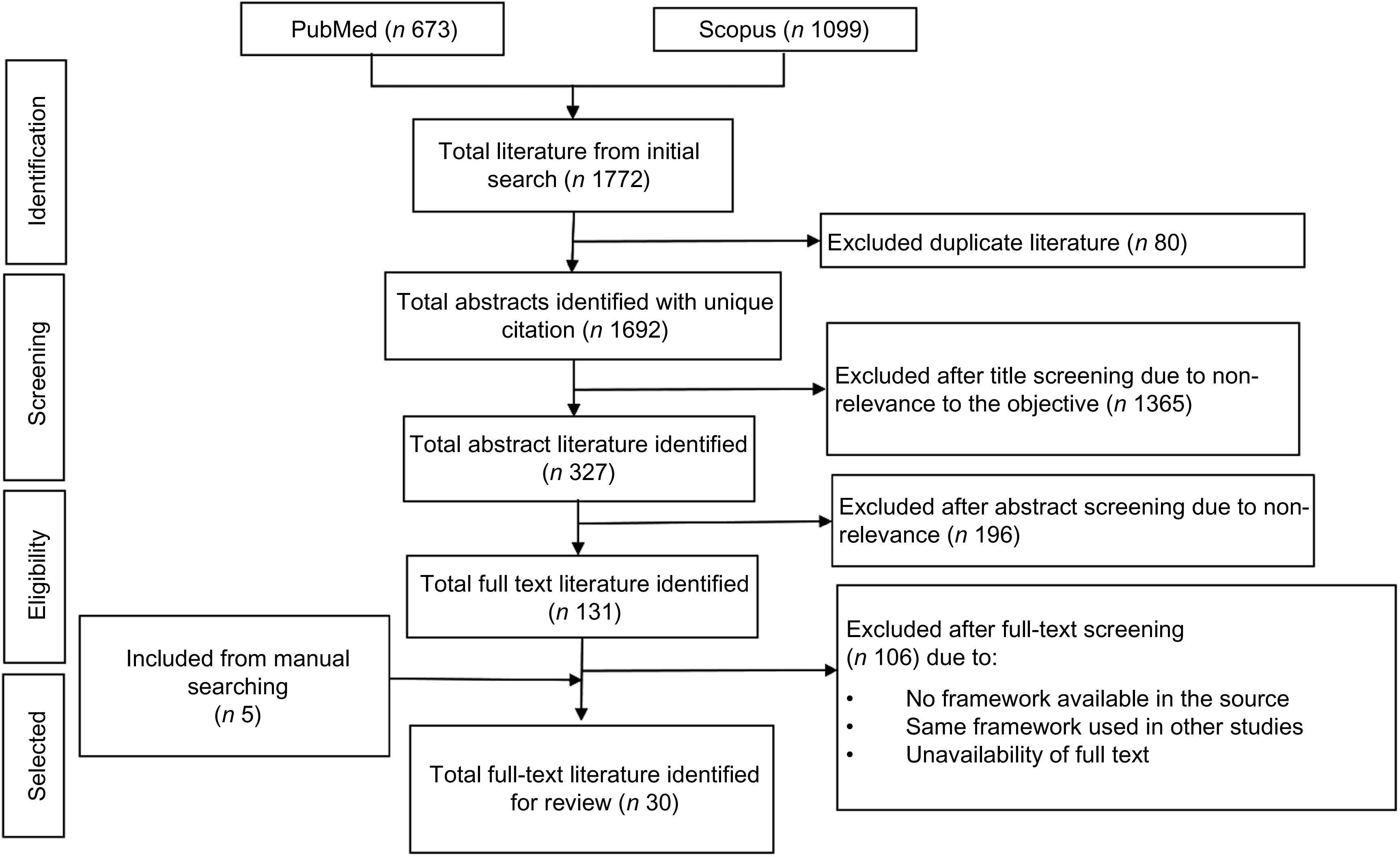
We conducted a narrative review using electronic databases and a manual search to identify implementation science frameworks, models and theories published in peer-reviewed journals. We performed a qualitative thematic analysis of these publications to generate a framework that could be applied to nutrition implementation science.
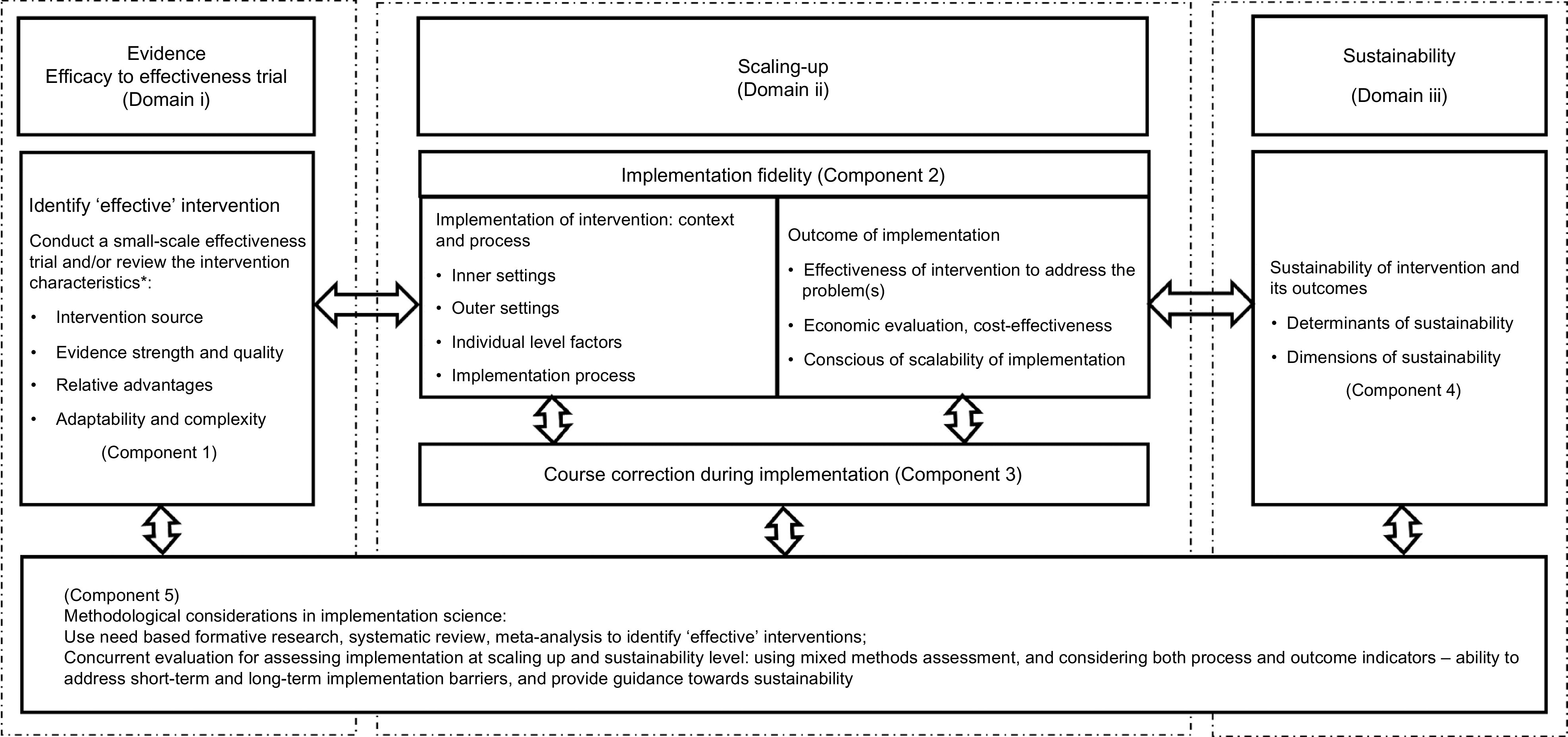
Based on this review, we developed a comprehensive framework which we have conceptualised as an implementation science process that describes the transition from the use of scientific evidence through to scaling-up with the aim of making an intervention sustainable. The framework consisted of three domains: Domain i - efficacy to effectiveness trials, Domain ii - scaling-up and Domain iii - sustainability. These three domains encompass five components: identifying an 'effective' intervention; scaling-up and implementation fidelity; course corrections during implementation; promoting sustainability of interventions and consideration of a comprehensive methodological paradigm to identify 'effective' interventions and to assess the process and outcome indicators of implementation. The framework was successfully applied to a nutrition implementation program in Bangladesh.
Our conceptual framework built from an implantation science perspective offers a comprehensive approach supported by a foundational and holistic understanding of its key components. This framework provides guidance for implementation researchers, policy-makers and programme managers to identify and review an effective intervention, to scale it up and to sustain it over time.
本文旨在通过实施科学,确定并构建一个全面的概念框架,以评估真实环境中的营养干预措施。
我们通过电子数据库和手动搜索,对已发表的同行评议期刊中的实施科学框架、模型和理论进行了叙述性综述。我们对这些出版物进行了定性主题分析,以生成一个可应用于营养实施科学的框架。
基于此次综述,我们提出了一个全面的框架,我们将其概念化为一个实施科学过程,描述了将科学证据付诸实践的转变,旨在实现干预的可持续性。该框架由三个领域组成:领域 i- 有效性到有效性试验,领域 ii- 扩大规模和领域 iii- 可持续性。这三个领域包含五个组成部分:确定“有效”干预措施;扩大规模和实施保真度;在实施过程中进行调整;促进干预措施的可持续性;考虑全面的方法学范例,以确定“有效”干预措施,并评估实施的过程和结果指标。该框架成功应用于孟加拉国的一项营养实施计划。
我们从实施科学的角度构建的概念框架提供了一种全面的方法,其基础和整体理解支持其关键组成部分。该框架为实施研究人员、政策制定者和项目管理人员提供了指导,以确定和审查有效的干预措施,扩大规模并保持其可持续性。