Department of Veterinary Biosciences and Department of Medical and Clinical Genetics, University of Helsinki, Helsinki, Finland.
Folkhälsan Research Center, Helsinki, Finland.
Sci Rep. 2020 Feb 26;10(1):3527. doi: 10.1038/s41598-020-60546-w.
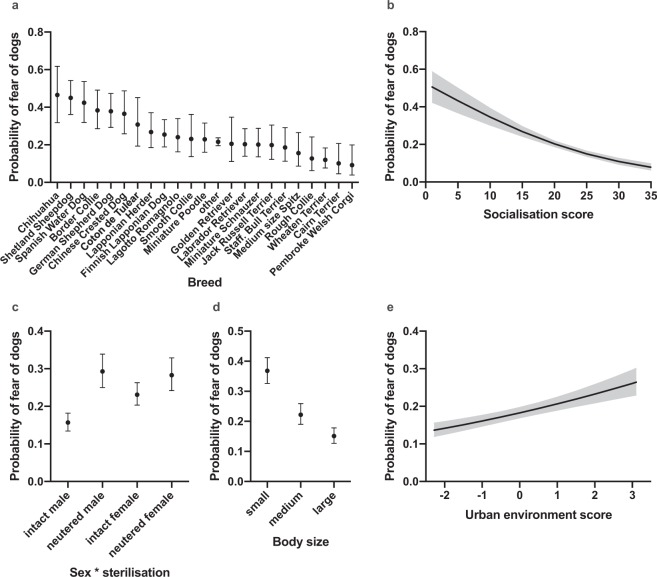
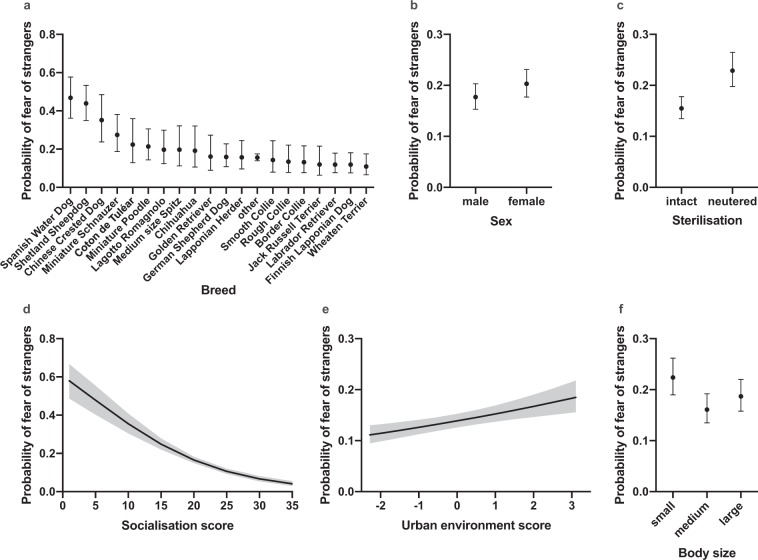
Problematic behaviours are severe welfare issues for one of the world's most popular pets, the domestic dog. One of the most prevalent behavioural problem that causes distress to dogs is social fearfulness, meaning fear of conspecifics or unfamiliar people. To identify demographic and environmental factors associated with fear of dogs and strangers, logistic regression was utilised with a large dataset of 6,000 pet dogs collected through an owner-filled behavioural survey. Social fearfulness was associated with several factors, including urban environment, poor socialisation during puppyhood, infrequent participation in training and other activities, small body size, female sex, and neutering. In addition, we identified several breed differences, suggesting a genetic contribution to social fearfulness. These findings highlight the role of inadequate socialisation, inactivity, and urban living environmental in fear-related behavioural problems in dogs. Improvements in the management and breeding practices of dogs could, therefore, enhance the welfare of man's best friend.
对于世界上最受欢迎的宠物之一——家犬来说,行为问题是一个严重的福利问题。导致犬类不适的最普遍的行为问题之一是社交恐惧,即对同类或陌生人类的恐惧。为了确定与犬类和陌生人恐惧相关的人口统计学和环境因素,我们利用一项针对 6000 只宠物犬的大型数据集,通过主人填写的行为调查,采用逻辑回归进行了分析。社交恐惧与多种因素有关,包括城市环境、幼犬期社会化不足、训练和其他活动参与不频繁、体型小、母犬、去势等。此外,我们还发现了一些品种差异,这表明社交恐惧与遗传有关。这些发现强调了社会化不足、不活跃和城市生活环境在犬类与恐惧相关的行为问题中的作用。因此,改进犬类的管理和繁殖实践可以提高人类最好的朋友的福利。