• 文献检索
  • 文档翻译
  • 深度研究
  • 学术资讯
  • Suppr Zotero 插件Zotero 插件
  • 邀请有礼
  • 套餐&价格
  • 历史记录
应用&插件
Suppr Zotero 插件Zotero 插件浏览器插件Mac 客户端Windows 客户端微信小程序
定价
高级版会员购买积分包购买API积分包
服务
文献检索文档翻译深度研究API 文档MCP 服务
关于我们
关于 Suppr公司介绍联系我们用户协议隐私条款
关注我们

Suppr 超能文献

核心技术专利:CN118964589B侵权必究
粤ICP备2023148730 号-1Suppr @ 2026

文献检索

告别复杂PubMed语法,用中文像聊天一样搜索,搜遍4000万医学文献。AI智能推荐,让科研检索更轻松。

立即免费搜索

文件翻译

保留排版,准确专业,支持PDF/Word/PPT等文件格式,支持 12+语言互译。

免费翻译文档

深度研究

AI帮你快速写综述,25分钟生成高质量综述,智能提取关键信息,辅助科研写作。

立即免费体验

植物、气候与人类:植物智能改变一切。

Plants, climate and humans: Plant intelligence changes everything.

机构信息

University of Bonn, Bonn, Germany.

University of Firenze, Firenze, Italy.

出版信息

EMBO Rep. 2020 Mar 4;21(3):e50109. doi: 10.15252/embr.202050109. Epub 2020 Feb 27.

DOI:10.15252/embr.202050109
PMID:32103598
原文链接:https://pmc.ncbi.nlm.nih.gov/articles/PMC7054678/
Abstract

Plants play a more active role in shaping their environment than most climate models assume. Understanding their specific behavior could have profound impact on predicting future climate changes.

摘要

植物在塑造环境方面发挥的作用比大多数气候模型所假设的更为积极。了解它们的具体行为将对预测未来气候变化产生深远影响。
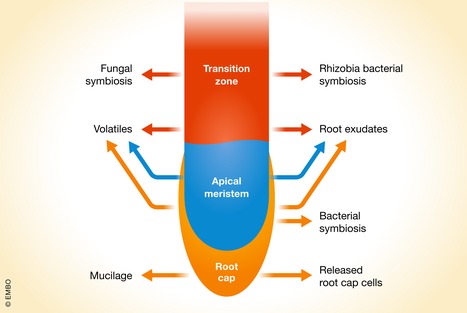
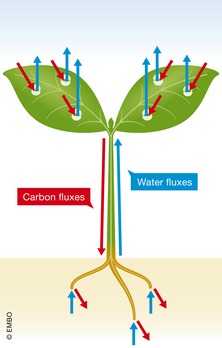
https://cdn.ncbi.nlm.nih.gov/pmc/blobs/e373/7054678/e3c77752f532/EMBR-21-e50109-g005.jpg
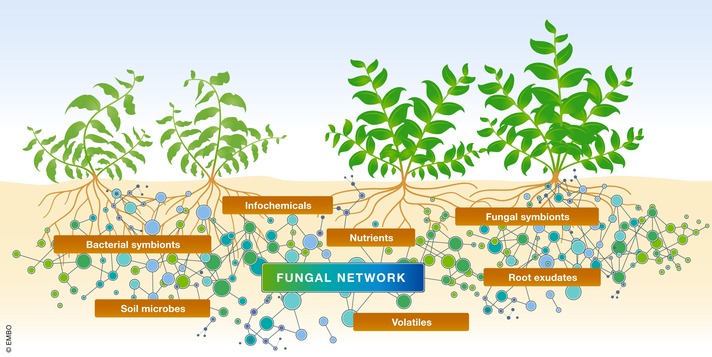
https://cdn.ncbi.nlm.nih.gov/pmc/blobs/e373/7054678/b74ddde3ec08/EMBR-21-e50109-g001.jpg
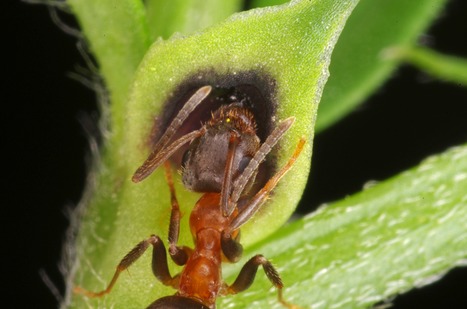
https://cdn.ncbi.nlm.nih.gov/pmc/blobs/e373/7054678/fedde88f1801/EMBR-21-e50109-g002.jpg
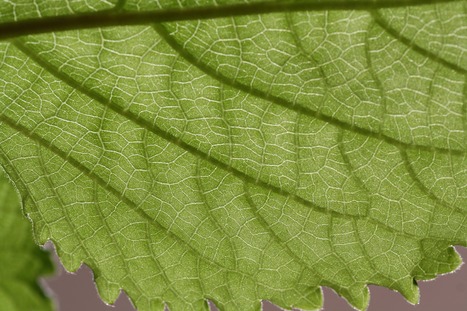
https://cdn.ncbi.nlm.nih.gov/pmc/blobs/e373/7054678/d33aade94201/EMBR-21-e50109-g003.jpg
https://cdn.ncbi.nlm.nih.gov/pmc/blobs/e373/7054678/9aabcd7b00cf/EMBR-21-e50109-g004.jpg
https://cdn.ncbi.nlm.nih.gov/pmc/blobs/e373/7054678/e3c77752f532/EMBR-21-e50109-g005.jpg
https://cdn.ncbi.nlm.nih.gov/pmc/blobs/e373/7054678/b74ddde3ec08/EMBR-21-e50109-g001.jpg
https://cdn.ncbi.nlm.nih.gov/pmc/blobs/e373/7054678/fedde88f1801/EMBR-21-e50109-g002.jpg
https://cdn.ncbi.nlm.nih.gov/pmc/blobs/e373/7054678/d33aade94201/EMBR-21-e50109-g003.jpg
https://cdn.ncbi.nlm.nih.gov/pmc/blobs/e373/7054678/9aabcd7b00cf/EMBR-21-e50109-g004.jpg
https://cdn.ncbi.nlm.nih.gov/pmc/blobs/e373/7054678/e3c77752f532/EMBR-21-e50109-g005.jpg

相似文献

1
Plants, climate and humans: Plant intelligence changes everything.植物、气候与人类:植物智能改变一切。
EMBO Rep. 2020 Mar 4;21(3):e50109. doi: 10.15252/embr.202050109. Epub 2020 Feb 27.
2
Predicting plant diversity patterns in Madagascar: understanding the effects of climate and land cover change in a biodiversity hotspot.预测马达加斯加的植物多样性模式:了解生物多样性热点地区气候和土地覆盖变化的影响。
PLoS One. 2015 Apr 9;10(4):e0122721. doi: 10.1371/journal.pone.0122721. eCollection 2015.
3
Effects of climate change on alpine plants and their pollinators.气候变化对高山植物及其传粉者的影响。
Ann N Y Acad Sci. 2020 Jun;1469(1):26-37. doi: 10.1111/nyas.14104. Epub 2019 Apr 26.
4
Plant phenotypic plasticity in a changing climate.在气候变化下的植物表型可塑性。
Trends Plant Sci. 2010 Dec;15(12):684-92. doi: 10.1016/j.tplants.2010.09.008. Epub 2010 Oct 21.
5
Climate change driven plant-metal-microbe interactions.气候变化驱动的植物-金属-微生物相互作用。
Environ Int. 2013 Mar;53:74-86. doi: 10.1016/j.envint.2012.12.009. Epub 2013 Jan 21.
6
Strategic plant choices can alleviate climate change impacts: A review.战略性植物选择可以缓解气候变化的影响:综述。
J Environ Manage. 2018 Sep 15;222:316-324. doi: 10.1016/j.jenvman.2018.05.042. Epub 2018 Jun 1.
7
Spatio-temporal effects of climate change on the geographical distribution and flowering phenology of hummingbird-pollinated plants.气候变化对蜂鸟传粉植物地理分布和开花物候的时空影响。
Ann Bot. 2019 Oct 18;124(3):389-398. doi: 10.1093/aob/mcz079.
8
Climate and plant controls on soil organic matter in coastal wetlands.气候和植物对沿海湿地土壤有机质的控制作用。
Glob Chang Biol. 2018 Nov;24(11):5361-5379. doi: 10.1111/gcb.14376. Epub 2018 Jul 29.
9
Future Scenarios for Plant Virus Pathogens as Climate Change Progresses.气候变化背景下植物病毒病原有何未来情景。
Adv Virus Res. 2016;95:87-147. doi: 10.1016/bs.aivir.2016.02.004. Epub 2016 Apr 8.
10
A tool to assess potential for alien plant establishment and expansion under climate change.评估在气候变化下外来植物建立和扩张潜力的工具。
J Environ Manage. 2015 Aug 15;159:121-127. doi: 10.1016/j.jenvman.2015.05.039. Epub 2015 Jun 7.

引用本文的文献

1
Plants have two minds as we do.植物和我们一样有两种意识。
Plant Signal Behav. 2025 Dec;20(1):2474895. doi: 10.1080/15592324.2025.2474895. Epub 2025 Mar 11.
2
MicroED: Unveiling the Structural Chemistry of Plant Biomineralisation.微电镜断层扫描技术:揭示植物生物矿化的结构化学。
Molecules. 2024 Oct 17;29(20):4916. doi: 10.3390/molecules29204916.
3
Don't jump the gun quite yet: aiming for the true target in plant neurobiology research.别急着仓促行事:瞄准植物神经生物学研究中的真正目标。

本文引用的文献

1
Ecological memory and relocation decisions in fungal mycelial networks: responses to quantity and location of new resources.真菌菌丝网络中的生态记忆和迁移决策:对新资源数量和位置的响应。
ISME J. 2020 Feb;14(2):380-388. doi: 10.1038/s41396-019-0536-3. Epub 2019 Oct 18.
2
Root Exudation of Primary Metabolites: Mechanisms and Their Roles in Plant Responses to Environmental Stimuli.初级代谢产物的根系分泌:机制及其在植物对环境刺激响应中的作用
Front Plant Sci. 2019 Feb 21;10:157. doi: 10.3389/fpls.2019.00157. eCollection 2019.
3
The origin of land plants: a matter of mycotrophism.
Protoplasma. 2025 Mar;262(2):247-254. doi: 10.1007/s00709-024-01993-4. Epub 2024 Sep 28.
4
Plant "intelligence" and the misuse of historical sources as evidence.植物“智能”与将历史资料误用作证据
Protoplasma. 2025 Mar;262(2):223-246. doi: 10.1007/s00709-024-01988-1. Epub 2024 Sep 14.
5
RGB Imaging as a Tool for Remote Sensing of Characteristics of Terrestrial Plants: A Review.RGB成像作为陆地植物特征遥感工具的综述
Plants (Basel). 2024 Apr 30;13(9):1262. doi: 10.3390/plants13091262.
6
Induced resistance to herbivory and the intelligent plant.诱导抗草食性与智能植物。
Plant Signal Behav. 2024 Dec 31;19(1):2345985. doi: 10.1080/15592324.2024.2345985. Epub 2024 Apr 30.
7
The Phytoneuroendocrine System: Connecting Plants to Human Systems Biology.植物神经内分泌系统:将植物与人类系统生物学联系起来
Integr Med (Encinitas). 2024 Mar;23(1):28-31.
8
Perspectives in Plant Abiotic Stress Signaling.植物非生物胁迫信号转导的研究视角
Methods Mol Biol. 2023;2642:429-444. doi: 10.1007/978-1-0716-3044-0_23.
9
Interplay of Methodology and Conceptualization in Plant Abiotic Stress Signaling.植物非生物胁迫信号传导中方法学与概念化的相互作用
Methods Mol Biol. 2023;2642:3-22. doi: 10.1007/978-1-0716-3044-0_1.
10
No ambiguity: Chemosensory-based ayurvedic classification of medicinal plants can be fingerprinted using E-tongue coupled with multivariate statistical analysis.无歧义:基于化学感官的阿育吠陀药用植物分类可以通过电子舌结合多元统计分析进行指纹识别。
Front Pharmacol. 2022 Dec 2;13:1025591. doi: 10.3389/fphar.2022.1025591. eCollection 2022.
陆地植物的起源:一个关于菌根营养的问题。
Biosystems. 1975 Mar;6(3):153-64. doi: 10.1016/0303-2647(75)90023-4.