Tauber Joseph, Owen James, Bloomenstein Marc, Hovanesian John, Bullimore Mark A
Tauber Eye Center, Kansas City, MO 64111, USA.
TLC Laser Eye Centers-La Jolla, La Jolla, CA 92122, USA.
Clin Ophthalmol. 2020 Feb 12;14:405-418. doi: 10.2147/OPTH.S234008. eCollection 2020.
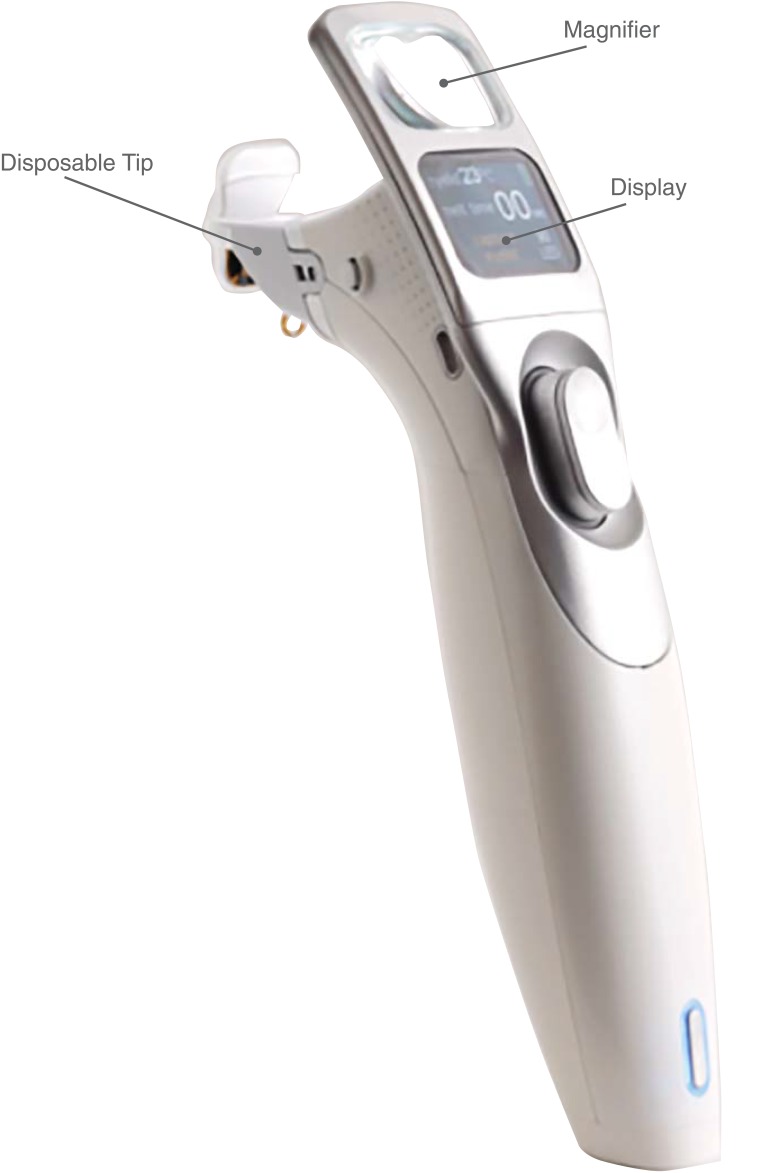
To compare the effects of eyelid treatment with the iLUX MGD Treatment System and the LipiFlow Thermal Pulsation System on objective and subjective parameters of meibomian gland function and symptoms.
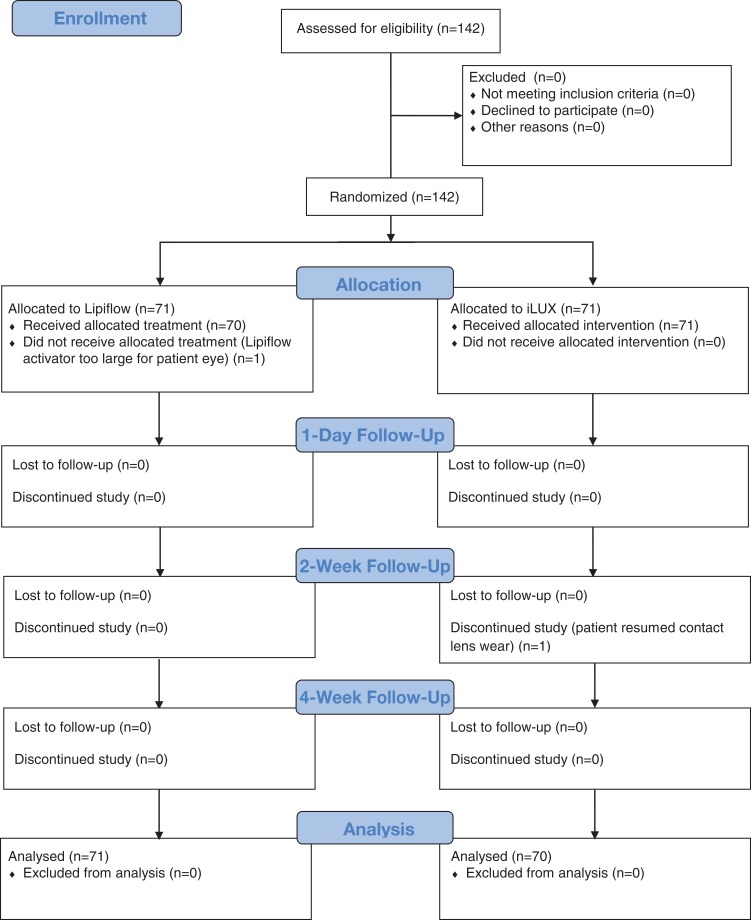
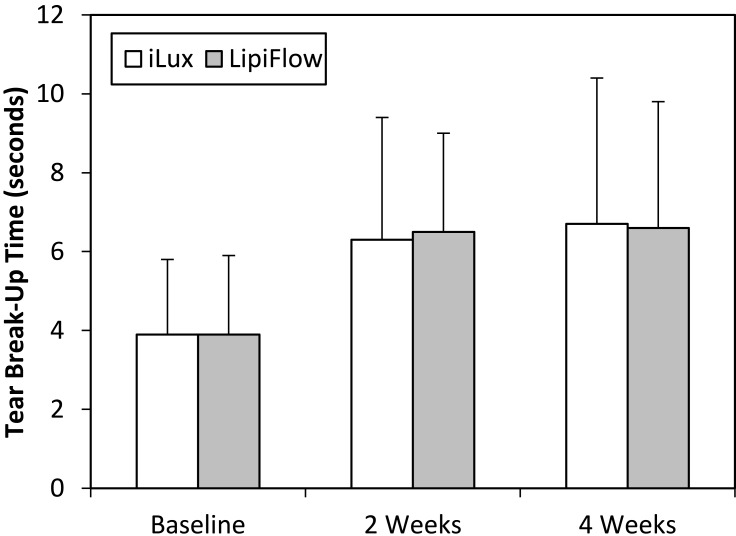
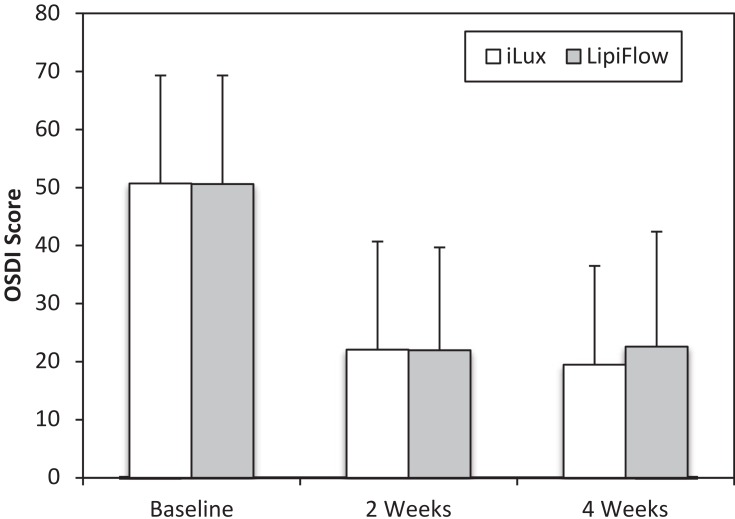
In this randomized, open-label, controlled, multicenter clinical trial, both eyes of 142 patients aged ≥18 years with Ocular Surface Disease Index (OSDI) scores ≥23, total meibomian gland scores (MGS) ≤12 in the lower eyelid of each eye, and tear break-up time (TBUT) <10 s were randomized 1:1 to iLUX or LipiFlow treatment, with stratification by test center. The primary effectiveness endpoints were changes in total MGS (masked) and TBUT from baseline to 4 weeks. The secondary effectiveness endpoint was changed in OSDI score from baseline to 4 weeks.
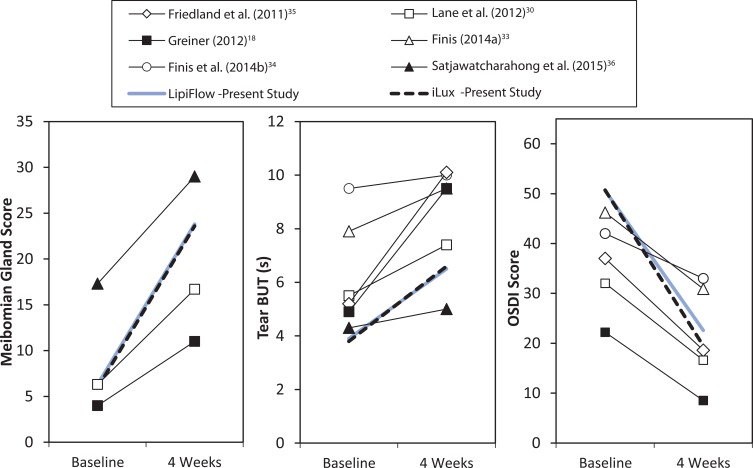
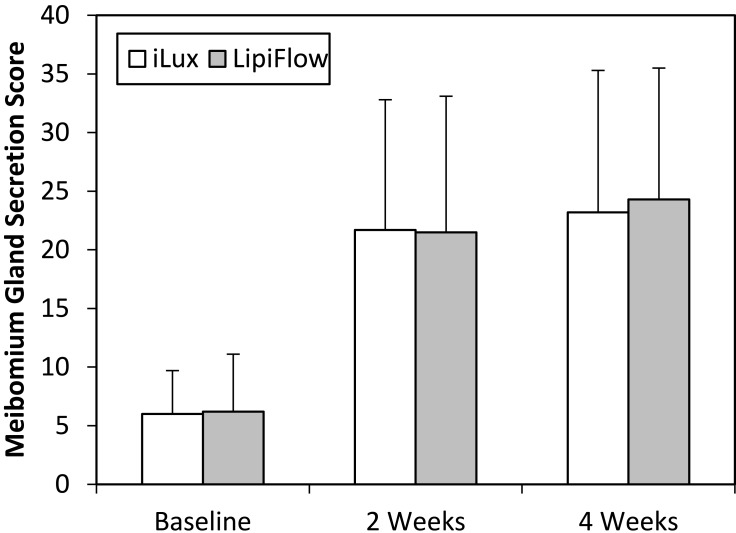
Both devices significantly improved effectiveness outcomes, with no differences between the two devices. At the 4-week visit, mean MGS, TBUT, and OSDI scores improved at least 16.9 ± 11.5, 2.6 ± 3.2 s, and 28.0 ± 22.8, respectively, across treatment groups and treated eyes. Four device/procedure-related events occurred in the iLUX group, compared with none in the LipiFlow group, but there were no device-related adverse events that involved changes in lid margins, eyelids, or lash integrity. Corneal staining, intraocular pressure, and visual acuity did not differ in the two groups.
Both treatments produced significant improvements in meibomian gland function and symptoms. For all effectiveness measures, there were no statistically significant differences between the two treatments.
比较使用iLUX睑板腺功能障碍治疗系统和LipiFlow热脉动系统进行眼睑治疗对睑板腺功能的客观和主观参数以及症状的影响。
在这项随机、开放标签、对照、多中心临床试验中,142例年龄≥18岁、眼表疾病指数(OSDI)评分≥23、每只眼下睑睑板腺总评分(MGS)≤12且泪膜破裂时间(TBUT)<10秒的患者的双眼按1:1随机分配至iLUX或LipiFlow治疗组,并按试验中心进行分层。主要有效性终点为从基线到4周时总MGS(盲态)和TBUT的变化。次要有效性终点为从基线到4周时OSDI评分的变化。
两种设备均显著改善了有效性结果,两种设备之间无差异。在4周随访时,各治疗组和治疗眼的平均MGS、TBUT和OSDI评分分别至少改善了16.9±11.5、2.6±3.2秒和28.0±22.8。iLUX组发生了4起与设备/操作相关的事件,而LipiFlow组未发生,但没有涉及睑缘、眼睑或睫毛完整性改变的与设备相关的不良事件。两组的角膜染色、眼压和视力无差异。
两种治疗均使睑板腺功能和症状有显著改善。对于所有有效性指标,两种治疗之间无统计学显著差异。