Liu Yanmei, Yu Fenglin, Zhang Beibei, Zhou Meng, Bei Yu, Zhang Yifan, Tang Jianzhong, Yang Yan, Huang Yadong, Xiang Qi, Zhao Yueping, Liang Qian, Liu Yang
Institute of Biomedicine and Guangdong Provincial Key Laboratory of Bioengineering Medicine, Jinan University, Guangzhou 510632, China.
Department of Pharmacy, the First Affiliated Hospital of Zhengzhou University, Zhengzhou 450052, China.
Asian J Pharm Sci. 2019 Sep;14(5):511-520. doi: 10.1016/j.ajps.2018.09.007. Epub 2018 Nov 1.
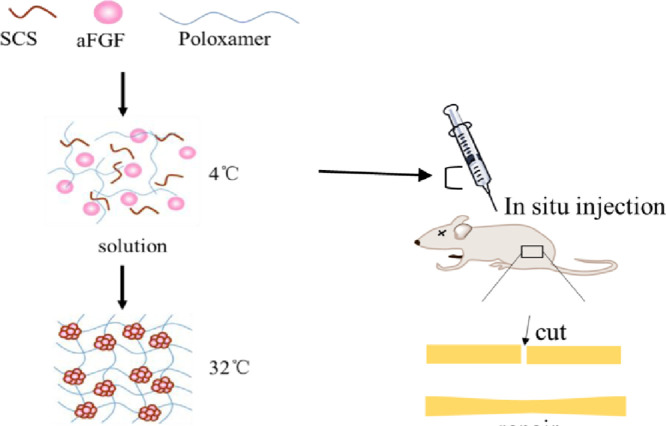
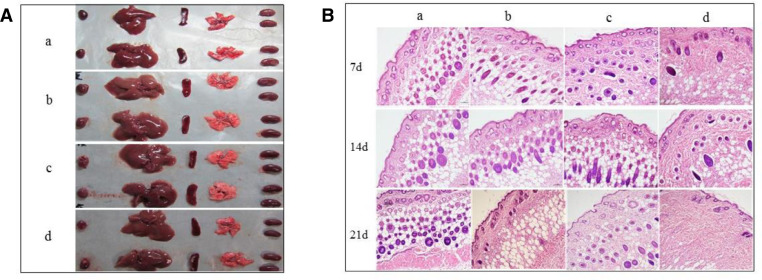
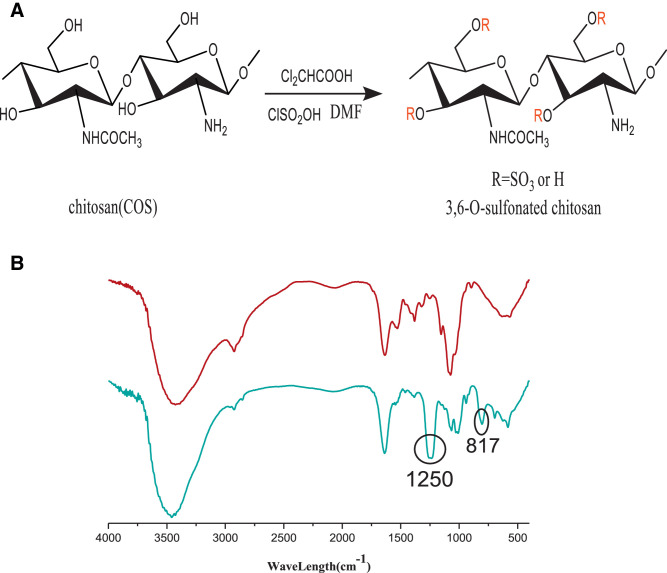
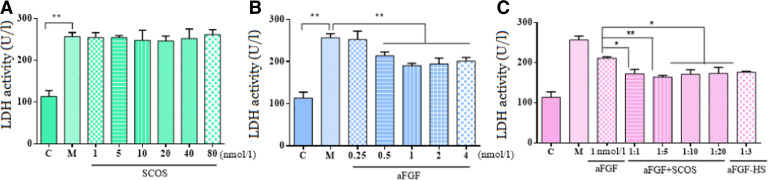
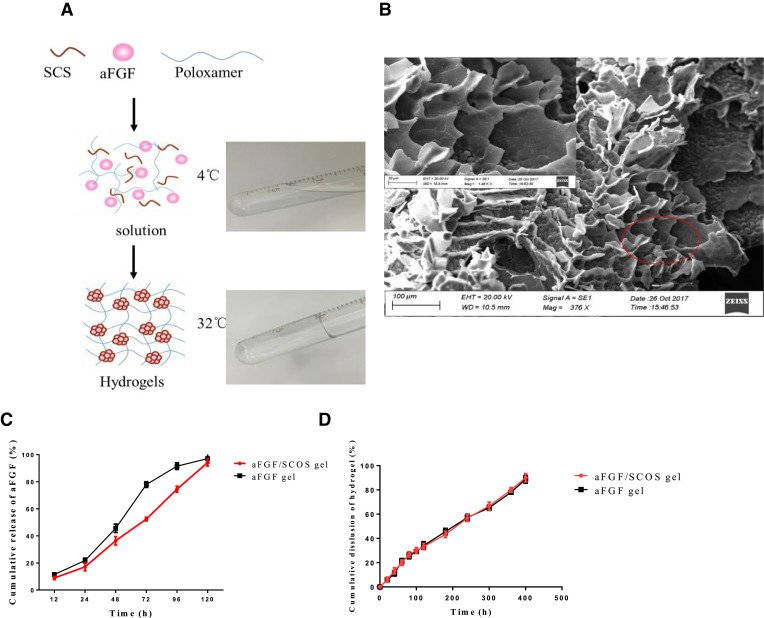
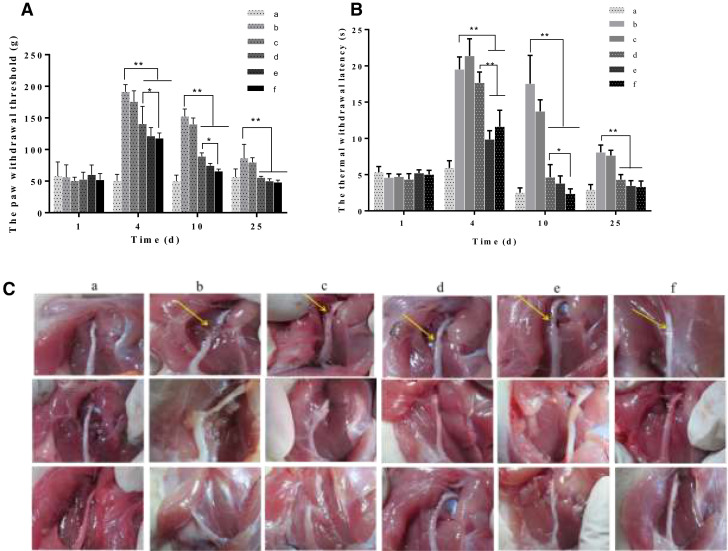
Injury to the peripheral nerves can result in temporary or life-long neuronal dysfunction and subsequent economic or social disability. Acidic fibroblast growth factor (aFGF) promotes the growth and survival of neurons and is a possible treatment for peripheral nerve injury. Yet, the actual therapeutic utility of aFGF is limited by its short half-life and instability . In the present study, we prepared sulfated chitooligosaccharides (SCOS), which have heparin-like properties, to improve the bioactivity of aFGF. We investigated the protective effects of SCOS with or without aFGF on RSC96 cells exposed to NaSO hypoxia/reoxygenation injury. Cell viability was measured by MTT assay and cytotoxicity induced by NaSO was assessed by lactate dehydrogenase (LDH) release into the culture medium. Pretreatment with aFGF and SCOS dramatically decreased LDH release after injury compared to pretreatment with aFGF or SCOS alone. We subsequently prepared an aFGF/SCOS thermo-sensitive hydrogel with poloxamer and examined its effects . Paw withdrawal thresholds and thermal withdrawal latencies were measured in rats with sciatic nerve injury. Local injection of the aFGF/SCOS hydrogels (aFGF: 40, 80 µg/kg) increased the efficiency of sciatic nerve repair compared to aFGF (80 µg/kg) hydrogel alone. Especially aFGF/SCOS thermo-sensitive hydrogel decreased paw withdrawal thresholds from 117.75 ± 8.38 (g, 4 d) to 65.74 ± 3.39 (g, 10 d), but aFGF alone group were 140.58 ± 27.54 (g, 4 d) to 89.12 ± 5.60 (g, 10 d) (aFGF dose was 80 µg/kg, < 0.05, = 8). The thermal withdrawal latencies decreased from 11.61 ± 2.26 (s, 4 d) to 2.37 ±0.67 (s, 10 d). However, aFGF alone group were from 17.69 ± 1.47 (s, 4 d) to 4.65 ± 1.73 (s, 10 d) ( < 0.05, = 8). Furthermore, the aFGF/SCOS hydrogels also exhibited good biocompatibility in mice. In summary, SCOS improved the protective effects of aFGF in RSC96 cells injured with NaSO and increased the efficiency of nerve repair and recovery of function in rats with sciatic nerve injury. These findings pave an avenue for the development of novel prophylactic and therapeutic strategies for peripheral nerve injury.
外周神经损伤可导致暂时或终身的神经元功能障碍以及随后的经济或社会残疾。酸性成纤维细胞生长因子(aFGF)可促进神经元的生长和存活,是外周神经损伤的一种可能治疗方法。然而,aFGF的实际治疗效用受到其短半衰期和不稳定性的限制。在本研究中,我们制备了具有类肝素特性的硫酸化壳寡糖(SCOS),以提高aFGF的生物活性。我们研究了SCOS单独或与aFGF联合对暴露于NaSO缺氧/复氧损伤的RSC96细胞的保护作用。通过MTT法测定细胞活力,并通过乳酸脱氢酶(LDH)释放到培养基中来评估NaSO诱导的细胞毒性。与单独用aFGF或SCOS预处理相比,用aFGF和SCOS预处理可显著降低损伤后LDH的释放。我们随后用泊洛沙姆制备了aFGF/SCOS热敏水凝胶并检查了其效果。在坐骨神经损伤的大鼠中测量爪退缩阈值和热退缩潜伏期。与单独的aFGF(80μg/kg)水凝胶相比,局部注射aFGF/SCOS水凝胶(aFGF:40、80μg/kg)提高了坐骨神经修复的效率。特别是aFGF/SCOS热敏水凝胶使爪退缩阈值从117.75±8.38(g,4天)降至65.74±3.39(g,10天),但单独aFGF组为140.58±27.54(g,4天)至89.12±5.60(g,10天)(aFGF剂量为80μg/kg,<0.05,n = 8)。热退缩潜伏期从11.61±2.26(s,4天)降至2.37±0.67(s,10天)。然而,单独aFGF组为从17.69±1.47(s,4天)至4.65±1.73(s,10天)(<0.05,n = 8)。此外,aFGF/SCOS水凝胶在小鼠中也表现出良好的生物相容性。总之,SCOS提高了aFGF对受NaSO损伤的RSC96细胞的保护作用,并提高了坐骨神经损伤大鼠的神经修复效率和功能恢复。这些发现为外周神经损伤的新型预防和治疗策略的开发铺平了道路。