Department of Urology, Shandong Provincial Hospital Affiliated to Shandong University, Jinan, China.
Department of Urology, The First Affiliated Hospital of Dalian Medical University, Dalian, China.
Biomed Res Int. 2020 Feb 13;2020:2527643. doi: 10.1155/2020/2527643. eCollection 2020.
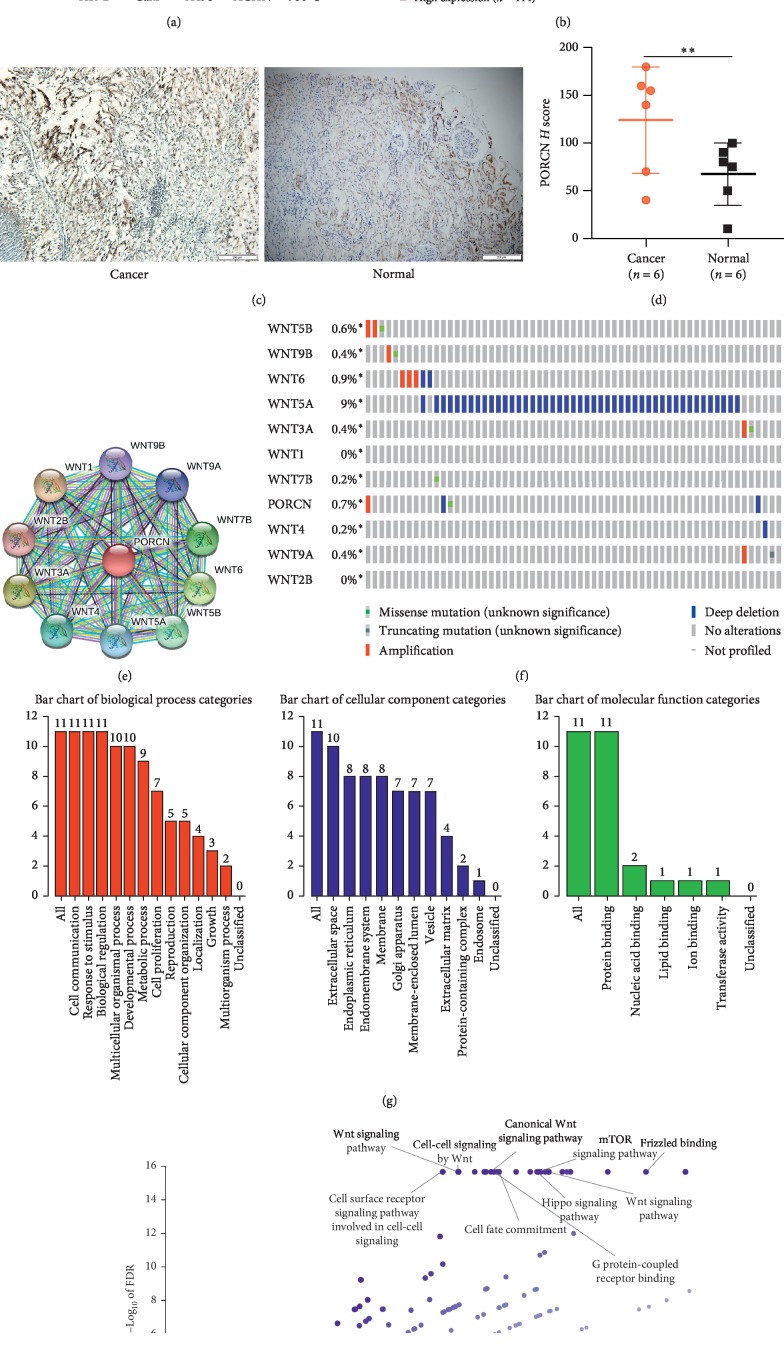
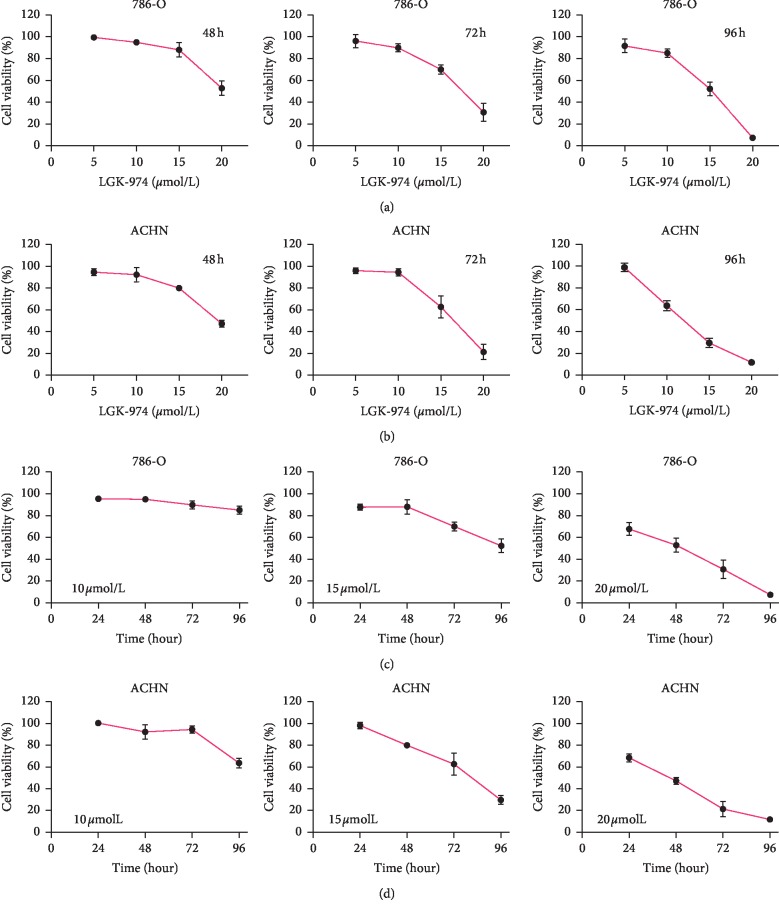
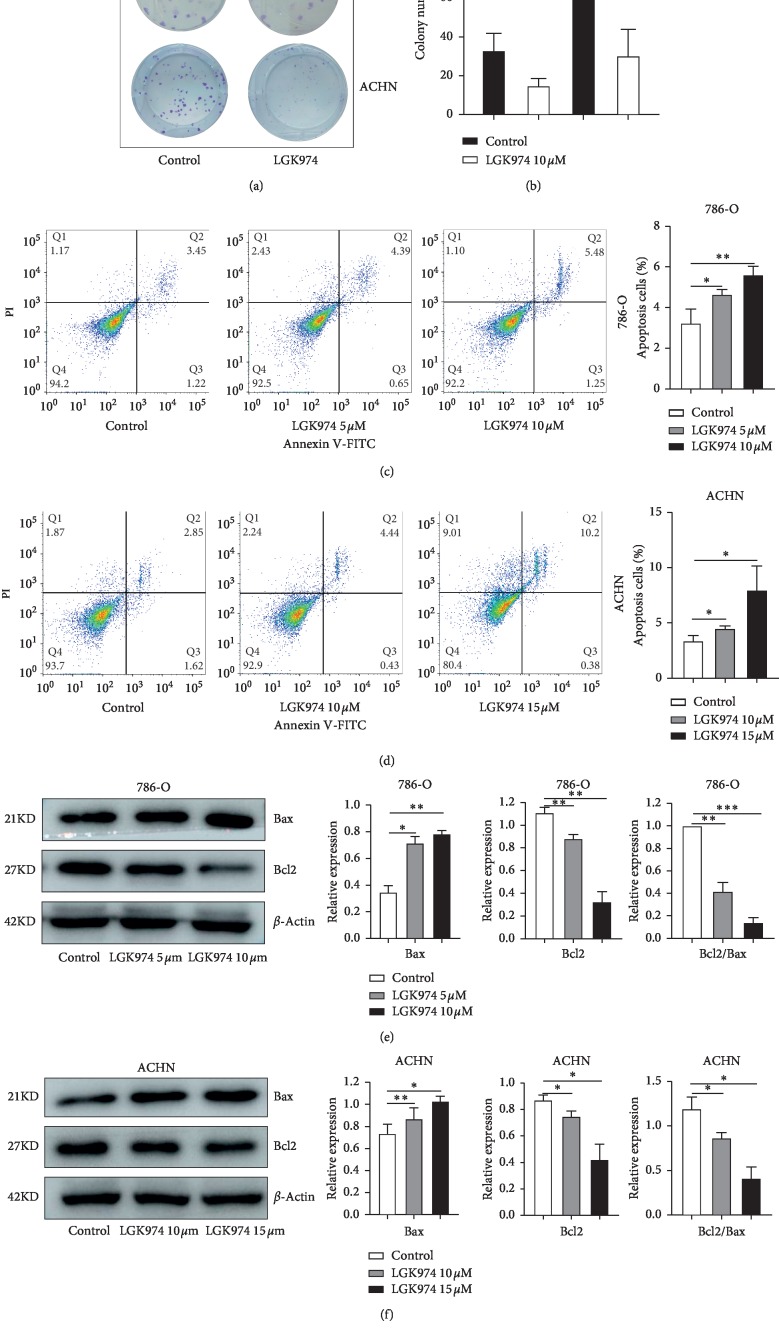
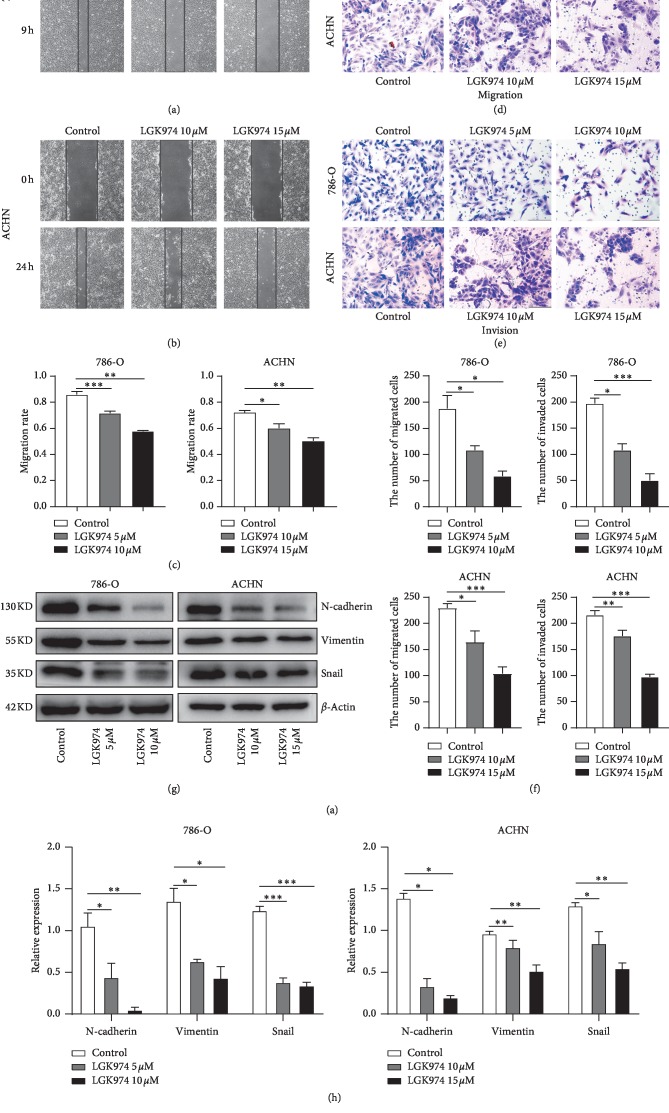
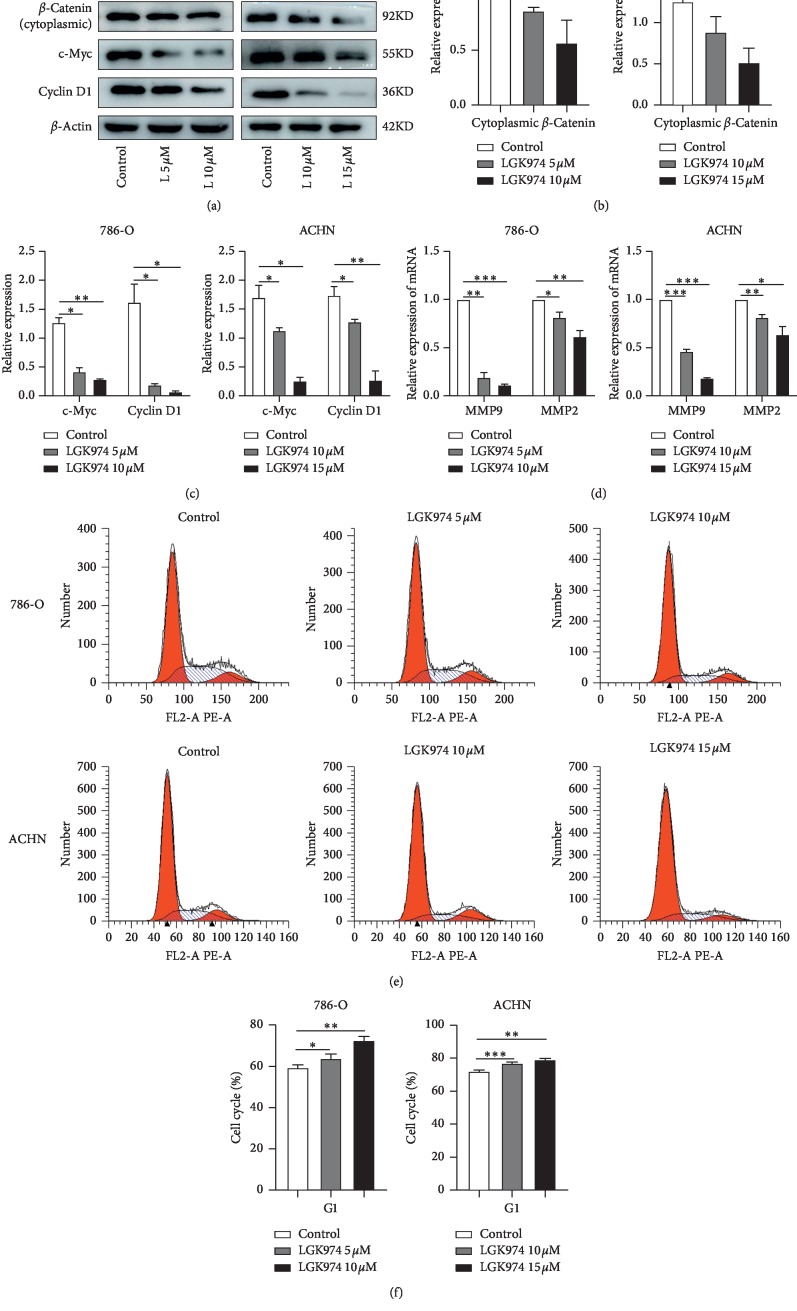
Targeted therapy for kidney cancer has achieved significant clinical results. However, because most patients who use targeted therapy will develop drug resistance, we still need to constantly explore new therapeutic targets. Although porcupine (PORCN) as a palmitoyltransferase plays a crucial role in the activation and secretion of Wnt proteins and affects the activity of the Wnt signaling pathway, little is known about the role of PORCN in clear cell renal cell carcinoma (ccRCC). We found that PORCN is highly expressed in renal cancer cell lines and patients with renal cell carcinoma with high expression of PORCN have a poor prognosis. Pathway analysis of PORCN and its related proteins showed that PORCN played a role through the Wnt signaling pathway, and there was a strong coexpression relationship between PORCN and Wnt proteins. Therefore, PORCN may be a potential and effective target for ccRCC. In the present study, we found that LGK974 could inhibit proliferation and colony formation and induce apoptosis in ccRCC cells. We also found that LGK974 could inhibit the migration and invasion of renal cell carcinoma and reduce the expression of mesenchymal markers. After treatment with LGK974, the expression level of -catenin, a key protein in the classical Wnt pathway, was significantly decreased, and the expression levels of the target genes cyclin D1, c-Myc, MMP9, and MMP2 in the Wnt signaling pathway were also significantly decreased, which represented a significant decrease in the activity of the Wnt signaling pathway. At the same time, the cycle of renal cancer cells was significantly blocked. In conclusion, our results indicate that LGK974 could significantly inhibit the progression of renal cancer cells in a safe concentration range, so PORCN may be a safe and effective target for patients with renal cancer.
肾癌的靶向治疗已经取得了显著的临床效果。然而,由于大多数使用靶向治疗的患者会产生耐药性,我们仍需不断探索新的治疗靶点。尽管猬(PORCN)作为一种棕榈酰转移酶在 Wnt 蛋白的激活和分泌中起着至关重要的作用,并影响 Wnt 信号通路的活性,但 PORCN 在肾透明细胞癌(ccRCC)中的作用知之甚少。我们发现 PORCN 在肾癌细胞系和 PORCN 高表达的肾细胞癌患者中高表达,且 PORCN 高表达的患者预后较差。PORCN 及其相关蛋白的通路分析表明,PORCN 通过 Wnt 信号通路发挥作用,PORCN 与 Wnt 蛋白之间存在强烈的共表达关系。因此,PORCN 可能是 ccRCC 的一个潜在有效的治疗靶点。在本研究中,我们发现 LGK974 可抑制 ccRCC 细胞的增殖、集落形成并诱导其凋亡。我们还发现 LGK974 可抑制肾癌细胞的迁移和侵袭,并降低间充质标志物的表达。用 LGK974 处理后,经典 Wnt 通路中的关键蛋白β-连环蛋白(β-catenin)的表达水平显著降低,Wnt 信号通路中的靶基因 cyclin D1、c-Myc、MMP9 和 MMP2 的表达水平也显著降低,这代表 Wnt 信号通路的活性显著降低。同时,肾癌细胞周期也被明显阻滞。综上所述,我们的研究结果表明,LGK974 可在安全浓度范围内显著抑制肾癌细胞的进展,因此 PORCN 可能是安全有效的肾癌细胞治疗靶点。