Department of Biochemistry and Molecular Genetics, University of Colorado Denver - Anschutz Medical Campus, Aurora, Colorado.
Department of Medicine - Division of Hematology, University of Colorado Denver - Anschutz Medical Campus, Aurora, Colorado.
Transfusion. 2020 Apr;60(4):786-798. doi: 10.1111/trf.15730. Epub 2020 Feb 27.
Blood transfusion is a lifesaving intervention for millions of recipients worldwide every year. Storing blood makes this possible but also promotes a series of alterations to the metabolism of the stored erythrocyte. It is unclear whether the metabolic storage lesion is correlated with clinically relevant outcomes and whether strategies aimed at improving the metabolic quality of stored units, such as hypoxic storage, ultimately improve performance in the transfused recipient.
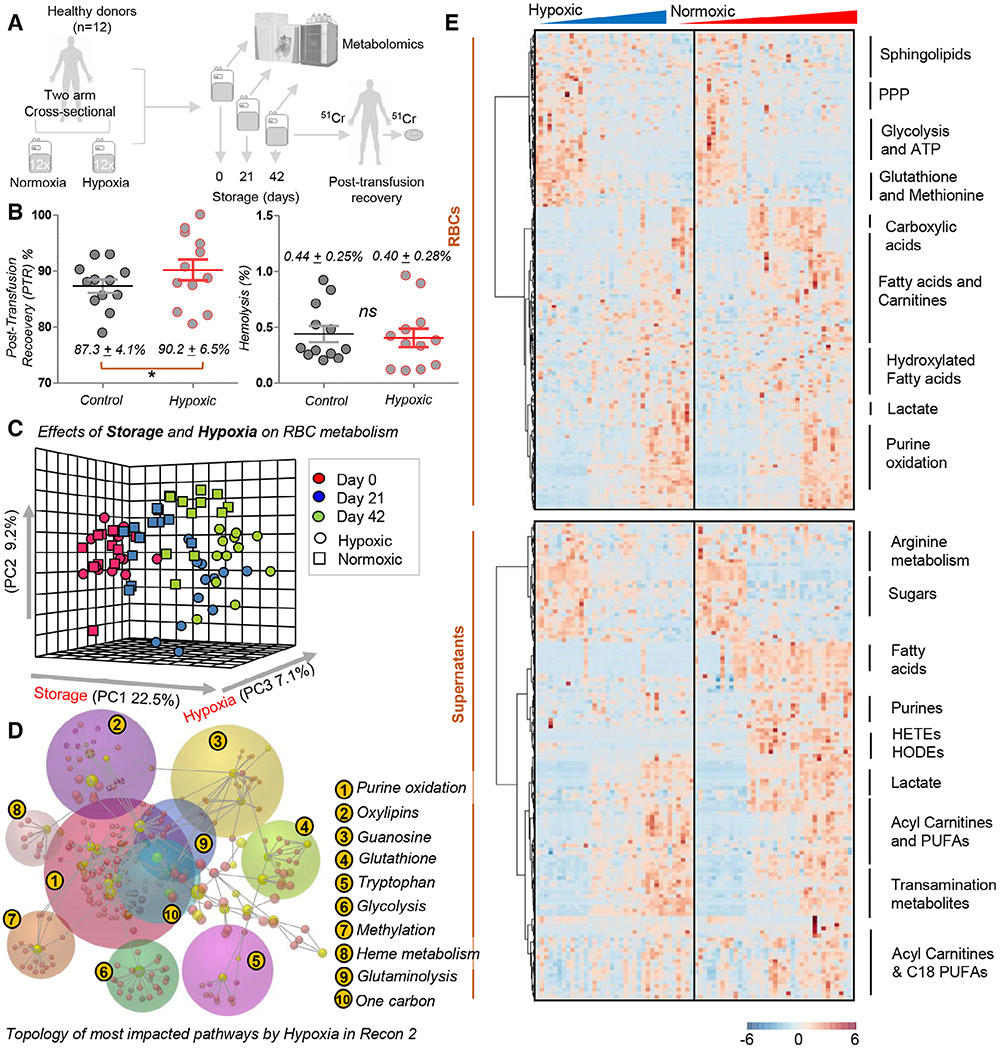
Twelve healthy donor volunteers were recruited in a two-arm cross-sectional study, in which each subject donated 2 units to be stored under standard (normoxic) or hypoxic conditions (Hemanext technology). End-of-storage measurements of hemolysis and autologous posttransfusion recovery (PTR) were correlated to metabolomics measurements at Days 0, 21, and 42.
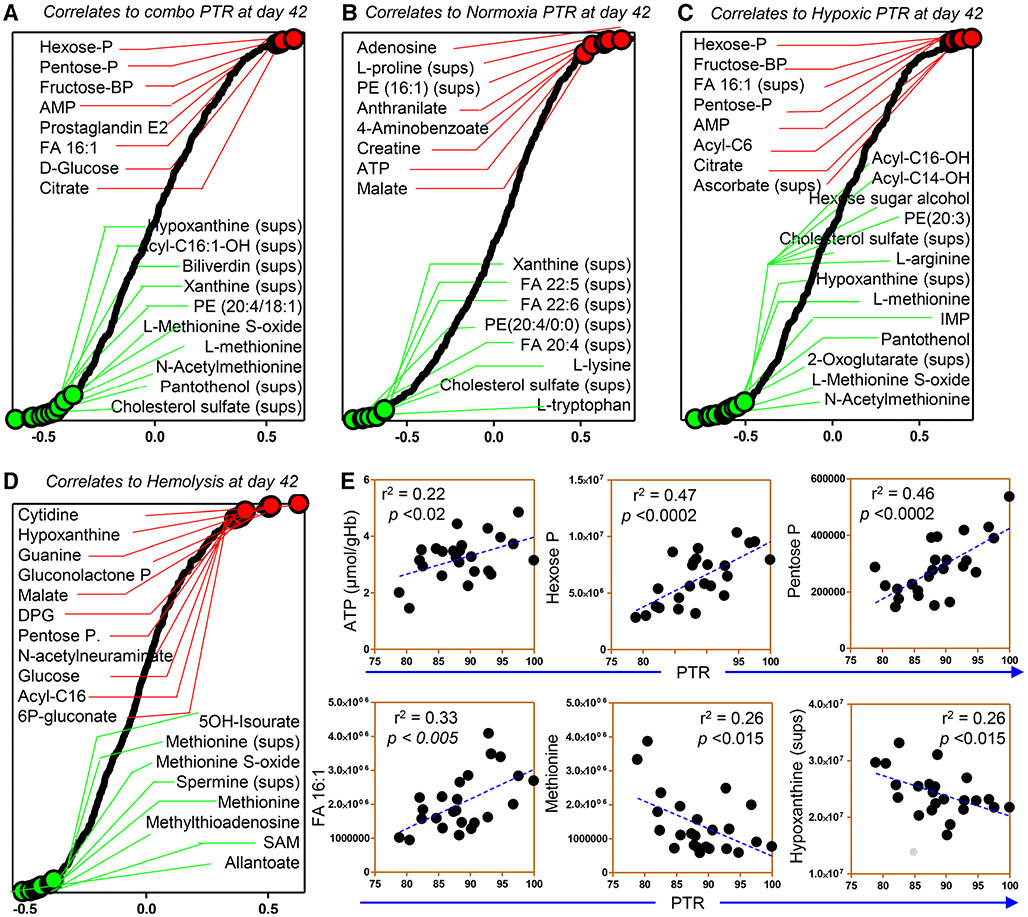
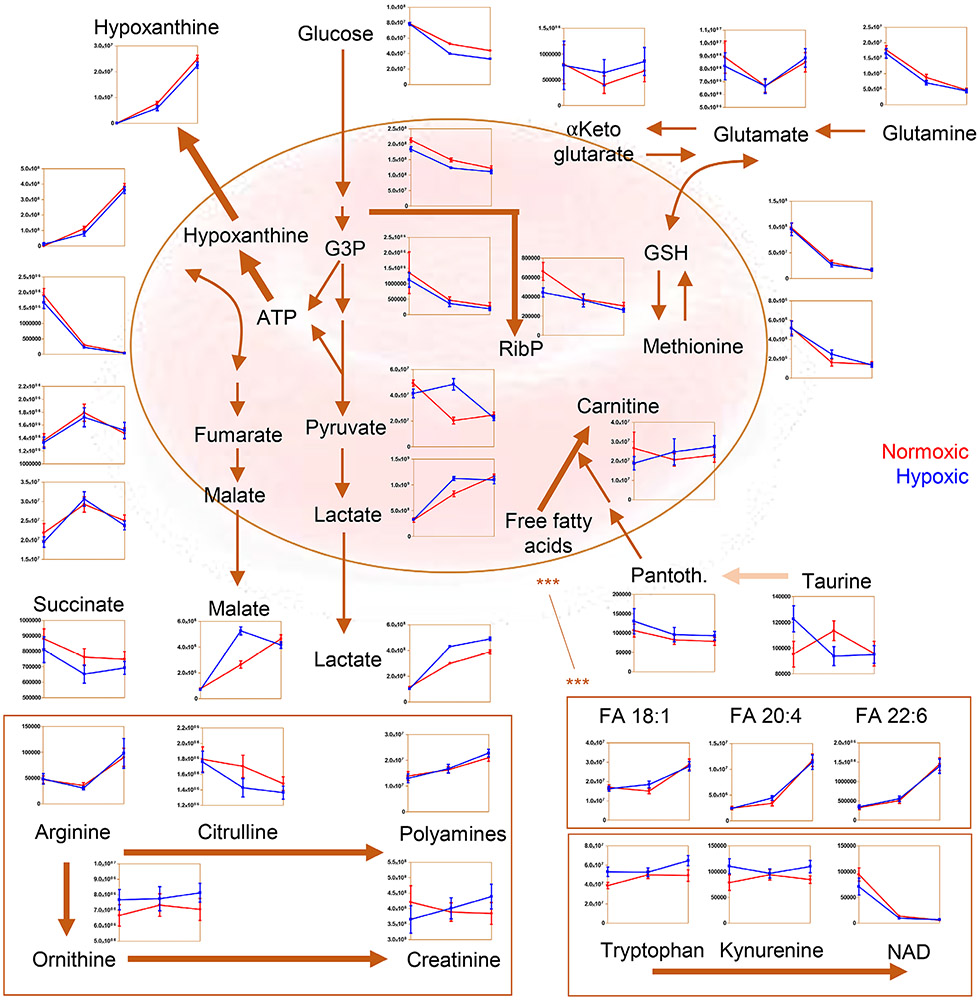
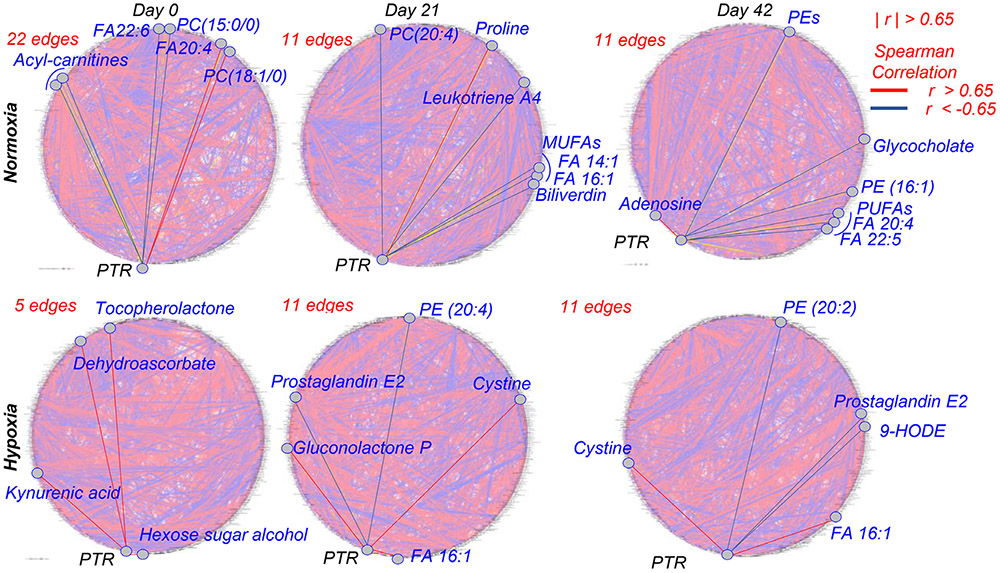
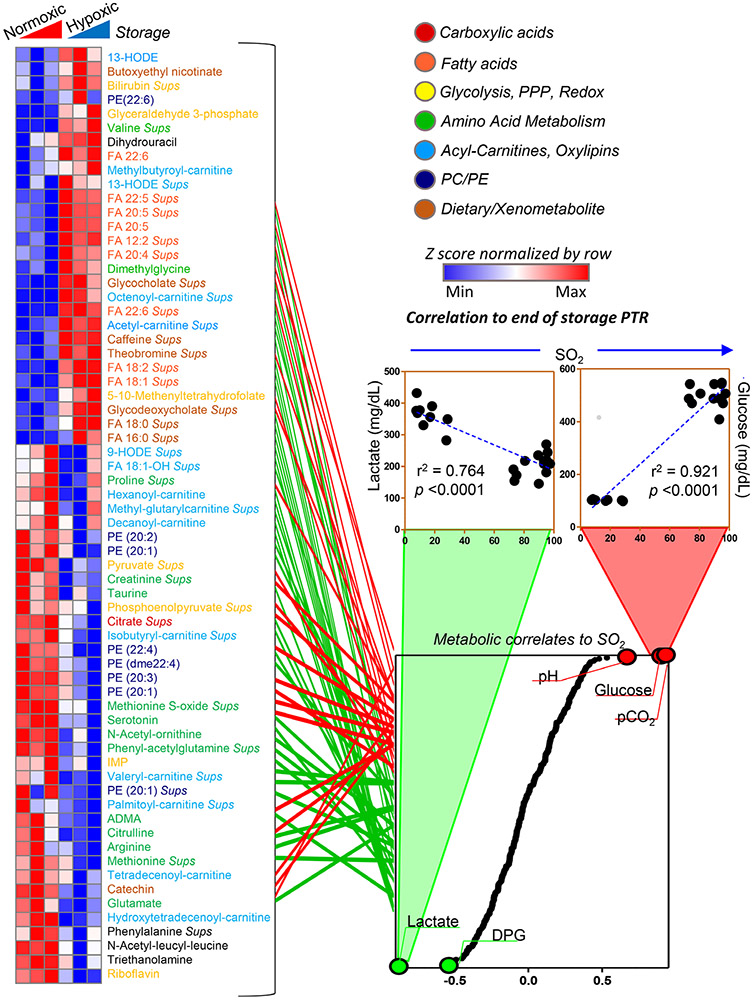
Hypoxic red blood cells (RBCs) showed superior PTR and comparable hemolysis to donor-paired standard units. Hypoxic storage improved energy and redox metabolism (glycolysis and 2,3-diphosphoglycerate), improved glutathione and methionine homeostasis, decreased purine oxidation and membrane lipid remodeling (free fatty acid levels, unsaturation and hydroxylation, acyl-carnitines). Intra- and extracellular metabolites in these pathways (including some dietary purines) showed significant correlations with PTR and hemolysis, though the degree of correlation was influenced by sulfur dioxide (SO ) levels.
Hypoxic storage improves energy and redox metabolism of stored RBCs, which results in improved posttransfusion recoveries in healthy autologous recipients-a Food and Drug Administration gold standard of stored blood quality. In addition, we identified candidate metabolic predictors of PTR for RBCs stored under standard and hypoxic conditions.
每年全球有数百万人因输血而获救。储存血液使这成为可能,但也会导致储存的红细胞代谢发生一系列改变。目前尚不清楚储存引起的代谢损伤是否与临床相关结局相关,以及旨在改善储存单位代谢质量的策略(如低氧储存)是否最终会改善输注受者的性能。
在一项双臂交叉研究中招募了 12 名健康献血者志愿者,每名志愿者捐献 2 单位血液,分别在标准(常氧)或低氧条件下(Hemanext 技术)储存。对储存末期的溶血和自体输血后恢复(PTR)进行测量,并与第 0、21 和 42 天的代谢组学测量值相关联。
低氧红细胞(RBC)的 PTR 优于配对的标准单位,且溶血程度相当。低氧储存可改善能量和氧化还原代谢(糖酵解和 2,3-二磷酸甘油酸),改善谷胱甘肽和蛋氨酸稳态,减少嘌呤氧化和膜脂重塑(游离脂肪酸水平、不饱和度和羟化度、酰基肉碱)。这些途径中的细胞内和细胞外代谢物(包括一些饮食嘌呤)与 PTR 和溶血有显著相关性,但相关性程度受二氧化硫(SO )水平的影响。
低氧储存可改善储存 RBC 的能量和氧化还原代谢,从而提高健康自体受者的输血后恢复率-这是储存血液质量的美国食品和药物管理局黄金标准。此外,我们确定了在标准和低氧条件下储存的 RBC 的 PTR 的候选代谢预测因子。