Finnish Institute for Health and Welfare (THL), Department of Public Health Solutions, P.O. Box 95, 70701 Kuopio, Finland.
University of Eastern Finland (UEF), Faculty of Science and Forestry, Department of Environmental and Biological Sciences, P.O. Box 1627, 70211 Kuopio, Finland.
Int J Environ Res Public Health. 2020 Feb 25;17(5):1472. doi: 10.3390/ijerph17051472.
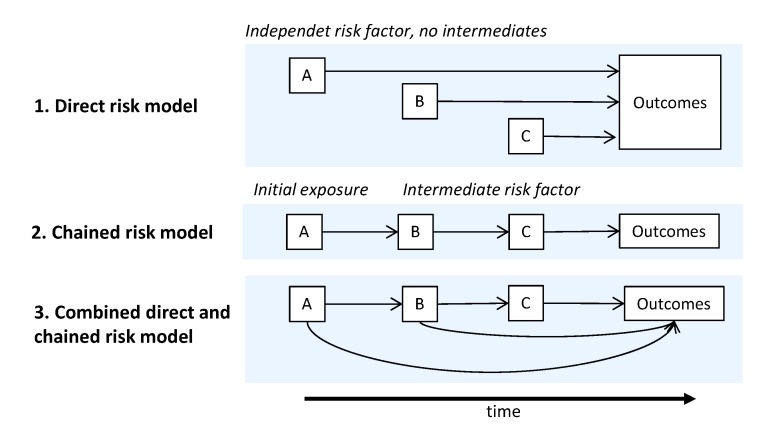
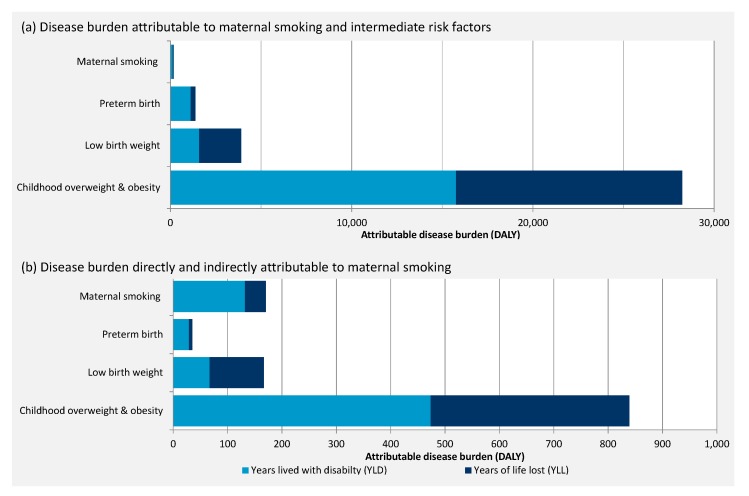
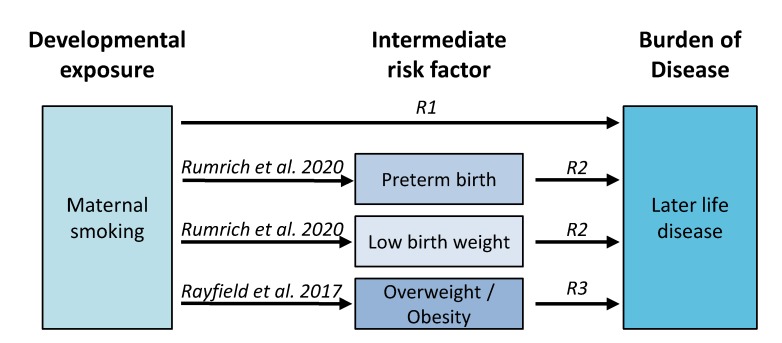
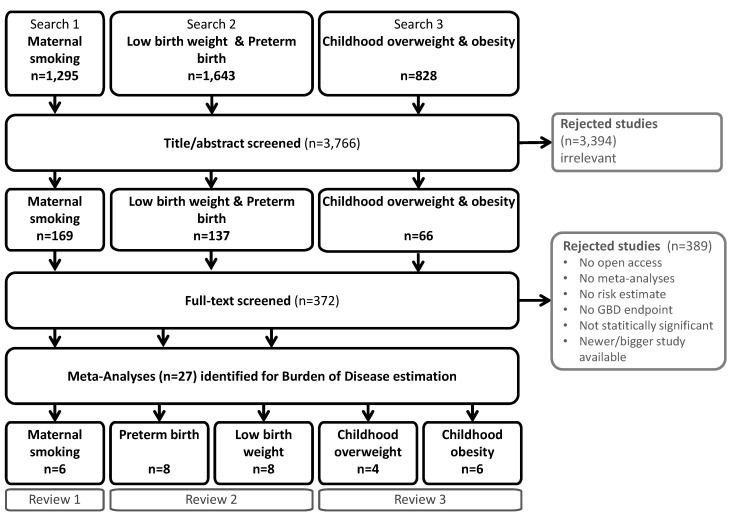
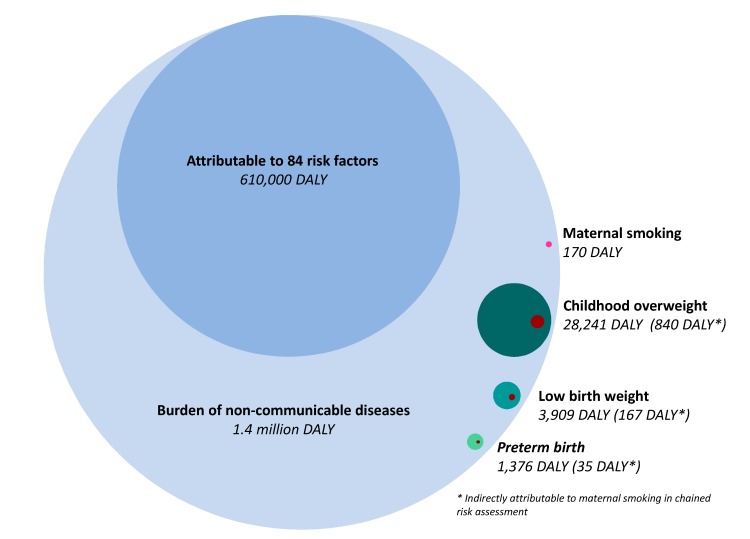
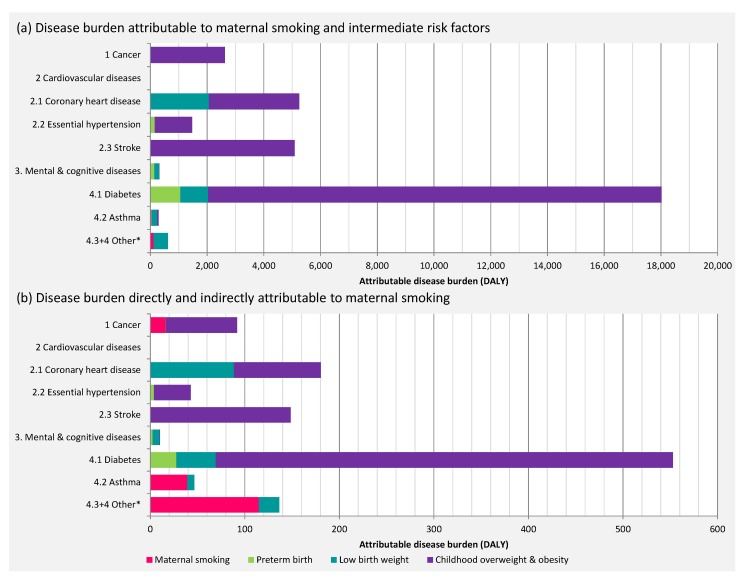
Traditional risk factors and environmental exposures only explain less than half of the disease burden. The developmental origin of the health and disease (DOHaD) concept proposes that prenatal and early postnatal exposures increase disease susceptibility throughout life. The aim of this work is to demonstrate the application of the DOHaD concept in a chained risk assessment and to provide an estimate of later in life burden of disease related to maternal smoking. We conducted three systematic literature searches for meta-analysis and reviewed the literature reporting meta-analyses of long-term health outcomes associated with maternal smoking and intermediate risk factors (preterm birth, low birth weight, childhood overweight). In the chained model the three selected risk factors explained an additional 2% (34,000 DALY) of the total non-communicable disease burden (1.4 million DALY) in 2017. Being overweight in childhood was the most important risk factor (28,000 DALY). Maternal smoking was directly associated with 170 DALY and indirectly via the three intermediate risk factors 1000 DALY (1200 DALY in total). The results confirm the potential to explain a previously unattributed part of the non-communicable diseases by the DOHAD concept. It is likely that relevant outcomes are missing, resulting in an underestimation of disease burden.
传统的风险因素和环境暴露仅能解释不足一半的疾病负担。健康与疾病的发育起源(DOHaD)概念提出,产前和产后早期的暴露会增加一生中的疾病易感性。本研究旨在展示 DOHaD 概念在连锁风险评估中的应用,并估计与母亲吸烟有关的生命后期疾病负担。我们进行了三次系统文献检索以进行荟萃分析,并综述了报告与母亲吸烟和中间风险因素(早产、低出生体重、儿童超重)相关的长期健康结局的荟萃分析文献。在连锁模型中,这三个选定的风险因素解释了 2017 年非传染性疾病总负担(140 万 DALY)的额外 2%(34,000 DALY)。儿童超重是最重要的风险因素(28,000 DALY)。母亲吸烟直接导致 170 DALY,通过三个中间风险因素间接导致 1000 DALY(总共 1200 DALY)。结果证实了 DOHAD 概念解释非传染性疾病中以前归因不明部分的潜力。很可能遗漏了相关结局,导致疾病负担低估。