Konsue Wilasinee, Dethoup Tida, Limtong Savitree
Department of Microbiology, Faculty of Science, Kasetsart University, Bangkok 10900, Thailand.
Department of Plant Pathology, Faculty of Agriculture, Kasetsart University, Bangkok 10900, Thailand.
Microorganisms. 2020 Feb 25;8(3):317. doi: 10.3390/microorganisms8030317.
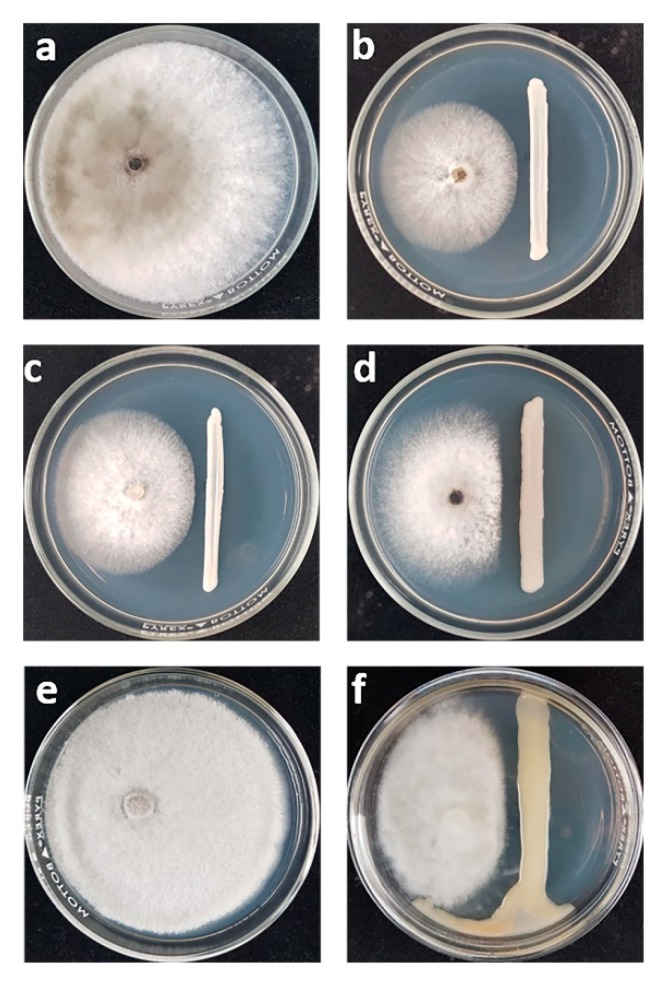
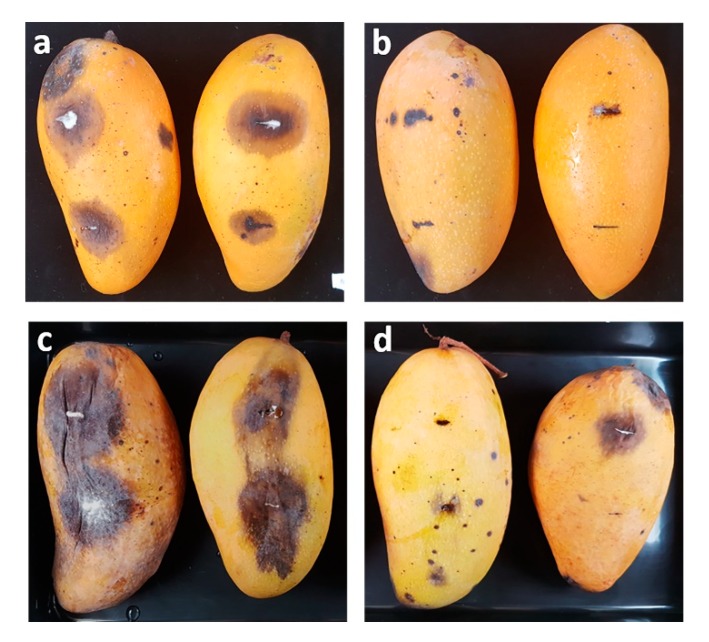
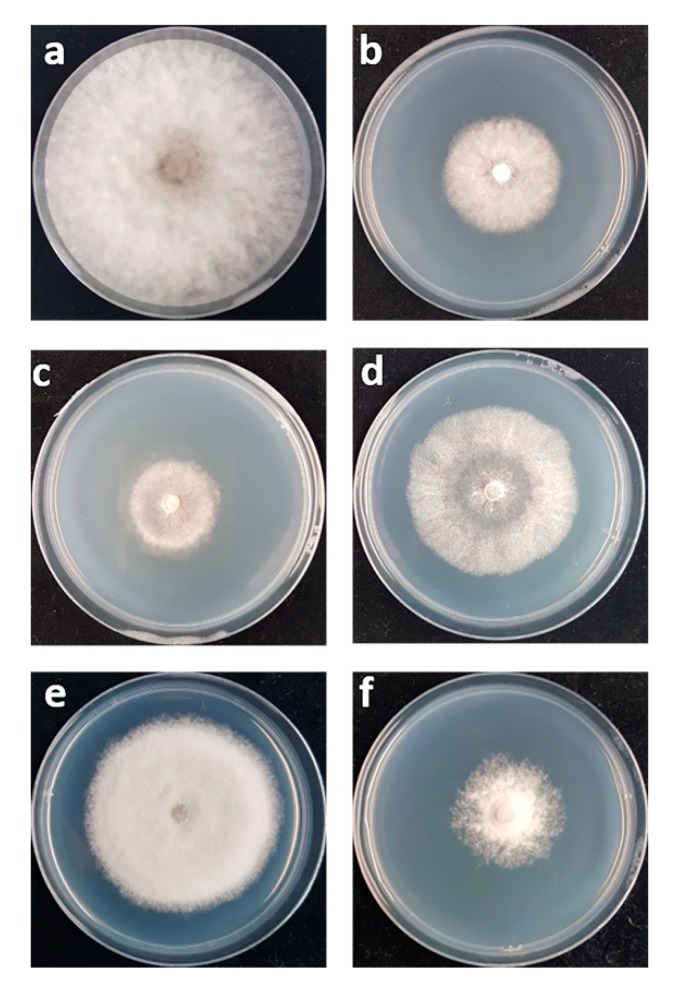
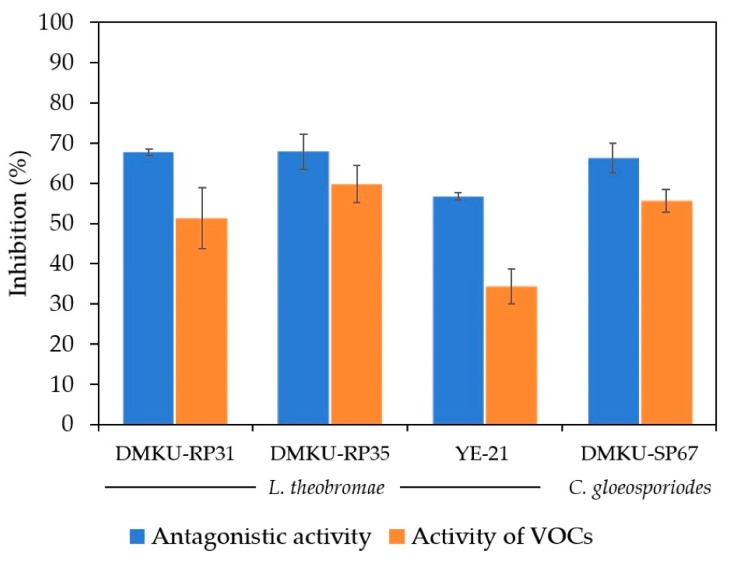
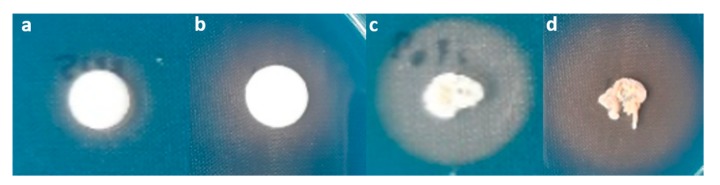
To select antagonistic yeasts for the control of fruit rot caused by and anthracnose caused by in postharvest mango fruit, 307 yeast strains isolated from plant leaves were evaluated for their antagonistic activities against these two fungal pathogens in vitro. DMKU-RP31, DMKU-RP35 and YE-21 were found to inhibit the growth of whereas only DMKU-SP67 inhibited the growth of . Antagonistic mechanisms of these four antagonistic yeasts in vitro consisted of the production of antifungal volatile organic compounds (VOCs), biofilm formation and siderophore production. DMKU-RP35 was the most effective strain in controlling fruit rot on postharvest mango fruits. Its action was comparable to that of the fungicide, benomyl, reducing the disease severity by 82.4%, whereas benomyl revealed 87.5% reduction. DMKU-SP67 reduced anthracnose severity by 94.1%, which was comparable to that of using benomyl (93.9%). The antifungal VOCs produced by these yeast strains also reduced the severity of these diseases on postharvest mango fruits but at lower rates than using yeast cells. Therefore, these antagonistic yeasts have the potential for use as biological control agents for the control of fruit rot and anthracnose diseases.
为筛选用于控制采后芒果果实上由[病原菌名称1]引起的果实腐烂和由[病原菌名称2]引起的炭疽病的拮抗菌,对从植物叶片分离得到的307株酵母菌株进行了体外对这两种真菌病原菌的拮抗活性评价。发现DMKU - RP31、DMKU - RP35和YE - 21抑制[病原菌名称1]的生长,而只有DMKU - SP67抑制[病原菌名称2]的生长。这四株拮抗菌在体外的拮抗机制包括产生抗真菌挥发性有机化合物(VOCs)、生物膜形成和铁载体产生。DMKU - RP35是控制采后芒果果实腐烂最有效的菌株。其作用与杀菌剂苯菌灵相当,病害严重程度降低82.4%,而苯菌灵降低87.5%。DMKU - SP67使炭疽病严重程度降低94.1%,与使用苯菌灵(93.9%)相当。这些酵母菌株产生的抗真菌VOCs也降低了采后芒果果实上这些病害的严重程度,但降低率低于使用酵母细胞。因此,这些拮抗菌有潜力用作控制果实腐烂和炭疽病的生物防治剂。