Faculty of Engineering, Information and Systems, University of Tsukuba, Tsukuba, Ibaraki, Japan.
University of Tsukuba, Leading Graduate School Doctoral Program in Human Biology, Tsukuba, Japan.
PLoS One. 2020 Feb 27;15(2):e0229573. doi: 10.1371/journal.pone.0229573. eCollection 2020.
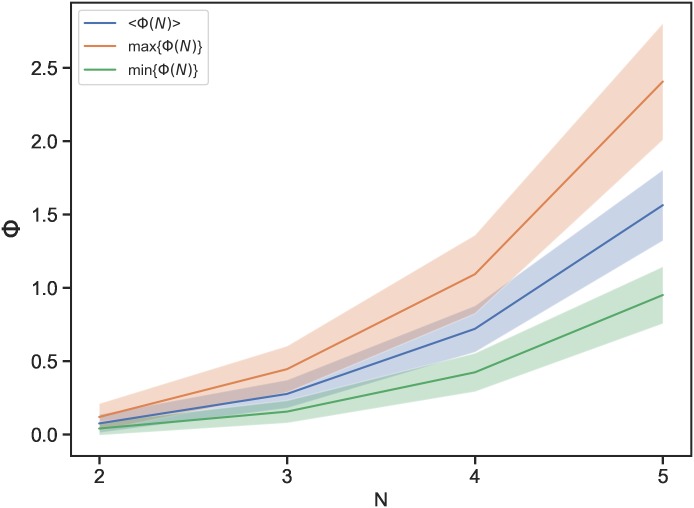
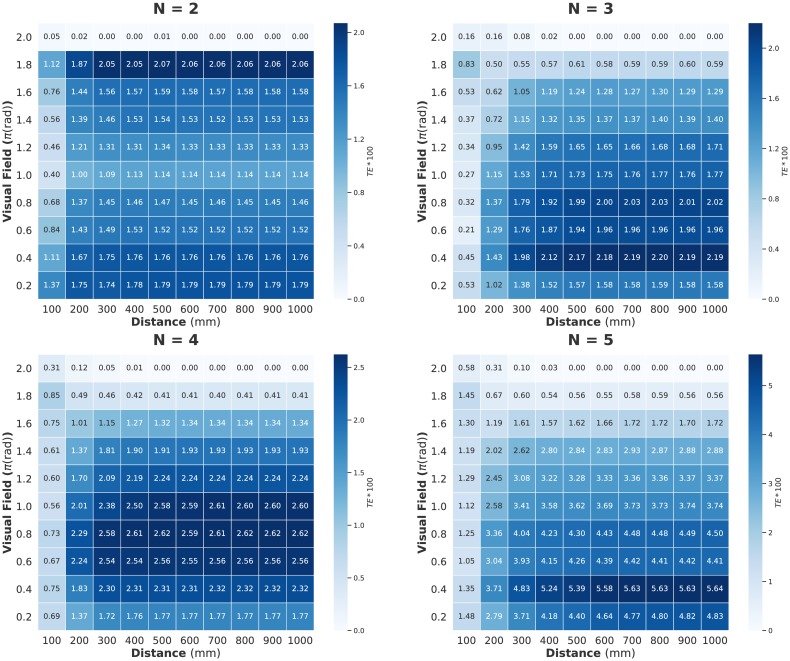
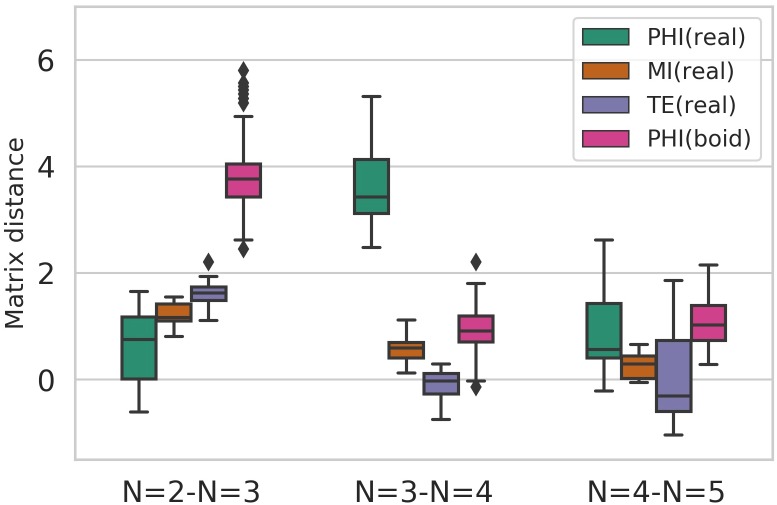
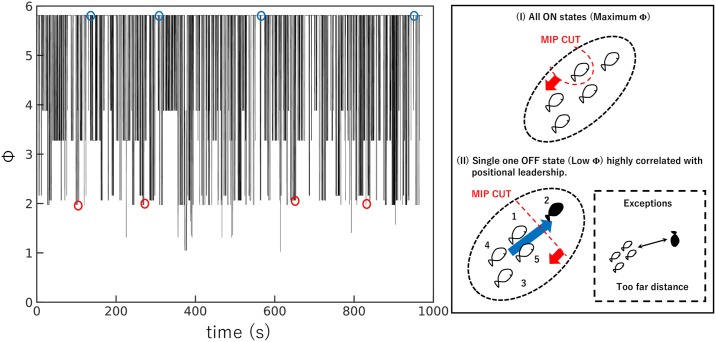
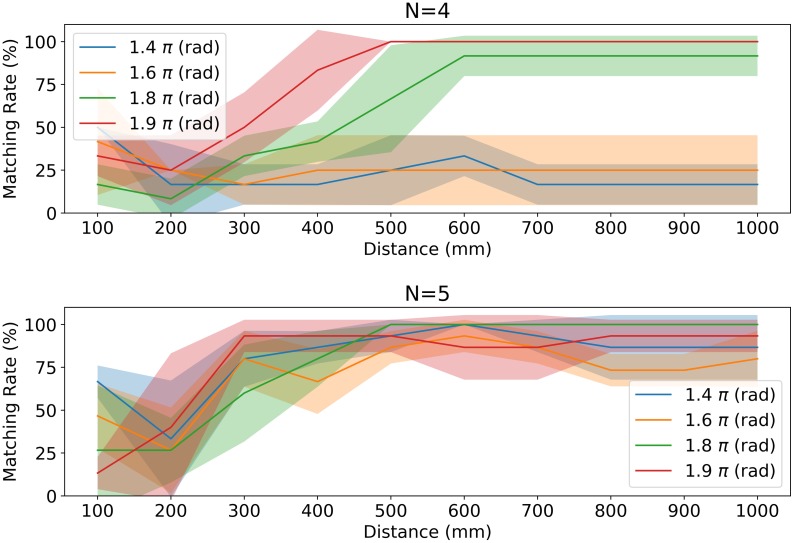
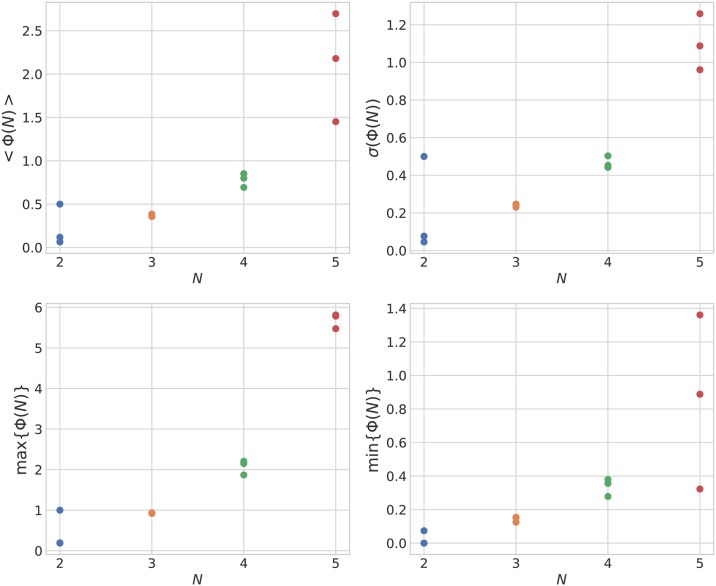
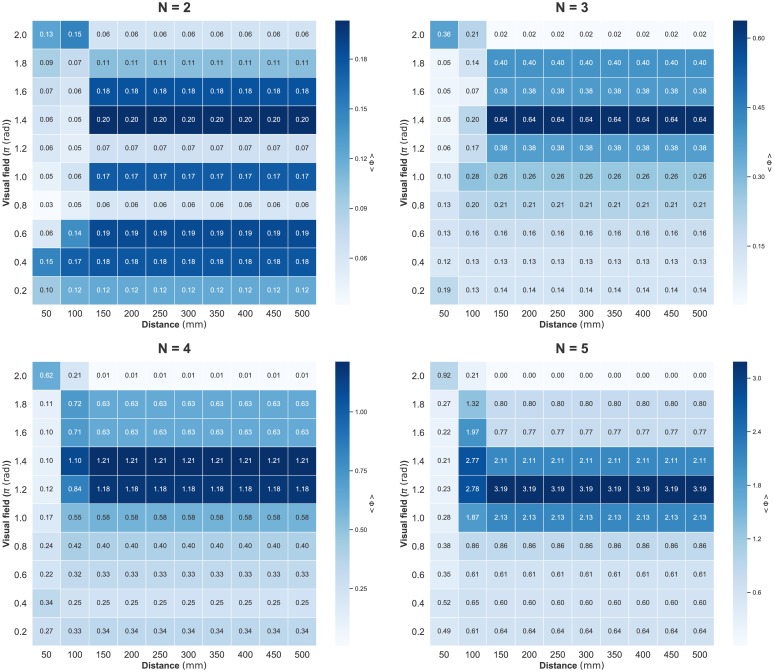
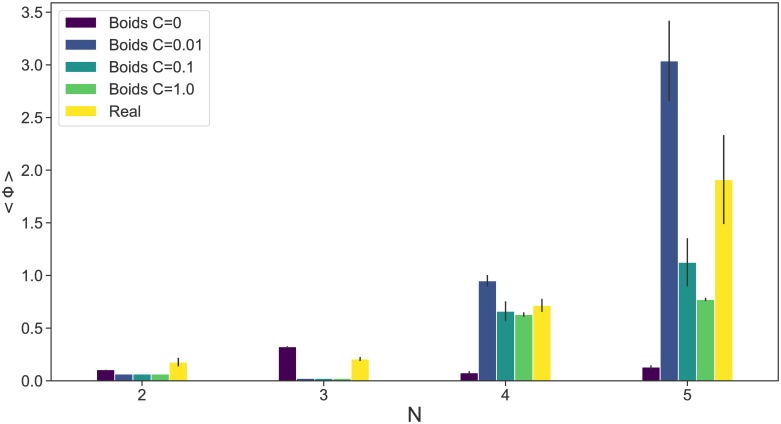
Collective behaviours are known to be the result of diverse dynamics and are sometimes likened to living systems. Although many studies have revealed the dynamics of various collective behaviours, their main focus has been on the information processing performed by the collective, not on interactions within the collective. For example, the qualitative difference between three and four elements in a system has rarely been investigated. Tononi et al. proposed integrated information theory (IIT) to measure the degree of consciousness Φ. IIT postulates that the amount of information loss caused by the minimum information partition is equivalent to the degree of information integration in the system. This measure is not only useful for estimating the degree of consciousness but can also be applied to more general network systems. Here, we obtained two main results from the application of IIT (in particular, IIT 3.0) to the analysis of real fish schools (Plecoglossus altivelis). First, we observed that the discontinuity on 〈Φ(N)〉 distributions emerges for a school of four or more fish. This transition was not observed by measuring the mutual information or the sum of the transfer entropy. We also analysed the IIT on Boids simulations with respect to different coupling strengths; however, the results of the Boids model were found to be quite different from those of real fish. Second, we found a correlation between this discontinuity and the emergence of leadership. We discriminate leadership in this paper from its traditional meaning (e.g. defined by transfer entropy) because IIT-induced leadership refers not to group behaviour, as in other methods, but the degree of autonomy (i.e. group integrity). These results suggest that integrated information Φ can reveal the emergence of a new type of leadership which cannot be observed using other measures.
集体行为是多种动态的结果,有时类似于生命系统。尽管许多研究已经揭示了各种集体行为的动态,但它们的主要重点是集体执行的信息处理,而不是集体内部的相互作用。例如,系统中三个和四个元素之间的定性差异很少被研究。Tononi 等人提出了综合信息理论(IIT)来测量意识 Φ 的程度。IIT 假设,系统中最小信息划分引起的信息量损失与系统中信息整合的程度相等。该度量不仅有助于估计意识的程度,还可以应用于更一般的网络系统。在这里,我们从 IIT(特别是 IIT 3.0)在真实鱼群(红鳍东方鲀)分析中的应用中获得了两个主要结果。首先,我们观察到,对于四尾或更多鱼的鱼群,〈Φ(N)〉分布的不连续性出现了。通过测量互信息或转移熵的总和,没有观察到这种转变。我们还分析了 Boids 模拟的 IIT 相对于不同的耦合强度;然而,Boids 模型的结果与真实鱼类的结果有很大的不同。其次,我们发现这种不连续性与领导力的出现之间存在相关性。在本文中,我们将领导力与传统意义上的领导力区分开来(例如,通过转移熵来定义),因为 IIT 诱导的领导力不是指其他方法中的群体行为,而是自主性的程度(即群体完整性)。这些结果表明,综合信息 Φ 可以揭示一种新类型的领导力的出现,而其他方法无法观察到这种领导力。