Geto Zeleke, Molla Meseret Derbew, Challa Feyissa, Belay Yohannes, Getahun Tigist
National Reference Laboratory for Clinical Chemistry, Ethiopian Public Health Institute, Addis Ababa, Ethiopia.
Department of Biochemistry, School of Medicine, College of Medicine and Health Sciences, University of Gondar, Gondar, Ethiopia.
J Inflamm Res. 2020 Feb 14;13:97-107. doi: 10.2147/JIR.S232009. eCollection 2020.
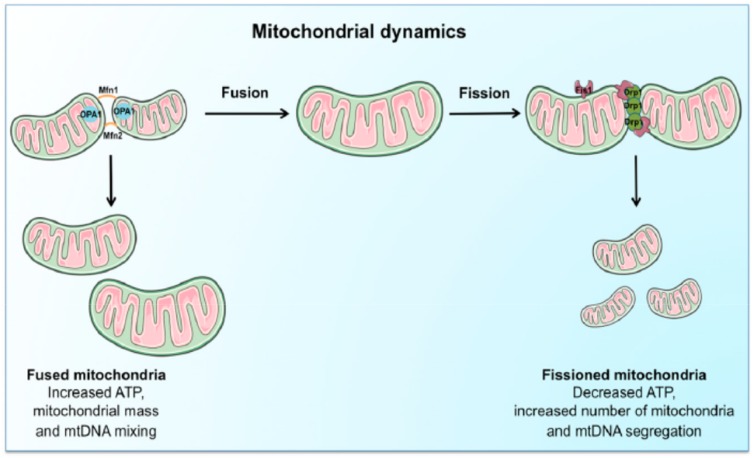
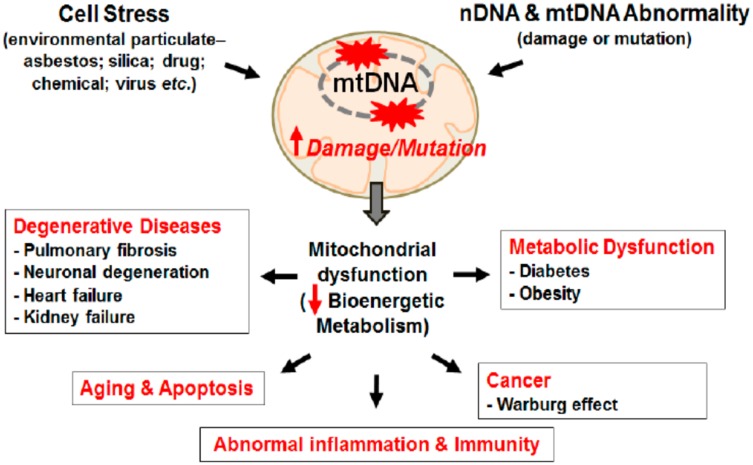
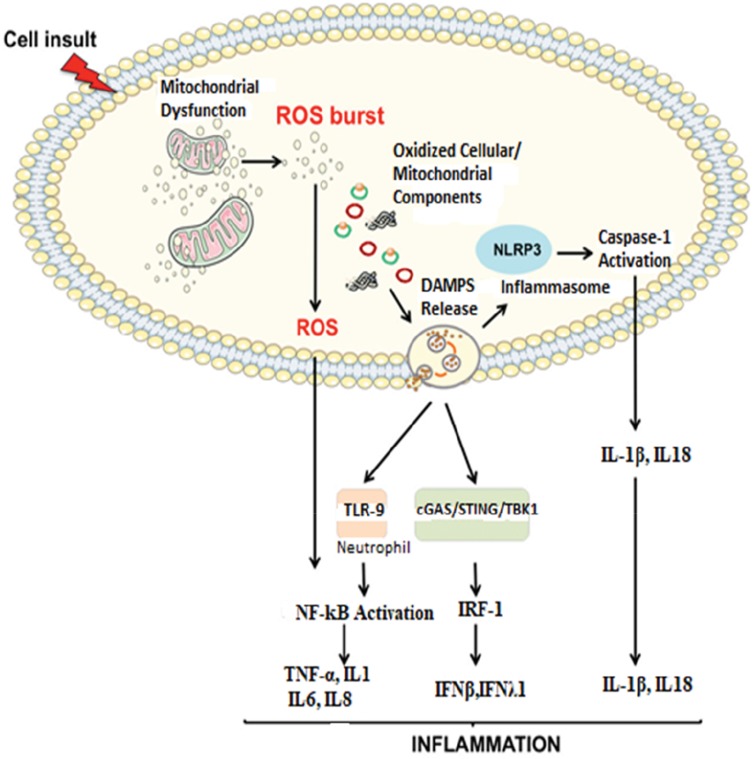
Mitochondria are organelles with highly dynamic ultrastructure maintained by flexible fusion and fission rates governed by Guanosine Triphosphatases (GTPases) dependent proteins. Balanced control of mitochondrial quality control is crucial for maintaining cellular energy and metabolic homeostasis; however, dysfunction of the dynamics of fusion and fission causes loss of integrity and functions with the accumulation of damaged mitochondria and mitochondrial deoxyribose nucleic acid (mtDNA) that can halt energy production and induce oxidative stress. Mitochondrial derived reactive oxygen species (ROS) can mediate redox signaling or, in excess, causing activation of inflammatory proteins and further exacerbate mitochondrial deterioration and oxidative stress. ROS have a deleterious effect on many cellular components, including lipids, proteins, both nuclear and mtDNA and cell membrane lipids producing the net result of the accumulation of damage associated molecular pattern (DAMPs) capable of activating pathogen recognition receptors (PRRs) on the surface and in the cytoplasm of immune cells. Chronic inflammation due to oxidative damage is thought to trigger numerous chronic diseases including cardiac, liver and kidney disorders, neurodegenerative diseases (Parkinson's disease and Alzheimer's disease), cardiovascular diseases/atherosclerosis, obesity, insulin resistance, and type 2 diabetes mellitus.
线粒体是具有高度动态超微结构的细胞器,其结构由鸟苷三磷酸酶(GTPases)依赖性蛋白控制的灵活融合和裂变率维持。线粒体质量控制的平衡对于维持细胞能量和代谢稳态至关重要;然而,融合和裂变动力学功能障碍会导致线粒体完整性和功能丧失,受损线粒体和线粒体脱氧核糖核酸(mtDNA)积累,进而可能停止能量产生并诱导氧化应激。线粒体衍生的活性氧(ROS)可介导氧化还原信号传导,或在过量时导致炎症蛋白激活,进一步加剧线粒体恶化和氧化应激。ROS对许多细胞成分具有有害作用,包括脂质、蛋白质、核DNA和mtDNA以及细胞膜脂质,其最终结果是积累能够激活免疫细胞表面和细胞质中病原体识别受体(PRRs)的损伤相关分子模式(DAMPs)。氧化损伤引起的慢性炎症被认为会引发多种慢性疾病,包括心脏、肝脏和肾脏疾病、神经退行性疾病(帕金森病和阿尔茨海默病)、心血管疾病/动脉粥样硬化、肥胖、胰岛素抵抗和2型糖尿病。