Saha Biswajit, Ruidas Bhuban, Mete Sourav, Mukhopadhyay Chitrangada Das, Bauri Kamal, De Priyadarsi
Polymer Research Centre and Centre for Advanced Functional Materials , Department of Chemical Sciences , Indian Institute of Science Education and Research Kolkata , Nadia , Mohanpur - 741246 , West Bengal , India . Email:
Centre for Healthcare Science and Technology , Indian Institute of Engineering Science and Technology , Shibpur, P.O. Botanic Garden , Howrah , West Bengal 711103 , India . Email:
Chem Sci. 2019 Oct 28;11(1):141-147. doi: 10.1039/c9sc04338a. eCollection 2020 Jan 7.
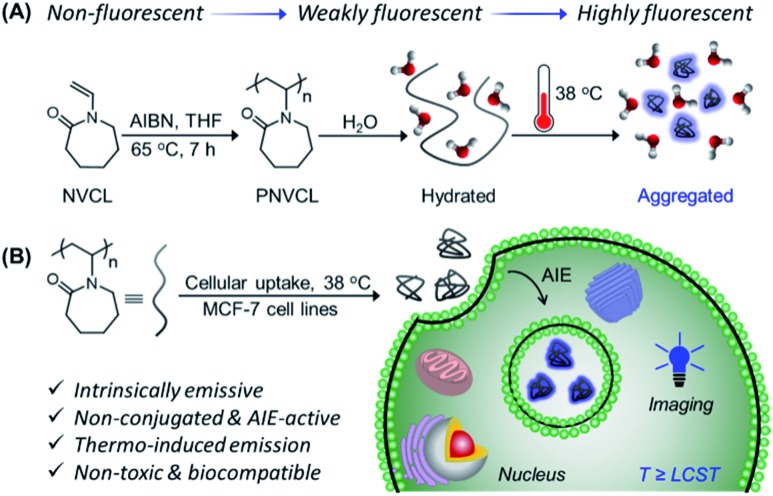
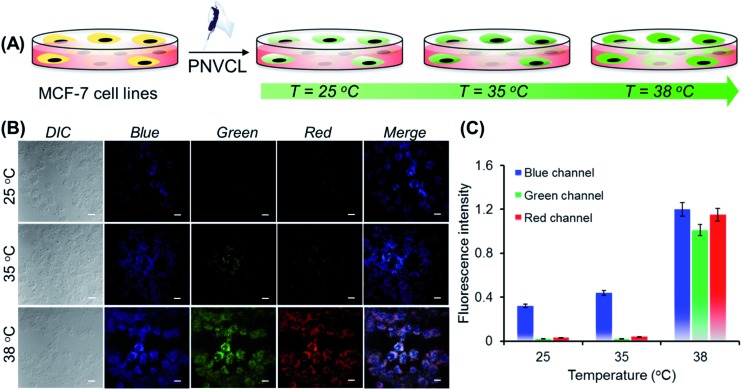
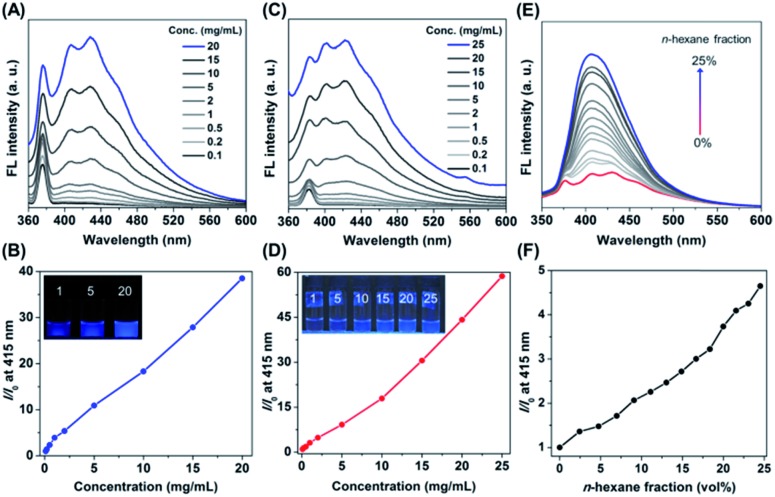
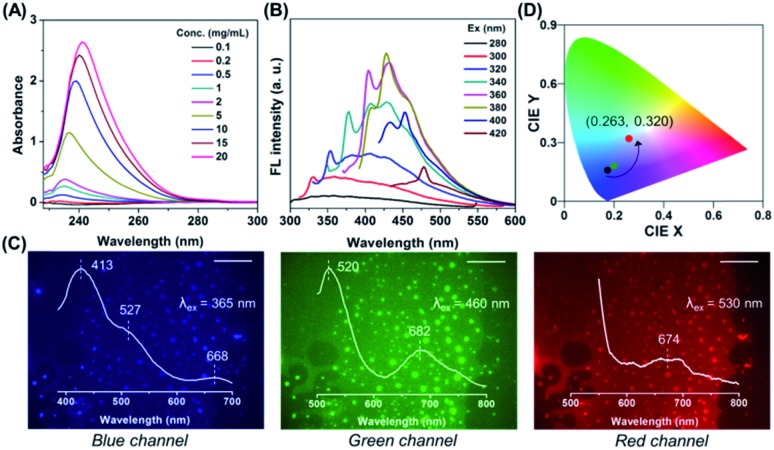
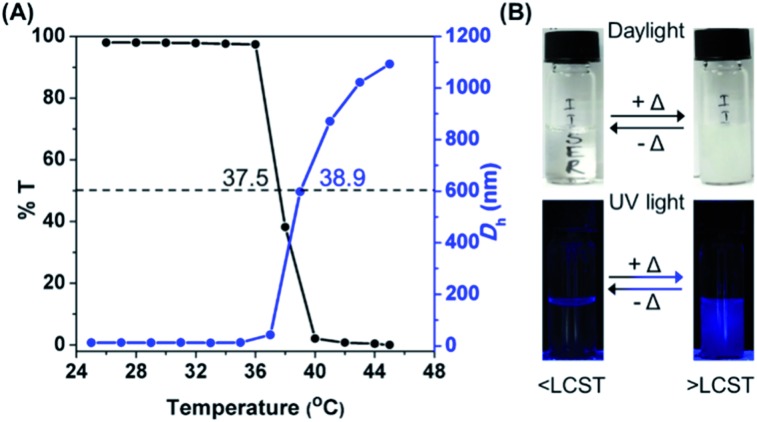
Since temperature is one of the most significant physiological parameters that dictate the cellular status of living organisms, accurate intracellular temperature measurement is crucial and a valuable biomarker for the diagnosis and treatment of diseases. Herein, we introduce the foremost example of a non-conjugated polymer as a next generation fluorescent thermometer which is capable of addressing the key shortcomings including toxicity and thermal-induced fluorescence quenching associated with π-π conjugated system-based thermometers developed so far. We revealed, for the first time, the unique photophysical and aggregation-induced emission (AIE) characteristics of well-known thermoresponsive poly(-vinylcaprolactam) (PNVCL) devoid of any classical fluorophore entity. PNVCL underwent a coil to globular conformational transition in an aqueous medium and appeared to be fluorescent above its lower critical solution temperature (LCST) near body temperature (38 °C). Eventually, this intriguing aspect enabled higher cellular uptake of PNVCL at the LCST boundary. By virtue of the AIE effect, the thermo-induced aggregation phenomenon has been ingeniously utilized to apply PNVCL as a novel fluorescent thermometer for intracellular temperature determination.
由于温度是决定生物体细胞状态的最重要生理参数之一,准确测量细胞内温度至关重要,是疾病诊断和治疗的重要生物标志物。在此,我们介绍了一种非共轭聚合物作为下一代荧光温度计的首要示例,它能够解决包括毒性和热致荧光猝灭等关键缺点,这些缺点与迄今为止开发的基于π-π共轭体系的温度计相关。我们首次揭示了著名的热响应性聚(乙烯基己内酰胺)(PNVCL)独特的光物理和聚集诱导发光(AIE)特性,该聚合物不含任何经典荧光团实体。PNVCL在水性介质中经历了从线圈到球状的构象转变,并且在接近体温(38°C)的下临界溶液温度(LCST)以上似乎具有荧光性。最终,这一有趣的方面使得PNVCL在LCST边界处具有更高的细胞摄取率。借助AIE效应,热诱导聚集现象已被巧妙地用于将PNVCL用作测定细胞内温度的新型荧光温度计。