Advanced Clinical Simulation Center, School of Medicine, Universidad de Valladolid, 47005 Valladolid, Spain.
Advanced Life Support Unit, Emergency Medical Services, 47006 Valladolid, Spain.
Int J Environ Res Public Health. 2020 Feb 26;17(5):1504. doi: 10.3390/ijerph17051504.
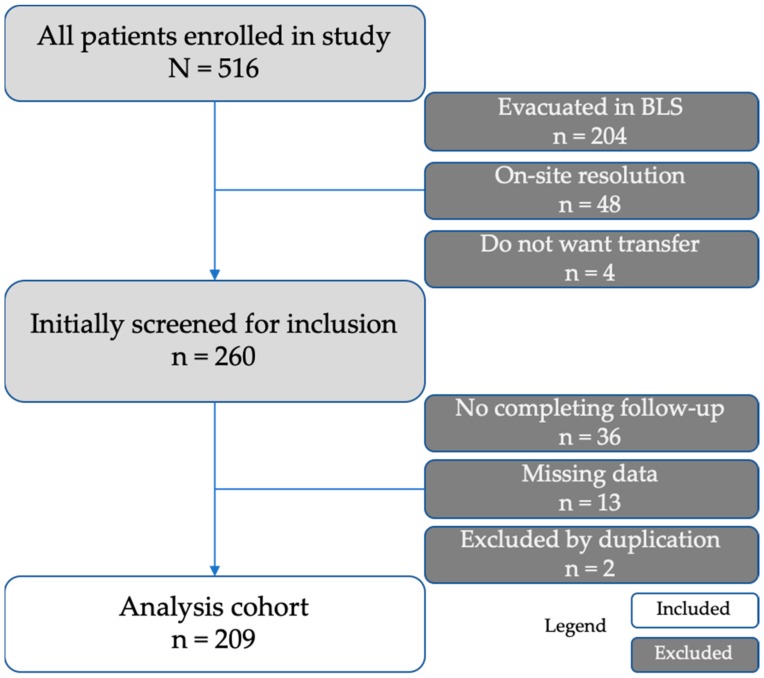
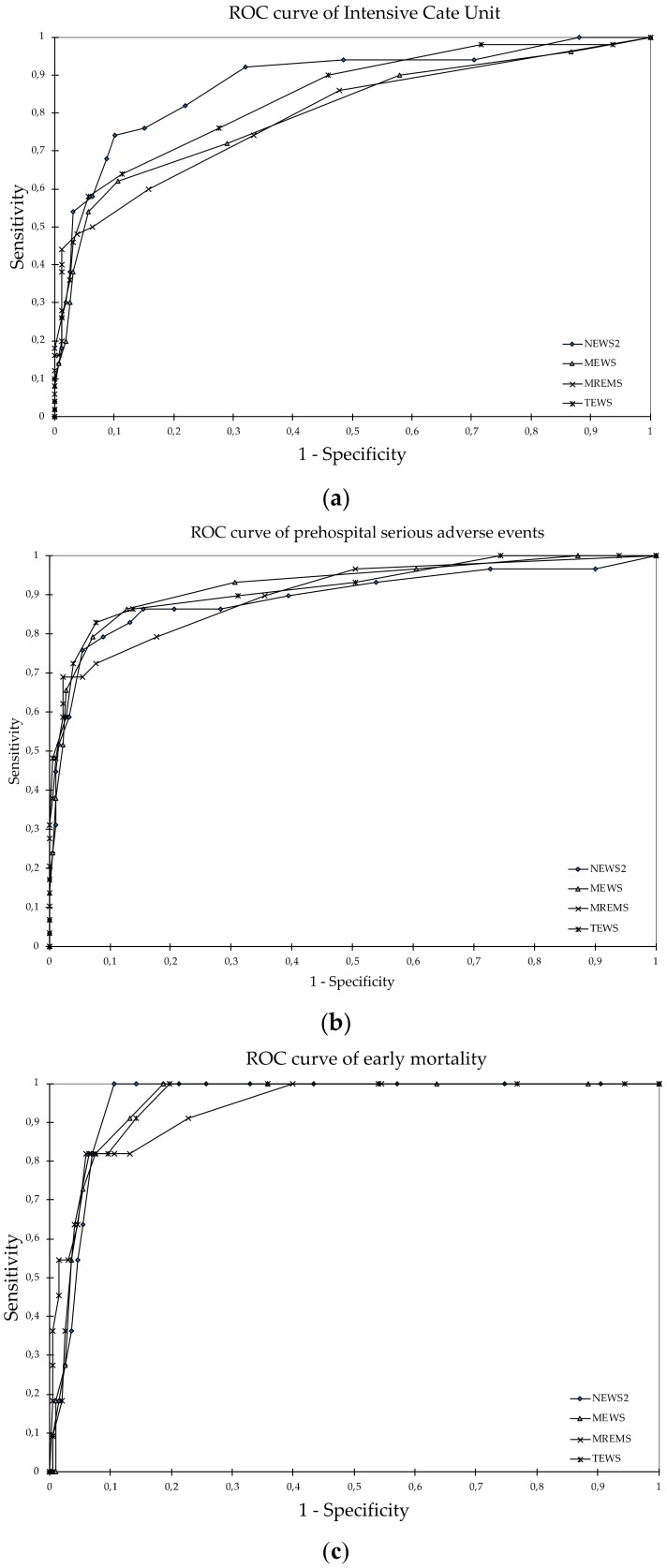
Traumatic brain injuries are complex situations in which the emergency medical services must quickly determine the risk of deterioration using minimal diagnostic methods. The aim of this study is to analyze whether the use of early warning scores can help with decision-making in these dynamic situations by determining the patients who need the intensive care unit. A prospective, multicentric cohort study without intervention was carried out on traumatic brain injury patients aged over 18 given advanced life support and taken to the hospital. Our study included a total of 209 cases. The total number of intensive-care unit admissions was 50 cases (23.9%). Of the scores analyzed, the National Early Warning Score2 was the best result presented with an area under the curve of 0.888 (0.81-0.94; < 0.001) and an odds ratio of 25.4 (95% confidence interval (CI):11.2-57.5). The use of early warning scores (and specifically National Early Warning Score2) can help the emergency medical services to differentiate traumatic brain injury patients with a high risk of deterioration. The emergency medical services should use the early warning scores routinely in all cases for the early detection of high-risk situations.
创伤性脑损伤是一种复杂的情况,急救医疗服务必须使用最小的诊断方法快速确定恶化的风险。本研究旨在分析早期预警评分是否可以通过确定需要重症监护病房的患者来帮助在这些动态情况下做出决策。这是一项前瞻性、多中心队列研究,未进行干预,纳入了接受高级生命支持并送往医院的年龄超过 18 岁的创伤性脑损伤患者。我们的研究共纳入了 209 例患者。共有 50 例(23.9%)患者进入重症监护病房。在分析的评分中,国家早期预警评分 2 表现出最佳结果,曲线下面积为 0.888(0.81-0.94;<0.001),优势比为 25.4(95%置信区间(CI):11.2-57.5)。早期预警评分(特别是国家早期预警评分 2)的使用可以帮助急救医疗服务人员区分具有高恶化风险的创伤性脑损伤患者。急救医疗服务人员应在所有情况下常规使用早期预警评分,以早期发现高危情况。