Department of Psychological and Brain Sciences, Washington University in Saint Louis, 1 Brookings Drive, Saint Louis, MO, 63130, USA.
Donders Institute for Brain, Cognition and Behaviour, Radboud University, Kapittelweg 29, 6525 EN, Nijmegen, the Netherlands; Department of Cognitive, Linguistics, and Psychological Sciences, Brown University, 190 Thayer Street, Providence, RI, 02912, USA.
Neuroimage. 2020 May 15;212:116683. doi: 10.1016/j.neuroimage.2020.116683. Epub 2020 Feb 27.
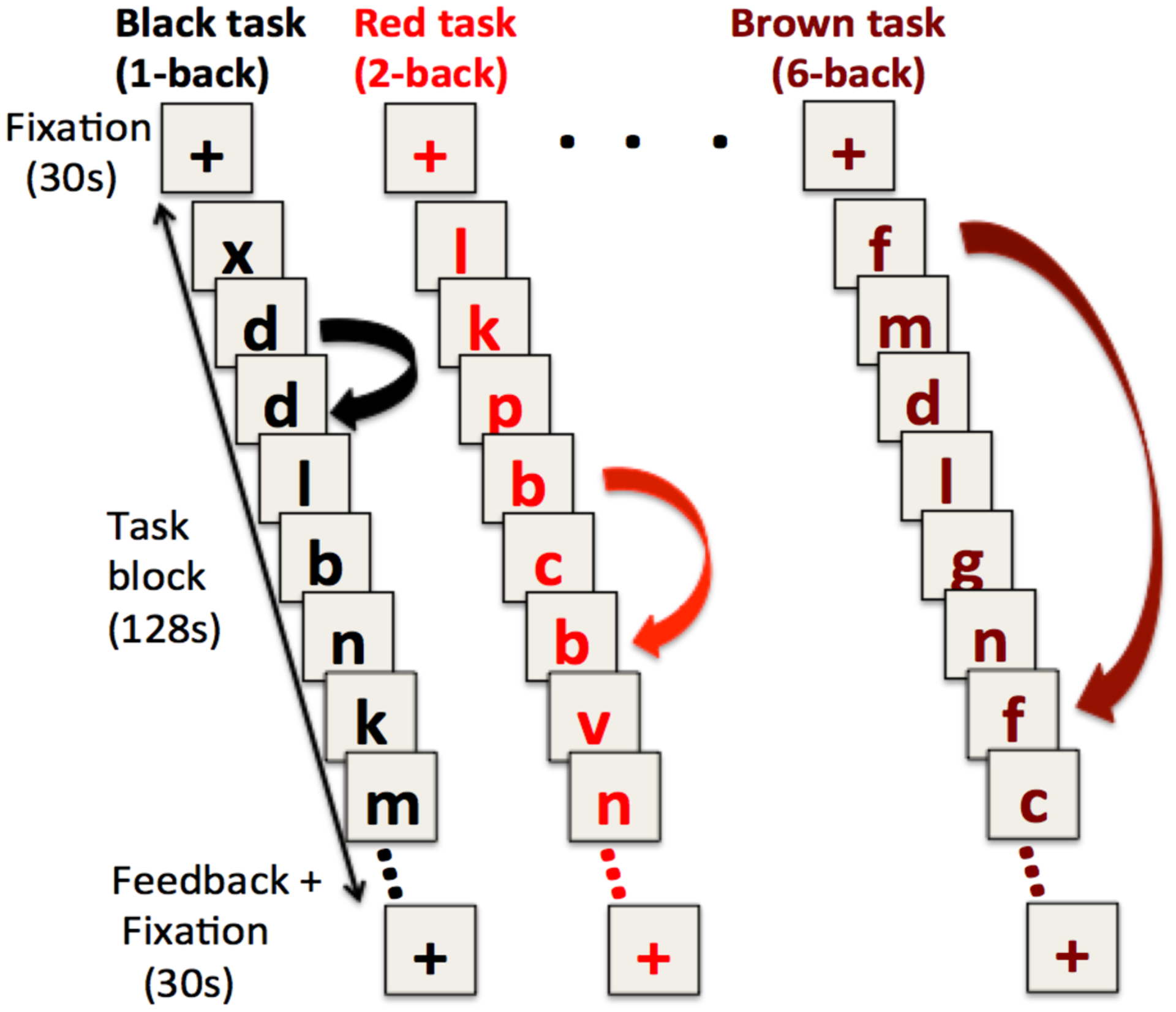
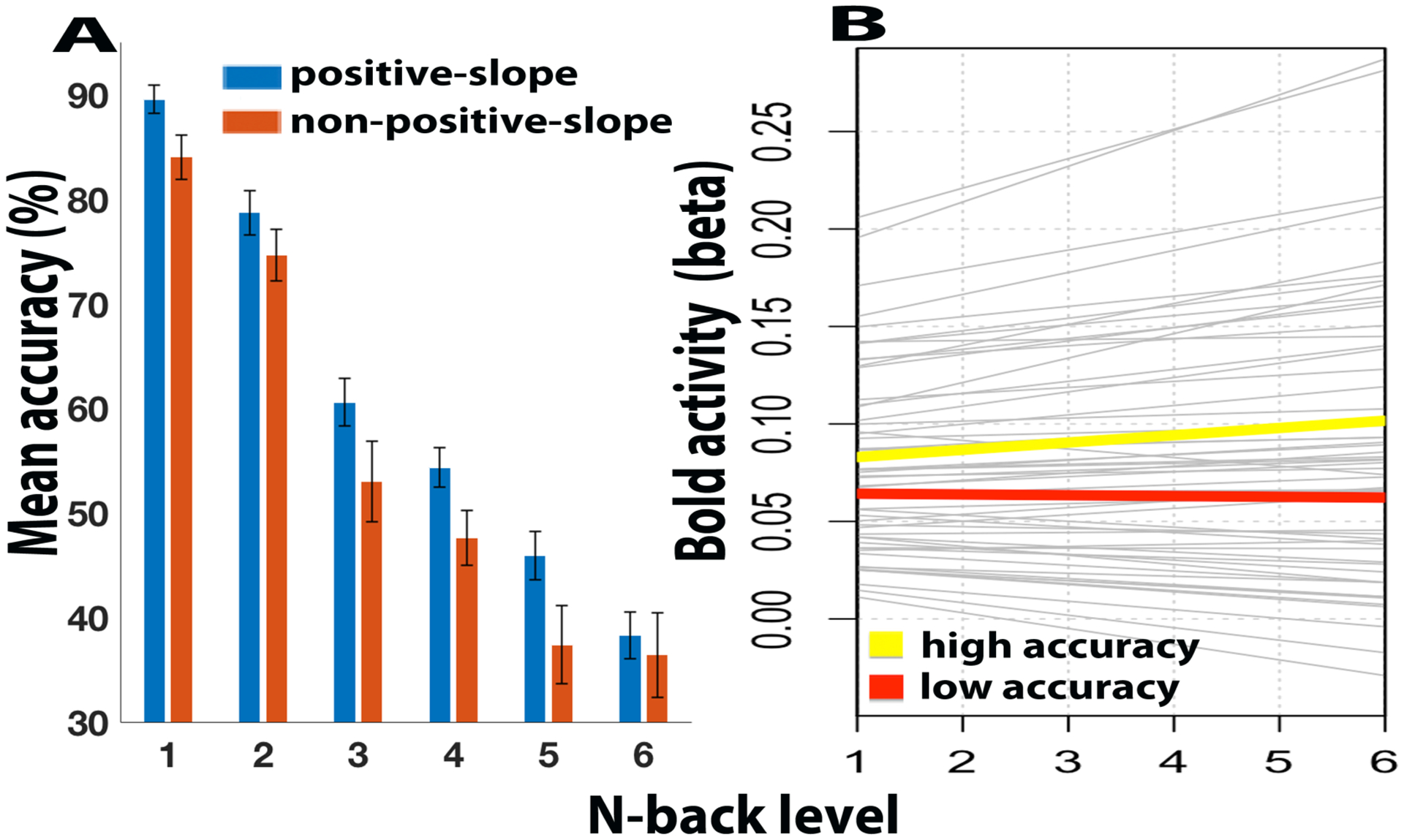
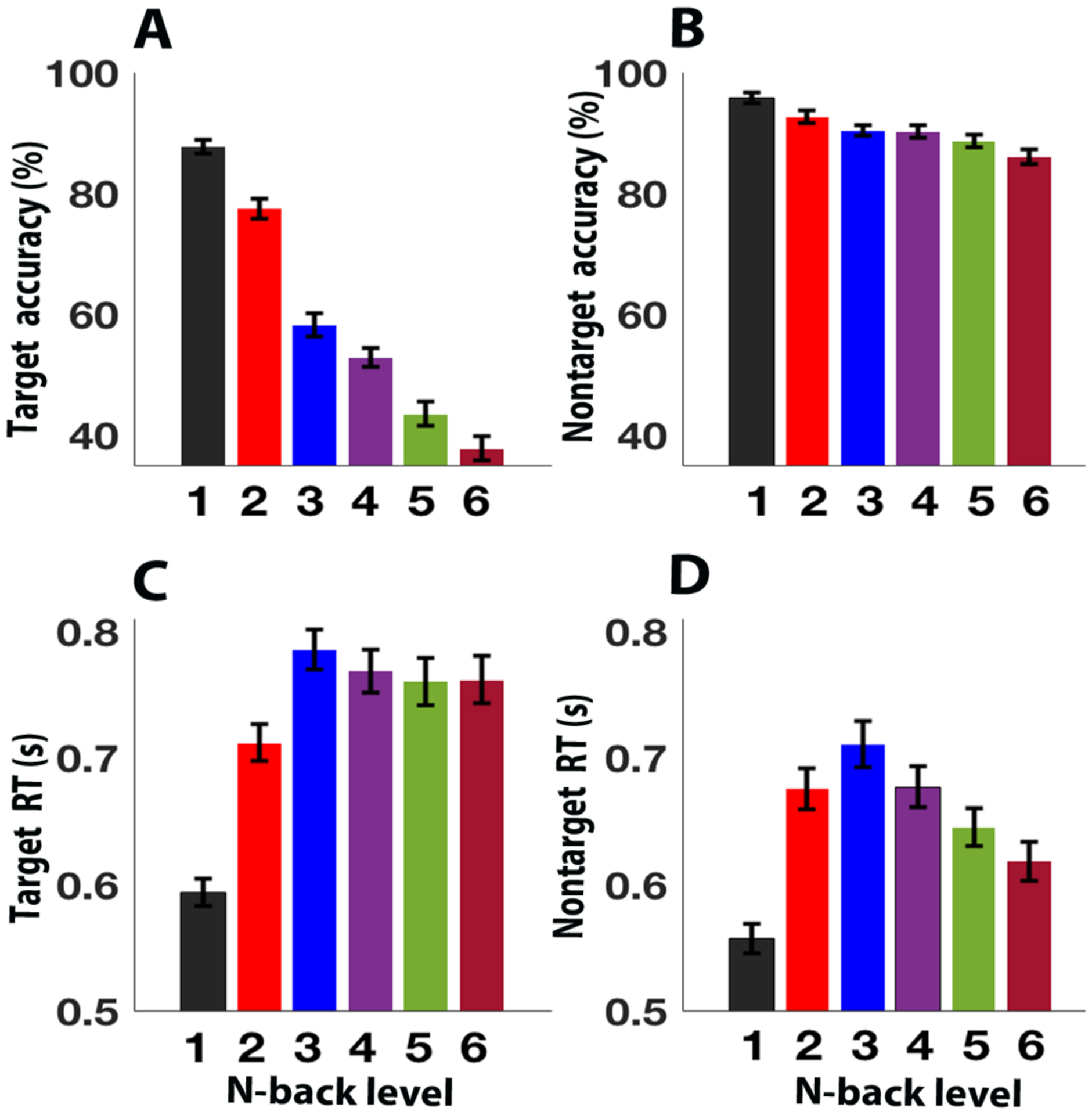
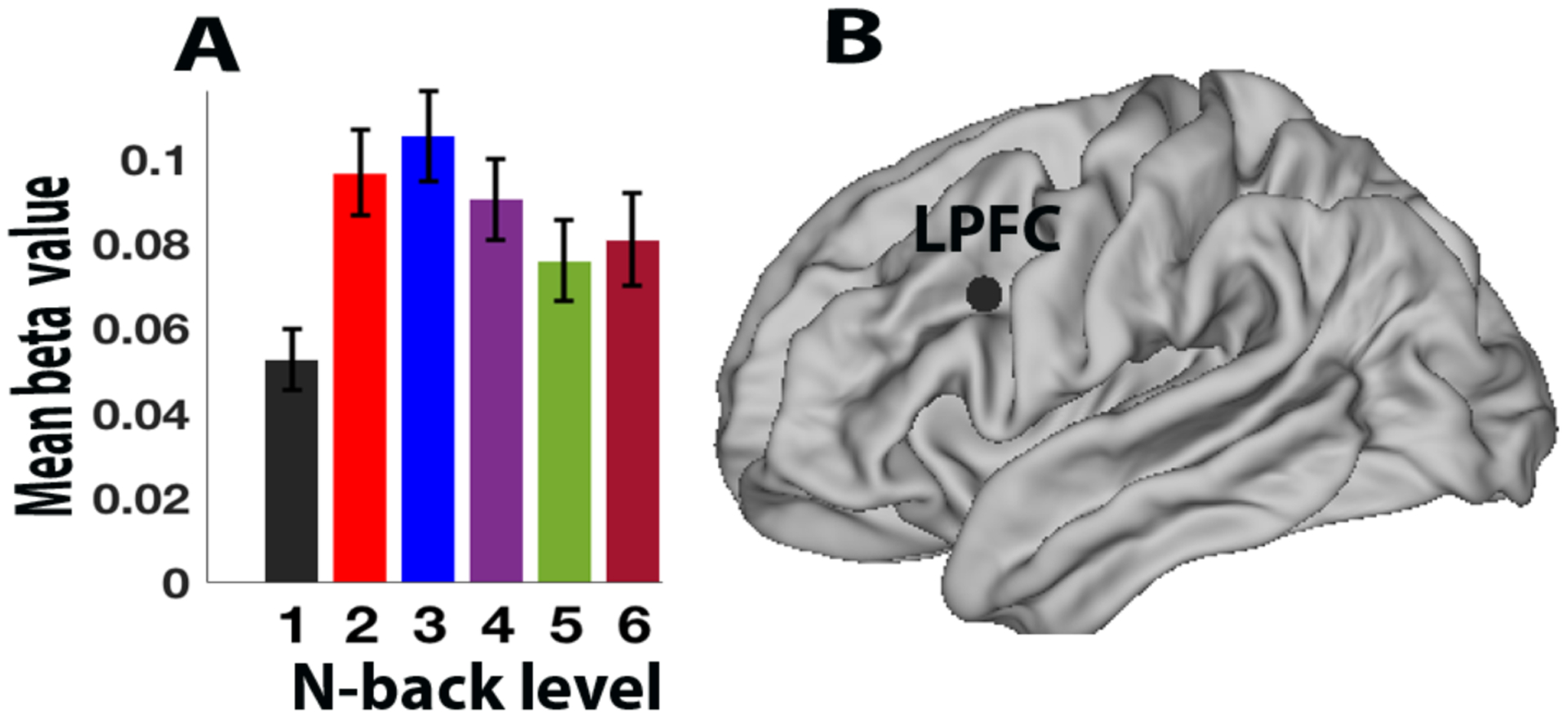
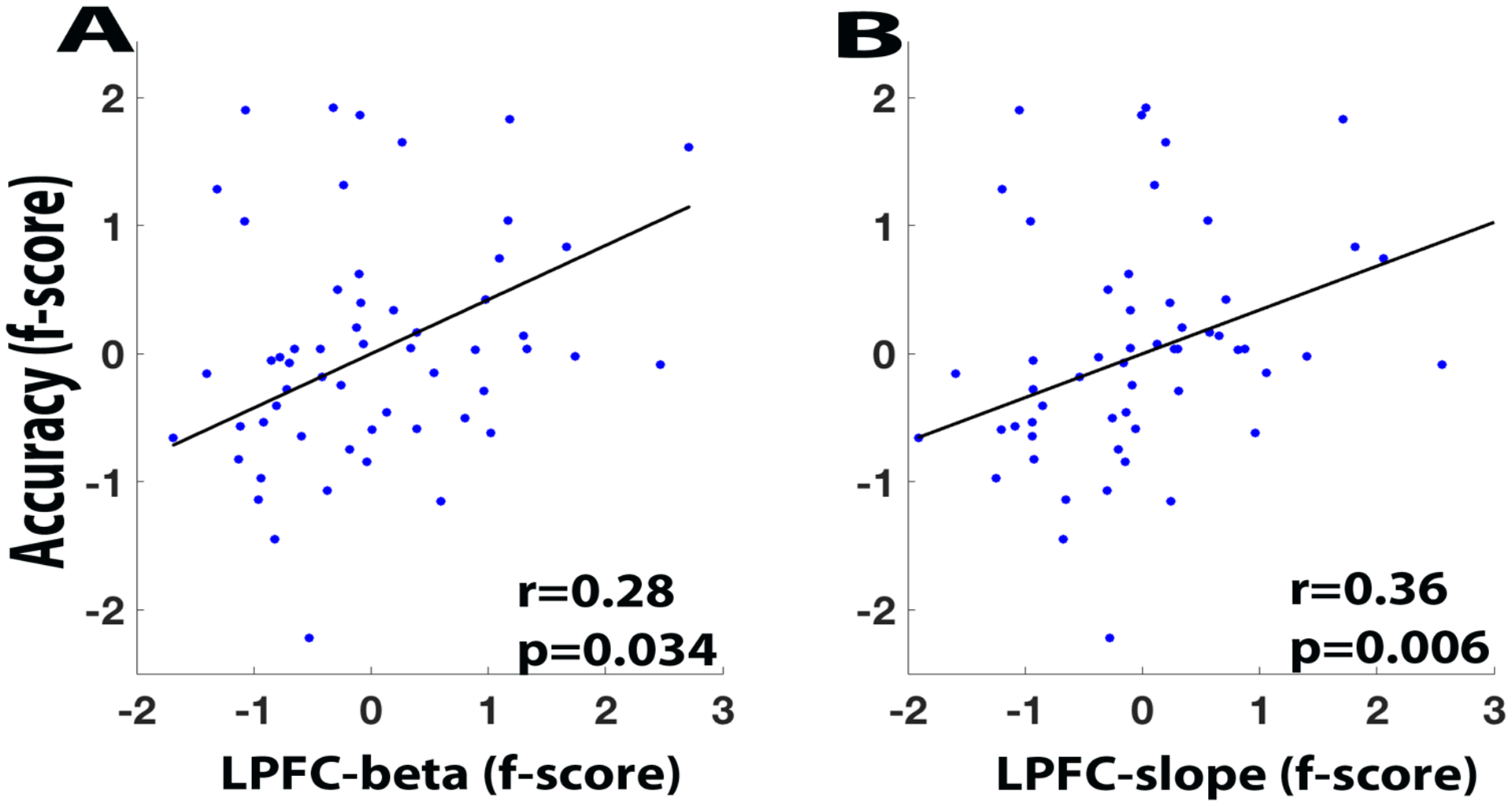
Working memory (WM) function has traditionally been investigated in terms of two dimensions: within-individual effects of WM load, and between-individual differences in task performance. In human neuroimaging studies, the N-back task has frequently been used to study both. A reliable finding is that activation in frontoparietal regions exhibits an inverted-U pattern, such that activity tends to decrease at high load levels. Yet it is not known whether such U-shaped patterns are a key individual differences factor that can predict load-related changes in task performance. The current study investigated this question by manipulating load levels across a much wider range than explored previously (N = 1-6), and providing a more comprehensive examination of brain-behavior relationships. In a sample of healthy young adults (n = 57), the analysis focused on a distinct region of left lateral prefrontal cortex (LPFC) identified in prior work to show a unique relationship with task performance and WM function. In this region it was the linear slope of load-related activity, rather than the U-shaped pattern, that was positively associated with individual differences in target accuracy. Comprehensive supplemental analyses revealed the brain-wide selectivity of this pattern. Target accuracy was also independently predicted by the global resting-state connectivity of this LPFC region. These effects were robust, as demonstrated by cross-validation analyses and out-of-sample prediction, and also critically, were primarily driven by the high-load conditions. Together, the results highlight the utility of high-load conditions for investigating individual differences in WM function.
工作记忆(WM)功能传统上被研究为两个维度:个体内部 WM 负荷的影响,以及个体间任务表现的差异。在人类神经影像学研究中,N-back 任务经常被用于研究这两个方面。一个可靠的发现是,额顶叶区域的激活表现出倒 U 型模式,即活动在高负荷水平下趋于减少。然而,目前尚不清楚这种 U 型模式是否是一个关键的个体差异因素,可以预测与任务表现相关的负荷变化。本研究通过在比以前探索的范围更广的范围内操纵负荷水平(N=1-6),并更全面地研究大脑-行为关系,来探讨这个问题。在一组健康的年轻成年人(n=57)中,分析集中在左外侧前额叶皮层(LPFC)的一个特定区域,该区域在先前的研究中显示出与任务表现和 WM 功能的独特关系。在这个区域,与负荷相关的活动的线性斜率,而不是 U 型模式,与个体差异的目标准确性呈正相关。全面的补充分析揭示了这种模式在大脑范围内的选择性。目标准确性也独立地由该 LPFC 区域的全局静息状态连接性来预测。这些效应是稳健的,如交叉验证分析和样本外预测所示,并且至关重要的是,主要是由高负荷条件驱动的。总之,结果突出了高负荷条件在研究 WM 功能个体差异方面的效用。