Rodrigues D R, Wilson K M, Trombetta M, Briggs W N, Duff A F, Chasser K M, Bottje W G, Bielke L
Department of Animal Sciences, The Ohio State University, Columbus, OH, United States.
Department of Poultry Science, University of Arkansas, Fayetteville, AR, United States.
Front Physiol. 2020 Feb 13;11:20. doi: 10.3389/fphys.2020.00020. eCollection 2020.
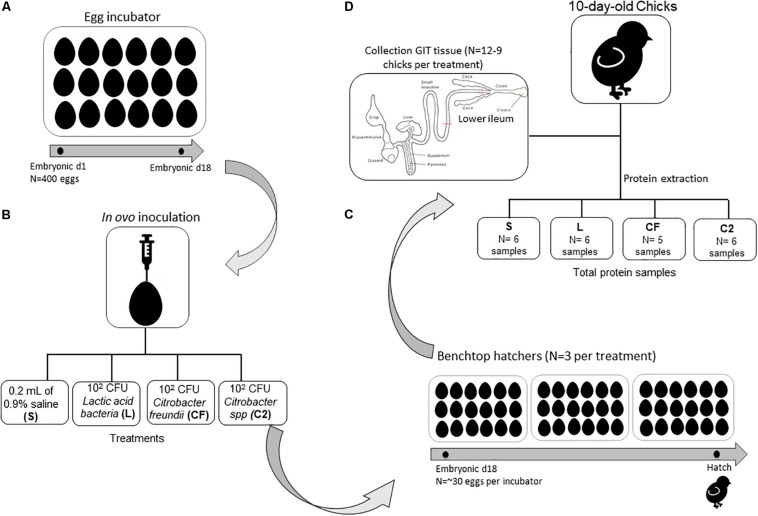
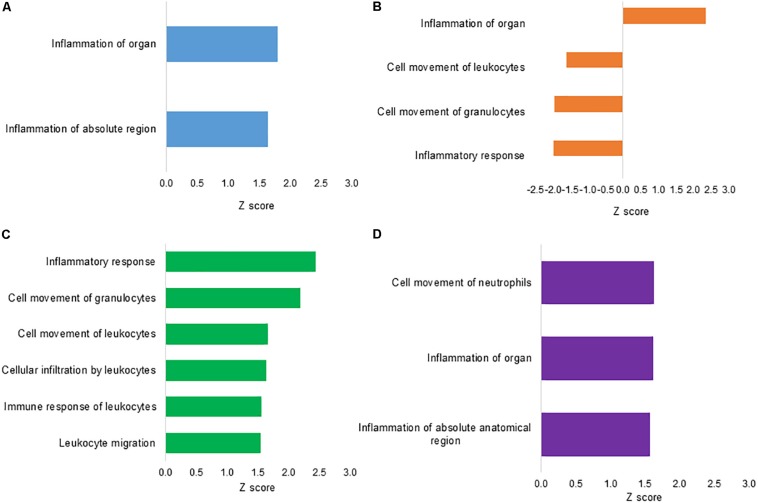
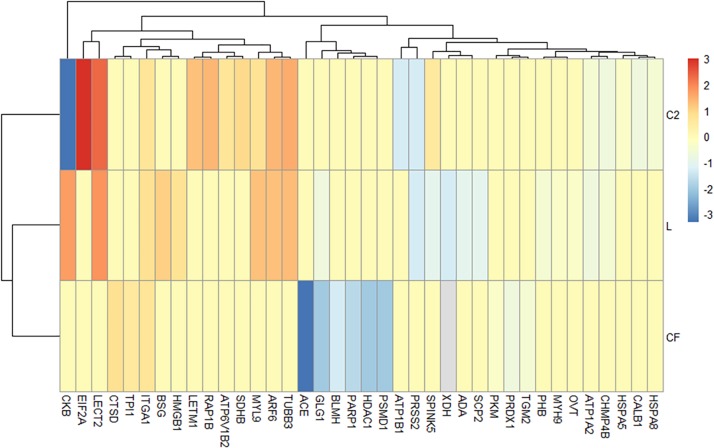
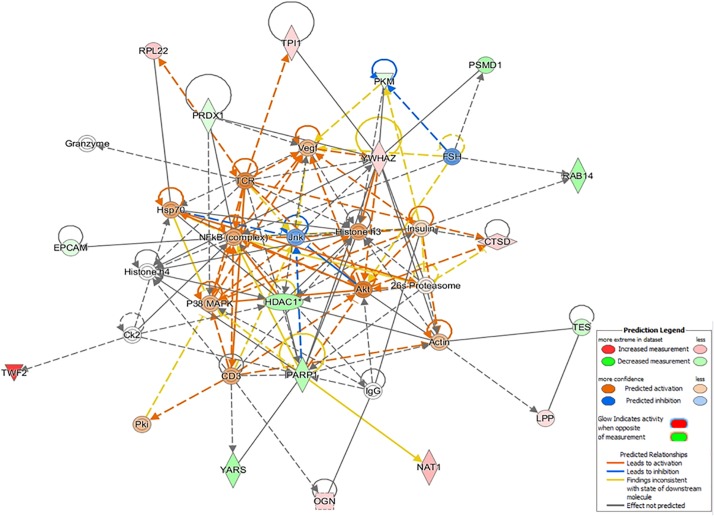
Proteomics has been used to investigate cross-talk between the intestinal microbiome and host biological processes. In this study, an technique and a proteomics approach was used to address how early bacterial colonization in the gastrointestinal tract (GIT) could modulate inflammatory and immune responses in young broilers. Embryos at 18 embryogenic days were inoculated with saline (S), 10 CFU of (CF), species (C2), or lactic acid bacteria mixture (L) into the amnion. At 10 days posthatch, ileum samples from 12 birds per treatment were selected for tandem mass spectrometry analysis. Our further findings indicated that treatment-specific influences on early GIT microbiota resulted in different immune responses in mature broilers. Predicted functional analyses revealed activation of inflammation pathways in broilers treated with L and CF. Exposure to L enhanced functional annotation related to activation, trafficking of immune cells, and skeletal growth based-network, while CF inhibited biological functions associated with immune cell migration and inflammatory response. These results highlighted that proper immune function was dependent on specific GIT microbiota profiles, in which early-life exposure to L-based probiotic may have modulated the immune functions, whereas neonatal colonization of strains may have led to immune dysregulation associated with chronic inflammation.
蛋白质组学已被用于研究肠道微生物群与宿主生物过程之间的相互作用。在本研究中,采用了一种技术和蛋白质组学方法来探讨胃肠道(GIT)早期细菌定植如何调节幼龄肉鸡的炎症和免疫反应。在胚胎发育第18天时,将生理盐水(S)、10 CFU的(CF)、种(C2)或乳酸菌混合物(L)接种到羊膜内。在孵化后第10天,从每种处理的12只鸡中选取回肠样本进行串联质谱分析。我们的进一步研究结果表明,对早期GIT微生物群的特异性处理影响导致成熟肉鸡产生不同的免疫反应。预测功能分析显示,用L和CF处理的肉鸡炎症途径被激活。暴露于L增强了与免疫细胞激活、运输以及基于骨骼生长的网络相关的功能注释,而CF抑制了与免疫细胞迁移和炎症反应相关的生物学功能。这些结果突出表明,适当的免疫功能依赖于特定的GIT微生物群谱,其中生命早期接触基于L的益生菌可能调节了免疫功能,而菌株的新生儿定植可能导致与慢性炎症相关的免疫失调。